• News & Research
    • Research Topics
    • Podcasts & Videos
  • Conventions & Events
    • 2026 APS Annual Convention
    • Webinars & Virtual Events
    • Past and Future Conventions
  • Journals
    • Psychological Science
    • Current Directions in Psychological Science
    • Psychological Science in the Public Interest
    • Perspectives on Psychological Science
    • Clinical Psychological Science
    • Advances in Methods and Practices in Psychological Science
    • Advances in Psychological Science Open
  • Advocacy & Policy
    • Policy & Position Statements
  • The Observer 
    • Archive
    • About the Observer
    • Advertising
    • Contact the Editor
    • Presidential Columns
  • Members
    • Awards & Honors
    • Member Directory
    • Lifetime Members
    • Student Members
    • Teaching of Psychology
    • Donors
  • Career Resources
    • Employment
  • About
    • Diversity, Equity, & Inclusion
    • Board of Directors 2025-2026
    • Staff Directory
    • Ethics Policy & Code of Conduct
APS Homepage
APS
  • Login
  • Join APS
  • The case against prolific Instagram use is all about protecting your memories

    Here’s a hot tip for this summer vacation season: Stop. Put the camera down. Don’t take that photo. A study published recently in the Journal of Applied Research in Memory and Cognition details two experiments, each producing evidence that in situations where people snap photos, their memories of those situations will fade more than in those in which they did not reach for their cameras. These findings, by two University of California-Santa Cruz researchers, ostensibly discredit the idea that by taking photos, we can offload our own organic memories and store them in pictures.

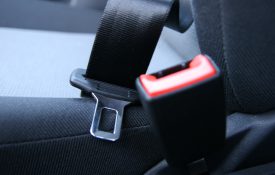
  • Buckle Your Truck Up: Factors That May Slacken Seat Belt Use

    As a possible explanation, the authors write that males “generally tend to make riskier decisions in order to show how self-confident they are in being the ‘stronger’ sex.”

  • The huge benefits of working in your second language

    I recently spent four months working at the BBC in London, and English always sounded far smarter in my head than when it came out of my mouth. I often forgot words, made grammatical slips, and missed the usual precision of my native Spanish. It felt like trying to eat soup with a fork. As I write this, I have a dictionary open in front of me because I have learned to mistrust my ideas about what some words mean. But there is a silver lining for those who are working in languages other than their native one. Research has recently shown that people who can speak a foreign language are likely to be more analytical.

  • Should You Keep a Secret?

    A while back, my sister, Rebecca, called with a request: She wanted me to book a flight to come and see her immediately—and not tell anyone. Rebecca explained that she was having a breast biopsy the next day, was terrified to hear the results, and wanted me there for support. But she didn’t want to worry others in our family. I jumped on a plane but wrestled with a dilemma. Many members of my family are doctors. Rebecca herself is an internist. Our father is an orthopedic surgeon and another sister is a gynecologist. I knew they would have advice for Rebecca—and would want to know if she were sick. But my sister asked me not to share what she told me. And I didn’t.

  • Upcoming Funding for Institutional Research Programs in Data Analytics for Behavioral Sciences Research

    Upcoming Funding for Institutional Research Programs in Data Analytics for Behavioral Sciences Research

    NIH has released a notice of an intent to solicit applications for institutions interested in leading behavioral sciences predoctoral training programs focusing on computational and/or data science approaches.

  • Why Grandmothers May Hold The Key To Human Evolution

    A hunter with bow and arrow, in a steamy sub-Saharan savanna, stalks a big, exotic animal. After killing and butchering it, he and his hunt-mates bring it back to their families and celebrate. This enduring scenario is probably what many of us have stuck in our heads about how early humans lived. It's an image with drama and danger. And it happens to coincide with Western ideas about the division of labor and the nuclear family that were prevalent in the 1960s when this so-called "Man the Hunter" theory first emerged. A newer body of research and theory, much of it created by women, has conjured a very different scenario.

« FirstPrevious...102030...643644645646647...650660670...NextLast »
  • Who We Are
  • Privacy Policy
  • Contact Us
  • Donate
  • Advertising
  • Follow APS
  • Facebook Logo link to APS's Facebook
  • BlueSky Logo link to APS's BlueSky
  • Youtube Logo link to APS's YouTube
  • Instagram Logo link to APS's Instagram
  • LinkedIn Logo link to APS's LinkedIn
  • Twitter Logo link to APS's Twitter

© Association for Psychological Science

Cookies
We use cookies on our website to give you the most relevant experience by remembering your preferences and repeat visits. By clicking “Accept”, you consent to the use of ALL the cookies. To accept or reject certain categories of cookies specifically please click the Cookie Settings link. Please read our Cookie Policy for more information.
Do not sell my personal information.
Cookie settingsAccept Reject
Privacy & Cookies Policy

Privacy Overview

This website uses cookies to improve your experience while you navigate through the website. Out of these cookies, the cookies that are categorized as necessary are stored on your browser as they are essential for the working of basic functionalities of the website. We also use third-party cookies that help us analyze and understand how you use this website. These cookies will be stored in your browser only with your consent. You also have the option to opt-out of these cookies. But opting out of some of these cookies may have an effect on your browsing experience.
Necessary
Always Enabled
Necessary cookies are absolutely essential for the website to function properly. This category only includes cookies that ensures basic functionalities and security features of the website. These cookies do not store any personal information.
Functional
Functional cookies help to perform certain functionalities like sharing the content of the website on social media platforms, collect feedbacks, and other third-party features.
CookieDurationDescription
__cf_bm30 minutesThis cookie, set by Cloudflare, is used to support Cloudflare Bot Management.
Performance
Performance cookies are used to understand and analyze the key performance indexes of the website which helps in delivering a better user experience for the visitors.
CookieDurationDescription
AWSELBCORS5 minutesThis cookie is used by Elastic Load Balancing from Amazon Web Services to effectively balance load on the servers.
Analytics
Analytical cookies are used to understand how visitors interact with the website. These cookies help provide information on metrics the number of visitors, bounce rate, traffic source, etc.
CookieDurationDescription
at-randneverAddThis sets this cookie to track page visits, sources of traffic and share counts.
CONSENT2 yearsYouTube sets this cookie via embedded youtube-videos and registers anonymous statistical data.
uvc1 year 27 daysSet by addthis.com to determine the usage of addthis.com service.
_ga2 yearsThe _ga cookie, installed by Google Analytics, calculates visitor, session and campaign data and also keeps track of site usage for the site's analytics report. The cookie stores information anonymously and assigns a randomly generated number to recognize unique visitors.
_gat_gtag_UA_3507334_11 minuteSet by Google to distinguish users.
_gid1 dayInstalled by Google Analytics, _gid cookie stores information on how visitors use a website, while also creating an analytics report of the website's performance. Some of the data that are collected include the number of visitors, their source, and the pages they visit anonymously.
Advertisement
Advertisement cookies are used to provide visitors with relevant ads and marketing campaigns. These cookies track visitors across websites and collect information to provide customized ads.
CookieDurationDescription
loc1 year 27 daysAddThis sets this geolocation cookie to help understand the location of users who share the information.
VISITOR_INFO1_LIVE5 months 27 daysA cookie set by YouTube to measure bandwidth that determines whether the user gets the new or old player interface.
YSCsessionYSC cookie is set by Youtube and is used to track the views of embedded videos on Youtube pages.
yt-remote-connected-devicesneverYouTube sets this cookie to store the video preferences of the user using embedded YouTube video.
yt-remote-device-idneverYouTube sets this cookie to store the video preferences of the user using embedded YouTube video.
yt.innertube::nextIdneverThis cookie, set by YouTube, registers a unique ID to store data on what videos from YouTube the user has seen.
yt.innertube::requestsneverThis cookie, set by YouTube, registers a unique ID to store data on what videos from YouTube the user has seen.
Others
Other uncategorized cookies are those that are being analyzed and have not been classified into a category as yet.
SAVE & ACCEPT
Powered by CookieYes Logo