• News & Research
    • Research Topics
    • Podcasts & Videos
  • Conventions & Events
    • 2026 APS Annual Convention
    • Webinars & Virtual Events
    • Past and Future Conventions
  • Journals
    • Psychological Science
    • Current Directions in Psychological Science
    • Psychological Science in the Public Interest
    • Perspectives on Psychological Science
    • Clinical Psychological Science
    • Advances in Methods and Practices in Psychological Science
    • Advances in Psychological Science Open
  • Advocacy & Policy
    • Policy & Position Statements
  • The Observer 
    • Archive
    • About the Observer
    • Advertising
    • Contact the Editor
    • Presidential Columns
  • Members
    • Awards & Honors
    • Member Directory
    • Lifetime Members
    • Student Members
    • Teaching of Psychology
    • Donors
  • Career Resources
    • Employment
  • About
    • Diversity, Equity, & Inclusion
    • Board of Directors 2025-2026
    • Staff Directory
    • Ethics Policy & Code of Conduct
APS Homepage
APS
  • Login
  • Join APS
  • 100 million Americans have chronic pain. Very few use one of the best tools to treat it.

    When pain settled into Blair Golson’s hands, it didn’t let go. What started off as light throbbing in one wrist 10 years ago quickly engulfed the other. The discomfort then spread, producing a pain much “like slapping your hands against a concrete wall,” he says. He was constantly stretching them, constantly shaking them, while looking for hot or cold surfaces to lay them on for relief. But worse was the deep sense of catastrophe that accompanied the pain. Working in tech-related startups, he depended on his hands to type.

  • Chasing the ‘Holy Grail’ of Baseball Performance

    In the final regular-season game for the 1977 Los Angeles Dodgers, Dusty Baker hit a home run, giving him 30 for the season and making him the fourth Dodger to reach that milestone that year, a Major League Baseball record. As Baker rounded third, a rookie who had recently entered the game, Glenn Burke, approached the plate from the on-deck circle and, seized by joy, raised his hand high above his head. Baker was taken aback by the gesture and, in a mix of celebration and confusion, decided to smack Burke’s hand. Their high five was clumsy, but then again it had every right to be: Reportedly, it was the first one ever. Baseball has always been a strange mix of social and solo.

  • APS Fellow Carsten de Dreu Receives Spinoza Prize

    The Spinoza Prize recognizes Carsten de Dreu’s groundbreaking research exploring conflict, negotiation, decision making, and innovation in groups.

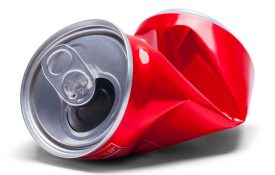
  • This is a photo of a crumpled soda can

    Graphic Warning Labels Linked to Reduced Sugary Drink Purchases

    Warning labels that include photos linking sugary drink consumption with obesity, type 2 diabetes, and tooth decay may reduce purchases of the drinks, a field study shows.

  • New Research From Psychological Science

    Read about the latest research published in Psychological Science: Revisiting the Marshmallow Test: A Conceptual Replication Investigating Links Between Early Delay of Gratification and Later Outcomes Tyler W. Watts, Greg J. Duncan, and Haonan Quan  In 1990, Shoda, Mischel, and Peake showed that preschoolers’ ability to wait to eat a marshmallow or other treat (i.e., to delay gratification) was related to their later cognitive and social achievements and development.

  • Why You Should Stop Being So Hard on Yourself

    “We’re all our own worst critics.” Ever heard that one before? Yes, it’s an obnoxious cliché, but it’s not just self-help fluff. Evolutionary psychologists have studied our natural “negativity bias,” which is that instinct in us all that makes negative experiences seem more significant than they really are. In other words: We’ve evolved to give more weight to our flaws, mistakes and shortcomings than our successes. “Self-criticism can take a toll on our minds and bodies,” said Dr. Richard Davidson, founder and director of the Center for Healthy Minds at the University of Wisconsin-Madison, where he also teaches psychology and psychiatry.

« FirstPrevious...102030...642643644645646...650660670...NextLast »
  • Who We Are
  • Privacy Policy
  • Contact Us
  • Donate
  • Advertising
  • Follow APS
  • Facebook Logo link to APS's Facebook
  • BlueSky Logo link to APS's BlueSky
  • Youtube Logo link to APS's YouTube
  • Instagram Logo link to APS's Instagram
  • LinkedIn Logo link to APS's LinkedIn
  • Twitter Logo link to APS's Twitter

© Association for Psychological Science

Cookies
We use cookies on our website to give you the most relevant experience by remembering your preferences and repeat visits. By clicking “Accept”, you consent to the use of ALL the cookies. To accept or reject certain categories of cookies specifically please click the Cookie Settings link. Please read our Cookie Policy for more information.
Do not sell my personal information.
Cookie settingsAccept Reject
Privacy & Cookies Policy

Privacy Overview

This website uses cookies to improve your experience while you navigate through the website. Out of these cookies, the cookies that are categorized as necessary are stored on your browser as they are essential for the working of basic functionalities of the website. We also use third-party cookies that help us analyze and understand how you use this website. These cookies will be stored in your browser only with your consent. You also have the option to opt-out of these cookies. But opting out of some of these cookies may have an effect on your browsing experience.
Necessary
Always Enabled
Necessary cookies are absolutely essential for the website to function properly. This category only includes cookies that ensures basic functionalities and security features of the website. These cookies do not store any personal information.
Functional
Functional cookies help to perform certain functionalities like sharing the content of the website on social media platforms, collect feedbacks, and other third-party features.
CookieDurationDescription
__cf_bm30 minutesThis cookie, set by Cloudflare, is used to support Cloudflare Bot Management.
Performance
Performance cookies are used to understand and analyze the key performance indexes of the website which helps in delivering a better user experience for the visitors.
CookieDurationDescription
AWSELBCORS5 minutesThis cookie is used by Elastic Load Balancing from Amazon Web Services to effectively balance load on the servers.
Analytics
Analytical cookies are used to understand how visitors interact with the website. These cookies help provide information on metrics the number of visitors, bounce rate, traffic source, etc.
CookieDurationDescription
at-randneverAddThis sets this cookie to track page visits, sources of traffic and share counts.
CONSENT2 yearsYouTube sets this cookie via embedded youtube-videos and registers anonymous statistical data.
uvc1 year 27 daysSet by addthis.com to determine the usage of addthis.com service.
_ga2 yearsThe _ga cookie, installed by Google Analytics, calculates visitor, session and campaign data and also keeps track of site usage for the site's analytics report. The cookie stores information anonymously and assigns a randomly generated number to recognize unique visitors.
_gat_gtag_UA_3507334_11 minuteSet by Google to distinguish users.
_gid1 dayInstalled by Google Analytics, _gid cookie stores information on how visitors use a website, while also creating an analytics report of the website's performance. Some of the data that are collected include the number of visitors, their source, and the pages they visit anonymously.
Advertisement
Advertisement cookies are used to provide visitors with relevant ads and marketing campaigns. These cookies track visitors across websites and collect information to provide customized ads.
CookieDurationDescription
loc1 year 27 daysAddThis sets this geolocation cookie to help understand the location of users who share the information.
VISITOR_INFO1_LIVE5 months 27 daysA cookie set by YouTube to measure bandwidth that determines whether the user gets the new or old player interface.
YSCsessionYSC cookie is set by Youtube and is used to track the views of embedded videos on Youtube pages.
yt-remote-connected-devicesneverYouTube sets this cookie to store the video preferences of the user using embedded YouTube video.
yt-remote-device-idneverYouTube sets this cookie to store the video preferences of the user using embedded YouTube video.
yt.innertube::nextIdneverThis cookie, set by YouTube, registers a unique ID to store data on what videos from YouTube the user has seen.
yt.innertube::requestsneverThis cookie, set by YouTube, registers a unique ID to store data on what videos from YouTube the user has seen.
Others
Other uncategorized cookies are those that are being analyzed and have not been classified into a category as yet.
SAVE & ACCEPT
Powered by CookieYes Logo