
• News & Research
    • Research Topics
    • Podcasts & Videos
  • Conventions & Events
    • 2026 APS Annual Convention
    • Webinars & Virtual Events
    • Past and Future Conventions
  • Journals
    • Psychological Science
    • Current Directions in Psychological Science
    • Psychological Science in the Public Interest
    • Perspectives on Psychological Science
    • Clinical Psychological Science
    • Advances in Methods and Practices in Psychological Science
    • Advances in Psychological Science Open
  • Advocacy & Policy
    • Policy & Position Statements
  • The Observer 
    • Archive
    • About the Observer
    • Advertising
    • Contact the Editor
    • Presidential Columns
  • Members
    • Awards & Honors
    • Member Directory
    • Lifetime Members
    • Student Members
    • Teaching of Psychology
    • Donors
  • Career Resources
    • Employment
  • About
    • Diversity, Equity, & Inclusion
    • Board of Directors 2025-2026
    • Staff Directory
    • Ethics Policy & Code of Conduct
APS Homepage
APS
  • Login
  • Join APS
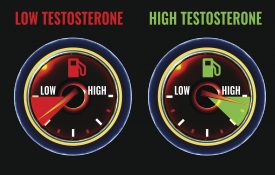
  • How DNA and Testosterone May Affect Men’s Driving

    New findings raise the possibility that men with a specific mix of biology and personality traits may be prone to aggressive driving as well as other fiery behavior.

  • Linda B. Smith, Robert Cialdini, and Gordon Logan Elected to National Academy of Sciences

    Linda B. Smith The National Academy of Sciences (NAS) has elected APS William James Fellow Linda B. Smith and APS Fellow Robert Cialdini to its distinguished list of members. APS Fellow Gordon Logan, a professor at Vanderbilt University who is a Canadian citizen, has been elected a foreign associate. The psychological scientists are among 100 new members and 25 foreign associates who have joined NAS in recognition of their achievements in original research. APS Fellow Gordon Logan, a professor at Vanderbilt University but is originally from Canada, has been elected a foreign associate.

  • Lonely young adults ‘in every kind of neighbourhood’

    Academics from King's College London found loneliness was an issue in urban as well as rural areas and in wealthy areas as well as deprived ones. They say loneliness is a particular problem among young adults - regardless of gender or socio-economic background. The study says these adults are more likely to have a negative view of where they live, compounding their isolation. The King's College research says: "The findings of this study reveal that among young adults, loneliness occurs equally within many different types of neighbourhoods, irrespective of urbanicity, population density, deprivation, or crime.

  • Is the Immediate Playback of Events Changing Children’s Memories?

    The night of the elementary school talent show, we came home to celebrate with ice cream when my mother took out her iPhone to show a video she’d taken of my 10-year-old daughter’s performance. My daughter had played Ed Sheeran’s “Perfect” on the piano by ear and sang along. Despite her nerves, she got out there in the middle of the stage in a new dress with scattered sequins and sang her best, bowing to an audience of clapping parents before she walked off stage — an expression of relief and pride on her face.

  • Ageism: A ‘Prevalent and Insidious’ Health Threat

    It happened about a year ago. I stepped off the subway and spotted an ad on the station wall for a food delivery service. It read: “When you want a whole cake to yourself because you’re turning 30, which is basically 50, which is basically dead.” After a bunch of us squawked about the ad on social media, the company apologized for what it called attempted humor and what I’d call ageism. Maybe you recall another media campaign last fall intended to encourage young people’s participation in the midterm elections. In pursuit of this laudable goal, marketers invoked every negative stereotype of old people — selfish, addled, unconcerned about the future — to scare their juniors into voting.

  • How to Deal With a Jerk Without Being a Jerk

    A couple of years ago I was discussing a study of the habits of great musical composers when an audience member interrupted. “That’s not true!” he shouted. “You’re totally ignorant — you don’t know what you’re talking about!” Early in my career, I had let nasty people walk all over me. When a client berated me for my predecessor’s error on an ad, I gave in and offered him a full refund. When a boss threatened to fire me for defending a colleague who was treated poorly, I said nothing. But this time, I was prepared: I had trained as a conflict mediator, worked as a negotiator and become an organizational psychologist.

« FirstPrevious...102030...526527528529530...540550560...NextLast »
  • Who We Are
  • Privacy Policy
  • Contact Us
  • Donate
  • Advertising
  • Follow APS
  • Facebook Logo link to APS's Facebook
  • BlueSky Logo link to APS's BlueSky
  • Youtube Logo link to APS's YouTube
  • Instagram Logo link to APS's Instagram
  • LinkedIn Logo link to APS's LinkedIn
  • Twitter Logo link to APS's Twitter

© Association for Psychological Science

Cookies
We use cookies on our website to give you the most relevant experience by remembering your preferences and repeat visits. By clicking “Accept”, you consent to the use of ALL the cookies. To accept or reject certain categories of cookies specifically please click the Cookie Settings link. Please read our Cookie Policy for more information.
Do not sell my personal information.
Cookie settingsAccept Reject
Privacy & Cookies Policy

Privacy Overview

This website uses cookies to improve your experience while you navigate through the website. Out of these cookies, the cookies that are categorized as necessary are stored on your browser as they are essential for the working of basic functionalities of the website. We also use third-party cookies that help us analyze and understand how you use this website. These cookies will be stored in your browser only with your consent. You also have the option to opt-out of these cookies. But opting out of some of these cookies may have an effect on your browsing experience.
Necessary
Always Enabled
Necessary cookies are absolutely essential for the website to function properly. This category only includes cookies that ensures basic functionalities and security features of the website. These cookies do not store any personal information.
Functional
Functional cookies help to perform certain functionalities like sharing the content of the website on social media platforms, collect feedbacks, and other third-party features.
CookieDurationDescription
__cf_bm30 minutesThis cookie, set by Cloudflare, is used to support Cloudflare Bot Management.
Performance
Performance cookies are used to understand and analyze the key performance indexes of the website which helps in delivering a better user experience for the visitors.
CookieDurationDescription
AWSELBCORS5 minutesThis cookie is used by Elastic Load Balancing from Amazon Web Services to effectively balance load on the servers.
Analytics
Analytical cookies are used to understand how visitors interact with the website. These cookies help provide information on metrics the number of visitors, bounce rate, traffic source, etc.
CookieDurationDescription
at-randneverAddThis sets this cookie to track page visits, sources of traffic and share counts.
CONSENT2 yearsYouTube sets this cookie via embedded youtube-videos and registers anonymous statistical data.
uvc1 year 27 daysSet by addthis.com to determine the usage of addthis.com service.
_ga2 yearsThe _ga cookie, installed by Google Analytics, calculates visitor, session and campaign data and also keeps track of site usage for the site's analytics report. The cookie stores information anonymously and assigns a randomly generated number to recognize unique visitors.
_gat_gtag_UA_3507334_11 minuteSet by Google to distinguish users.
_gid1 dayInstalled by Google Analytics, _gid cookie stores information on how visitors use a website, while also creating an analytics report of the website's performance. Some of the data that are collected include the number of visitors, their source, and the pages they visit anonymously.
Advertisement
Advertisement cookies are used to provide visitors with relevant ads and marketing campaigns. These cookies track visitors across websites and collect information to provide customized ads.
CookieDurationDescription
loc1 year 27 daysAddThis sets this geolocation cookie to help understand the location of users who share the information.
VISITOR_INFO1_LIVE5 months 27 daysA cookie set by YouTube to measure bandwidth that determines whether the user gets the new or old player interface.
YSCsessionYSC cookie is set by Youtube and is used to track the views of embedded videos on Youtube pages.
yt-remote-connected-devicesneverYouTube sets this cookie to store the video preferences of the user using embedded YouTube video.
yt-remote-device-idneverYouTube sets this cookie to store the video preferences of the user using embedded YouTube video.
yt.innertube::nextIdneverThis cookie, set by YouTube, registers a unique ID to store data on what videos from YouTube the user has seen.
yt.innertube::requestsneverThis cookie, set by YouTube, registers a unique ID to store data on what videos from YouTube the user has seen.
Others
Other uncategorized cookies are those that are being analyzed and have not been classified into a category as yet.
SAVE & ACCEPT
Powered by CookieYes Logo