
-
Lee Ross, Expert in Why We Misunderstand Each Other, Dies at 78
Personal humiliation inspired Lee Ross’s greatest insight. In 1969, when he defended his graduate dissertation at Columbia University, a committee of faculty members let loose a downpour of esoteric questions. Mr. Ross had done a study of how perceptions differed under bright and dim light. What, one inquisitor asked, was the wavelength of the dim light, calculated in the infinitesimal unit of measurement known as angstroms? That’s what it meant to be a real academic, Mr. Ross thought: to know about stuff like angstroms. He felt sure he was unworthy. That same month, he went to Stanford University, where he’d gotten a job as a junior professor.
-
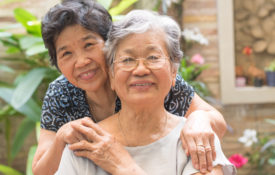
When Caregivers Care Too Much: Emotional Empathy as a Mental Health Risk Factor
When a person receiving care has dementia, the caregiver is much more likely to experience depression or anxiety, especially if they have high levels of emotional empathy.
-

A Major Boost for U.S. Science Research?
APS supports the National Science Foundation for the Future Act, which would dramatically increase the scope of NSF research and education efforts.
-

Putting Psychological Science to the Test: Transparency and Reproducibility-Related Research Practices (2014-2017)
An estimate of transparency and reproducibility-related practices in studies published between 2014 and 2017, this study signals that even when these practices are adopted, they might not be correctly implemented.
-
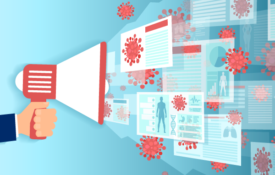
A ‘Nudge’ May Not Be Enough to Counter Fake News Online
Can people learn to better identify fake news about COVID-19—and if so, would they be less likely to share that fake story with others? Perhaps, but it may take more than simply priming them to think more critically beforehand.
-
Going Beyond ‘Back to Normal’
You’ve been waiting… and waiting… and waiting for this amazing, magical day when you could return to “normal life.” For many people in the U.S., it feels like that dim light at the end of the pandemic tunnel is becoming brighter. My 12- and 14-year-old daughters now have their first shot, with the second one soon to follow. I was euphoric when the kids received their vaccinations, choking up under my mask at the relief that my family was now unlikely to get sick or pass the coronavirus on to others more vulnerable than we are. Finally our family could start returning to so-called normal life. But what should those of us fortunate enough to be vaccinated return to?
