• News & Research
    • Research Topics
    • Podcasts & Videos
  • Conventions & Events
    • 2026 APS Annual Convention
    • Webinars & Virtual Events
    • Past and Future Conventions
  • Journals
    • Psychological Science
    • Current Directions in Psychological Science
    • Psychological Science in the Public Interest
    • Perspectives on Psychological Science
    • Clinical Psychological Science
    • Advances in Methods and Practices in Psychological Science
    • Advances in Psychological Science Open
  • Advocacy & Policy
    • Policy & Position Statements
  • The Observer 
    • Archive
    • About the Observer
    • Advertising
    • Contact the Editor
    • Presidential Columns
  • Members
    • Awards & Honors
    • Member Directory
    • Lifetime Members
    • Student Members
    • Teaching of Psychology
    • Donors
  • Career Resources
    • Employment
  • About
    • Diversity, Equity, & Inclusion
    • Board of Directors 2025-2026
    • Staff Directory
    • Ethics Policy & Code of Conduct
APS Homepage
APS
  • Login
  • Join APS
  • Growing Over Showing in Math Education

    In case you missed it, the cameras were rolling at the APS 23rd Annual Convention in Washington, DC. Watch Matthew G. Mandelbaum from Fordham University present his poster session research on “Mastery, Need for Cognition, and Self-Efficacy Promote Long-Term Math Achievement in Adolescent Females.” Mandelbaum’s research shows that “growing” is better than “showing” when it comes to learning math.

  • Brain Stores Objects by Color, Too

    How do we know what a lemon is, or a baseball? “Theories that explain how our brains store knowledge say that similar knowledge is stored in similar places. So things that are related - in how they look, how they smell, and so on - should overlap in the brain,” says Eiling Yee of the Basque Center on Cognition, Brain, & Language. In other words, the same part of your brain might store the information that both lemons and canaries are yellow. This sort of overlap has been shown for certain properties of objects, like their shape and function, or even for how you manipulate them with your hands.

  • Real Good For Free: The Paradox of Leisure Time

    I’m pretty busy. Like most people I know, I try to balance a lot of different things—a full-time job, household chores, cooking and meals, regular exercise, time with family and friends. Throw in an occasional bike ride, a movie or museum, maybe even reading a book—oh, and sleep—and there aren’t many free minutes left in a typical week. Yet I volunteer my time, too. I do this because it’s a good cause, but also because it makes me feel good. And somewhat surprisingly, I’ve never had the sense that this is one more obligation chipping away at my already compressed day. Indeed, it sometimes seems the other way around, as if working for free eases the time pressure of modern life.

  • Canadian group studies impact of social networks on mental health

    Montreal Gazette: A couple of months ago, Marisa Murray stepped out to grab a bite to eat with a friend. The restaurant they chose was busy, and the table they sat at was shoehorned between two large families. They didn't mind, but as Murray settled in, she found herself paying more attention to the people at the tables beside her than the person at her own. What caught the clinical psychology student's eye was that the families were socializing, but not with each other: Everyone, from the children to the grandparents, was nose deep in an electronic device. "It was so strange. There was no conversation. Within the family, everyone had a cellphone.

  • Learning to Drive With A.D.H.D.

    The New York Times: The first time Jillian Serpa tried to learn to drive, the family car wound up straddling a creek next to her home in Ringwood, N.J. Ms. Serpa, then 16, had gotten flustered trying to sort out a rapid string of directions from her father while preparing to back out of their driveway. “There was a lack of communication,” she said. “I stepped on the gas instead of the brake.” On her second attempt to learn, Ms. Serpa recalled, she “totally freaked out” at a busy intersection. It was four years before she tried driving again.

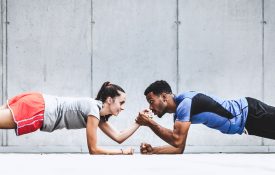
  • Two friends exercising together

    I Think, Therefore I Exercise: Philosophy and Health

    Researchers investigate how dualists, who view the body as separate and independent from the mind, tend to see their bodies and, specifically, their fitness and health.

« FirstPrevious...102030...1,9791,9801,9811,9821,983...1,9902,0002,010...NextLast »
  • Who We Are
  • Privacy Policy
  • Contact Us
  • Donate
  • Advertising
  • Follow APS
  • Facebook Logo link to APS's Facebook
  • BlueSky Logo link to APS's BlueSky
  • Youtube Logo link to APS's YouTube
  • Instagram Logo link to APS's Instagram
  • LinkedIn Logo link to APS's LinkedIn
  • Twitter Logo link to APS's Twitter

© Association for Psychological Science

Cookies
We use cookies on our website to give you the most relevant experience by remembering your preferences and repeat visits. By clicking “Accept”, you consent to the use of ALL the cookies. To accept or reject certain categories of cookies specifically please click the Cookie Settings link. Please read our Cookie Policy for more information.
Do not sell my personal information.
Cookie settingsAccept Reject
Privacy & Cookies Policy

Privacy Overview

This website uses cookies to improve your experience while you navigate through the website. Out of these cookies, the cookies that are categorized as necessary are stored on your browser as they are essential for the working of basic functionalities of the website. We also use third-party cookies that help us analyze and understand how you use this website. These cookies will be stored in your browser only with your consent. You also have the option to opt-out of these cookies. But opting out of some of these cookies may have an effect on your browsing experience.
Necessary
Always Enabled
Necessary cookies are absolutely essential for the website to function properly. This category only includes cookies that ensures basic functionalities and security features of the website. These cookies do not store any personal information.
Functional
Functional cookies help to perform certain functionalities like sharing the content of the website on social media platforms, collect feedbacks, and other third-party features.
CookieDurationDescription
__cf_bm30 minutesThis cookie, set by Cloudflare, is used to support Cloudflare Bot Management.
Performance
Performance cookies are used to understand and analyze the key performance indexes of the website which helps in delivering a better user experience for the visitors.
CookieDurationDescription
AWSELBCORS5 minutesThis cookie is used by Elastic Load Balancing from Amazon Web Services to effectively balance load on the servers.
Analytics
Analytical cookies are used to understand how visitors interact with the website. These cookies help provide information on metrics the number of visitors, bounce rate, traffic source, etc.
CookieDurationDescription
at-randneverAddThis sets this cookie to track page visits, sources of traffic and share counts.
CONSENT2 yearsYouTube sets this cookie via embedded youtube-videos and registers anonymous statistical data.
uvc1 year 27 daysSet by addthis.com to determine the usage of addthis.com service.
_ga2 yearsThe _ga cookie, installed by Google Analytics, calculates visitor, session and campaign data and also keeps track of site usage for the site's analytics report. The cookie stores information anonymously and assigns a randomly generated number to recognize unique visitors.
_gat_gtag_UA_3507334_11 minuteSet by Google to distinguish users.
_gid1 dayInstalled by Google Analytics, _gid cookie stores information on how visitors use a website, while also creating an analytics report of the website's performance. Some of the data that are collected include the number of visitors, their source, and the pages they visit anonymously.
Advertisement
Advertisement cookies are used to provide visitors with relevant ads and marketing campaigns. These cookies track visitors across websites and collect information to provide customized ads.
CookieDurationDescription
loc1 year 27 daysAddThis sets this geolocation cookie to help understand the location of users who share the information.
VISITOR_INFO1_LIVE5 months 27 daysA cookie set by YouTube to measure bandwidth that determines whether the user gets the new or old player interface.
YSCsessionYSC cookie is set by Youtube and is used to track the views of embedded videos on Youtube pages.
yt-remote-connected-devicesneverYouTube sets this cookie to store the video preferences of the user using embedded YouTube video.
yt-remote-device-idneverYouTube sets this cookie to store the video preferences of the user using embedded YouTube video.
yt.innertube::nextIdneverThis cookie, set by YouTube, registers a unique ID to store data on what videos from YouTube the user has seen.
yt.innertube::requestsneverThis cookie, set by YouTube, registers a unique ID to store data on what videos from YouTube the user has seen.
Others
Other uncategorized cookies are those that are being analyzed and have not been classified into a category as yet.
SAVE & ACCEPT
Powered by CookieYes Logo