• News & Research
    • Research Topics
    • Podcasts & Videos
  • Conventions & Events
    • 2026 APS Annual Convention
    • Webinars & Virtual Events
    • Past and Future Conventions
  • Journals
    • Psychological Science
    • Current Directions in Psychological Science
    • Psychological Science in the Public Interest
    • Perspectives on Psychological Science
    • Clinical Psychological Science
    • Advances in Methods and Practices in Psychological Science
    • Advances in Psychological Science Open
  • Advocacy & Policy
    • Policy & Position Statements
  • The Observer 
    • Archive
    • About the Observer
    • Advertising
    • Contact the Editor
    • Presidential Columns
  • Members
    • Awards & Honors
    • Member Directory
    • Lifetime Members
    • Student Members
    • Teaching of Psychology
    • Donors
  • Career Resources
    • Employment
  • About
    • Diversity, Equity, & Inclusion
    • Board of Directors 2025-2026
    • Staff Directory
    • Ethics Policy & Code of Conduct
APS Homepage
APS
  • Login
  • Join APS
  • The Benefits of Belonging

    Julie L. Martin, Duke University, presented her research on "The Benefits of Belonging: State Belonging and Motivation for Social Reconnection Following Rejection" at the 2014 APS Annual Convention in San Francisco. Martin received a 2014 APSSC Student Research Award for this work. According to the Social Reconnection Hypothesis, social exclusion increases the motivation to forge new social bonds in an effort to restore belonging.

  • Redskin Psychology: The Origins of Cruel Caricature

    On prime time TV this week, during halftime of the NBA playoff game, the Yocha Dehe Wintun Nation of California ran a paid advertisement to protest cultural stereotyping of Native Americans. The 2-minute clip was a series of images, each associated with a spoken word: soldier, doctor, spiritualist, son, daughter, patriot, rancher, struggling, resilient, Sioux, Pueblo, Apache, Blackfoot, and more. The video ended with these words: “Native Americans call themselves many things. The one they don’t . . .” This sentence ended as the final image occupied the screen: the logo of the Washington Redskins.

  • Where Do Eureka Moments Come From?

    The New Yorker: A man in a town married twenty women. There have been no divorces or annulments, and everyone in question is still alive and well. The man is not a bigamist, and he has broken no laws. How is this possible? This is the so-called marrying-man problem, which psychologists often use to study creative insight: the process by which we suddenly figure out the answer to something that had previously stumped us. A problem makes no sense at first. But then we turn it around in our minds and, presto, the answer comes.

  • Want a Better Deal? Put on Your ‘Angry Face’

    TODAY: Skip the poker face. If you’re hoping to get a good deal on a car, or get people to do what you want, you should put on your best angry expression, a new study suggests. “If you come in with a scowl on your face, they’re going to take your threat more seriously,” said study co-author Lawrence Ian Reed, a researcher at Harvard University. “You might think a poker face would be better in a negotiation. But in a bargaining situation when you make threats, your facial expression could add credibility to what you are saying.” Read the whole story: TODAY

  • Rethinking the Colorful Kindergarten Classroom

    The New York Times: Imagine a kindergarten classroom. Picture the vividly colored scalloped borders on the walls, the dancing letters, maybe some charming cartoon barnyard animals holding up “Welcome to School!” signs. That bright, cheery look has become a familiar sight in classrooms across the country, one that has only grown over the last few decades, fed by the proliferation of educational supply stores. But to what effect? A new study looked at whether such classrooms encourage, or actually distract from, learning.

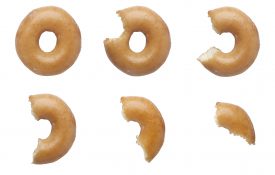
  • Donuts with bites taken out

    It’s the Last Bite That Keeps You Coming Back for More

    Your memory for that last bite of a steak or chocolate cake may be more influential than memory for the first bite in determining when you want to eat it again, according to research published

« FirstPrevious...102030...1,3771,3781,3791,3801,381...1,3901,4001,410...NextLast »
  • Who We Are
  • Privacy Policy
  • Contact Us
  • Donate
  • Advertising
  • Follow APS
  • Facebook Logo link to APS's Facebook
  • BlueSky Logo link to APS's BlueSky
  • Youtube Logo link to APS's YouTube
  • Instagram Logo link to APS's Instagram
  • LinkedIn Logo link to APS's LinkedIn
  • Twitter Logo link to APS's Twitter

© Association for Psychological Science

Cookies
We use cookies on our website to give you the most relevant experience by remembering your preferences and repeat visits. By clicking “Accept”, you consent to the use of ALL the cookies. To accept or reject certain categories of cookies specifically please click the Cookie Settings link. Please read our Cookie Policy for more information.
Do not sell my personal information.
Cookie settingsAccept Reject
Privacy & Cookies Policy

Privacy Overview

This website uses cookies to improve your experience while you navigate through the website. Out of these cookies, the cookies that are categorized as necessary are stored on your browser as they are essential for the working of basic functionalities of the website. We also use third-party cookies that help us analyze and understand how you use this website. These cookies will be stored in your browser only with your consent. You also have the option to opt-out of these cookies. But opting out of some of these cookies may have an effect on your browsing experience.
Necessary
Always Enabled
Necessary cookies are absolutely essential for the website to function properly. This category only includes cookies that ensures basic functionalities and security features of the website. These cookies do not store any personal information.
Functional
Functional cookies help to perform certain functionalities like sharing the content of the website on social media platforms, collect feedbacks, and other third-party features.
CookieDurationDescription
__cf_bm30 minutesThis cookie, set by Cloudflare, is used to support Cloudflare Bot Management.
Performance
Performance cookies are used to understand and analyze the key performance indexes of the website which helps in delivering a better user experience for the visitors.
CookieDurationDescription
AWSELBCORS5 minutesThis cookie is used by Elastic Load Balancing from Amazon Web Services to effectively balance load on the servers.
Analytics
Analytical cookies are used to understand how visitors interact with the website. These cookies help provide information on metrics the number of visitors, bounce rate, traffic source, etc.
CookieDurationDescription
at-randneverAddThis sets this cookie to track page visits, sources of traffic and share counts.
CONSENT2 yearsYouTube sets this cookie via embedded youtube-videos and registers anonymous statistical data.
uvc1 year 27 daysSet by addthis.com to determine the usage of addthis.com service.
_ga2 yearsThe _ga cookie, installed by Google Analytics, calculates visitor, session and campaign data and also keeps track of site usage for the site's analytics report. The cookie stores information anonymously and assigns a randomly generated number to recognize unique visitors.
_gat_gtag_UA_3507334_11 minuteSet by Google to distinguish users.
_gid1 dayInstalled by Google Analytics, _gid cookie stores information on how visitors use a website, while also creating an analytics report of the website's performance. Some of the data that are collected include the number of visitors, their source, and the pages they visit anonymously.
Advertisement
Advertisement cookies are used to provide visitors with relevant ads and marketing campaigns. These cookies track visitors across websites and collect information to provide customized ads.
CookieDurationDescription
loc1 year 27 daysAddThis sets this geolocation cookie to help understand the location of users who share the information.
VISITOR_INFO1_LIVE5 months 27 daysA cookie set by YouTube to measure bandwidth that determines whether the user gets the new or old player interface.
YSCsessionYSC cookie is set by Youtube and is used to track the views of embedded videos on Youtube pages.
yt-remote-connected-devicesneverYouTube sets this cookie to store the video preferences of the user using embedded YouTube video.
yt-remote-device-idneverYouTube sets this cookie to store the video preferences of the user using embedded YouTube video.
yt.innertube::nextIdneverThis cookie, set by YouTube, registers a unique ID to store data on what videos from YouTube the user has seen.
yt.innertube::requestsneverThis cookie, set by YouTube, registers a unique ID to store data on what videos from YouTube the user has seen.
Others
Other uncategorized cookies are those that are being analyzed and have not been classified into a category as yet.
SAVE & ACCEPT
Powered by CookieYes Logo