
Winners Announced for the APS Share Your Science Competition

In early 2026, the APS Advocacy Task Force invited psychological scientists across the globe to participate in a social media video competition designed to bring the importance of psychological science to the public.
The project aimed to mobilize scientists to communicate their stories and research, as well as the real-world impact of their work, through compelling, accessible social media videos to spread the word beyond APS membership. To convey the importance of their research, participants were asked to answer two questions:
- What should the public know about your research?
- Why is your research important, and how does it make a difference in people’s lives?
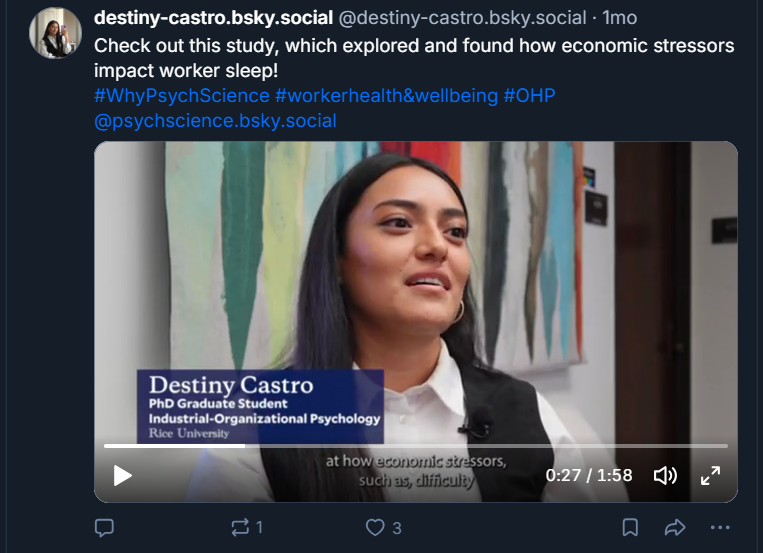
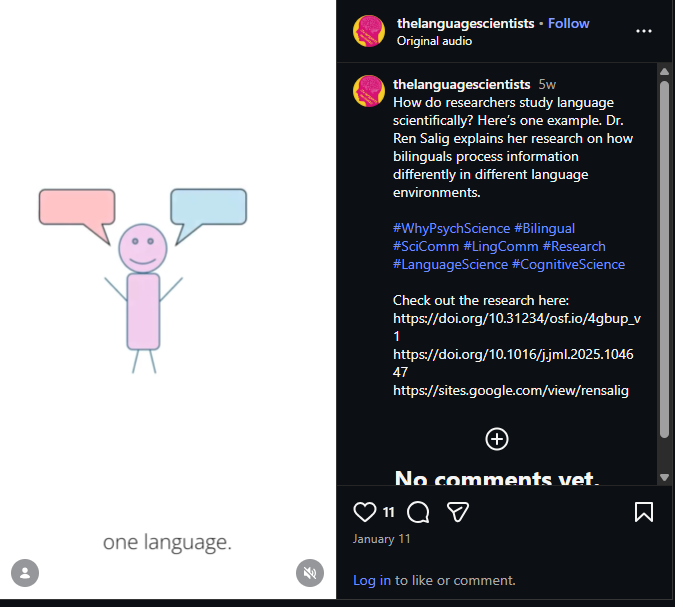
The Advocacy Task Force awarded two participants with first place: Destiny Castro (Rice University), on how economic stressors impact sleep, and Lauren Salig (University of Michigan), who explained how bilinguals process information differently in different language environments. Both first-place prize winners will receive complimentary registration to the 2026 APS Annual Convention, a one-year APS membership, and have their video showcased at the 2026 Annual Convention in Barcelona, Spain.
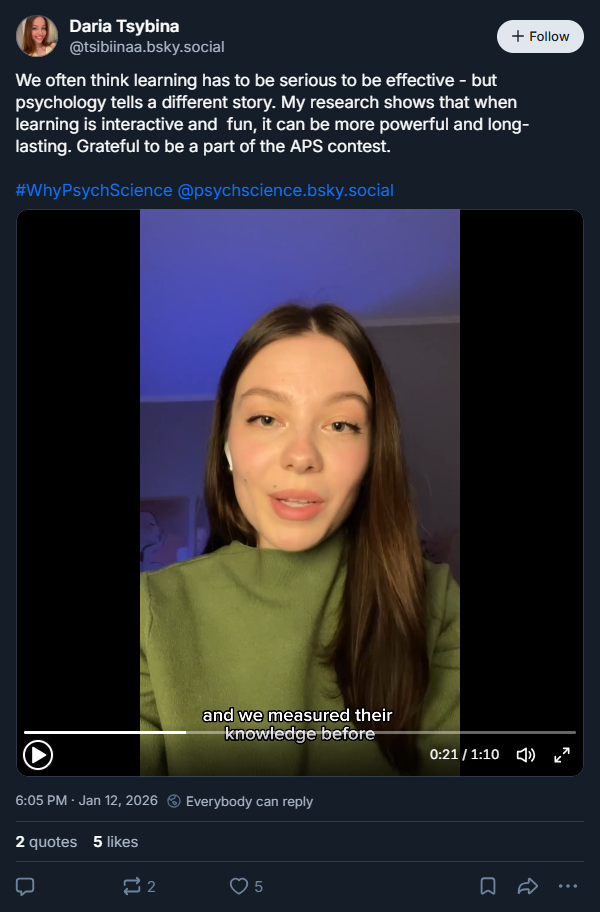
The second-place prize, which includes a complimentary registration to the 2026 APS Convention and a one-year APS membership, was awarded to Daria Tsybina (Pacific University) for her video on interactive learning and its long-lasting impacts.
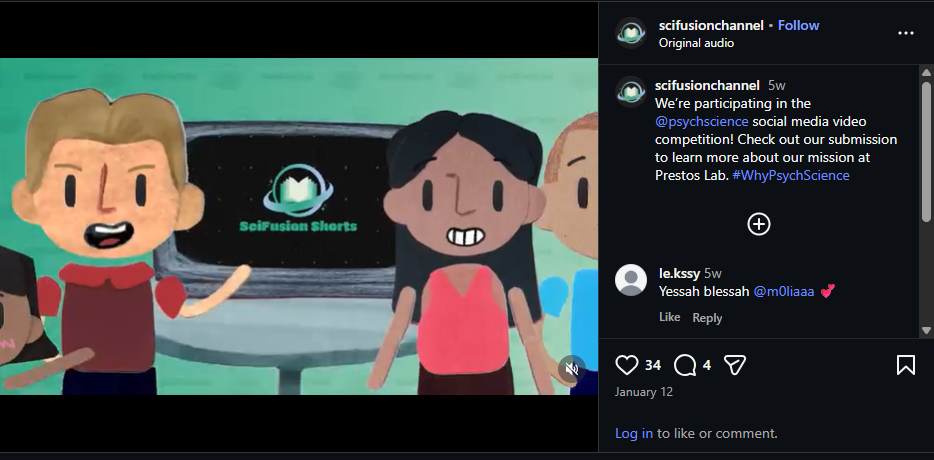
Maria Sun (University of Michigan) was awarded third place for her video introducing the SciFusion Channel, a hub to make psychological science research digestible in video format, and will receive a one-year APS membership.
Congratulations to the winning participants!
Explore the APS Advocacy & Policy hub, your gateway to up-to-date policy statements, expert analysis, action tools, and resources to engage meaningfully with legislation, funding decisions, and public discourse.
Feedback on this article? Email [email protected] or login to comment.



APS regularly opens certain online articles for discussion on our website. Effective February 2021, you must be a logged-in APS member to post comments. By posting a comment, you agree to our Community Guidelines and the display of your profile information, including your name and affiliation. Any opinions, findings, conclusions, or recommendations present in article comments are those of the writers and do not necessarily reflect the views of APS or the article’s author. For more information, please see our Community Guidelines.
Please login with your APS account to comment.