
Science for Society: The Science of Stress Management Interventions and Resilience
Scientific Insights on Stress Management
Stress is an inescapable aspect of life. Some experience more than others, but we all deal with it on some level. This webinar focused on stress-related responses, measurements, and stigma—and how resilience can help us manage stress.
Ryan L. Brown, an assistant professor of human development and family sciences at Texas Tech University, discussed how stress can be measured and how the measurements of stress are one of the most important aspects of stress research. She gave the example of a study which measured stress levels by asking participants how often they felt stressed. However, as Brown explained, the researchers did not include qualifiers such as a time frame, whether the event was a specific incident, the phases of a person’s life, or cultural differences.
“Our language really matters,” Brown emphasized. “Describing our science, especially our stress science, with precise language is critical. And it’s especially critical to helping people navigate this complex world with so many options and so many solutions that are marketed to us.”
A. Janet Tomiyama, a health psychology professor at the University of California, Los Angeles, discussed how stress also relates to weight stigma. Despite the belief that stigmatizing people based on weight will lead to a decrease in obesity rates, Tomiyama’s research has found the opposite effect.
Her findings, especially those involving young girls, suggest that girls who experience weight stigma at a young age are more likely to become obese later. But addressing this problem is more than simply telling people to lose weight, Tomiyama argued.
“I think resilience sometimes puts the onus of change on the victims of stress, or on the victims of stigma,” she said. “When really, we need to be going a little bit more upstream to changing society, changing structures, changing the institutions.”
David Creswell, a professor of psychology and neuroscience at Carnegie Mellon University, explored how resilience in the face of stress may differ from popular understanding. Creswell cited various studies that assess stress and resilience after significant losses such as the loss of a spouse or family member.
“These folks might have a little blip initially. But generally, their sort of psychological health or distress and depression stay at low levels,” Creswell said. “That really represents about 55%-85% of participants in these studies, so people are more resilient than we might think they might be.”
Speakers
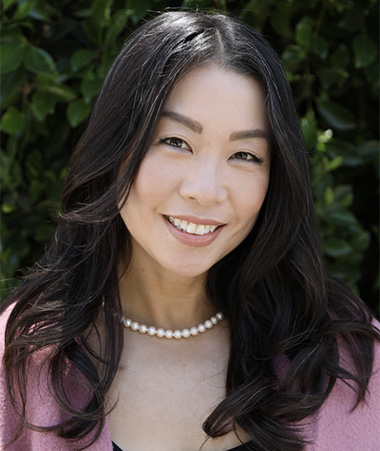
A. Janet Tomiyama
University of California, Los AngelesA. Janet Tomiyama, Ph.D., is Professor in the Department of Psychology at the University of California, Los Angeles and Director of the DIet, Stigma, and Health (DiSH) laboratory (www.dishlab.org). She earned her B.A. in Psychology from Cornell University in 2001, her Ph.D. in Social Psychology at the University of California, Los Angeles in June of 2009, and completed a Robert Wood Johnson Foundation Health & Society Scholar Fellowship jointly at the University of California San Francisco and Berkeley. Her work has been recognized by early career awards from the Association for Psychological Science, the Society for Behavioral Medicine, and the Society for Health Psychology. She is also the recipient of the UCLA Life Sciences Excellence in Promotion of Diversity & Inclusion Award, the Undergraduate Research Mentoring Award, and the Distinguished Faculty Teaching Award. Her research, which has been funded by the National Institutes of Health, the National Science Foundation, and the Robert Wood Johnson Foundation, focuses on the biobehavioral and health consequences of stress, dieting, comfort eating, and weight stigma.
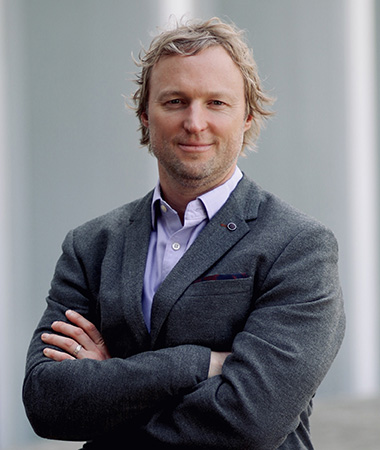
David Creswell
Carnegie Mellon University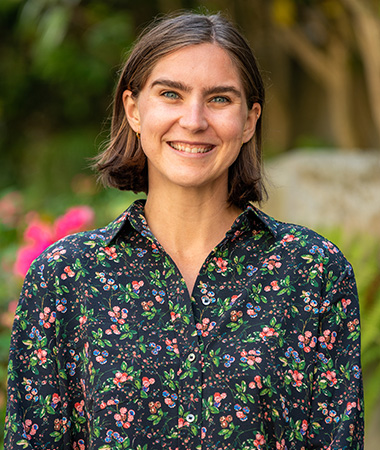
Ryan L. Brown
Texas Tech UniversityRyan L. Brown is an Assistant Professor of Human Development and Family Sciences at Texas Tech University where she leads the Stress, Aging, and Relationships (STAR) Lab. Her research explores how fundamental human experiences like love and loss contribute to biopsychosocial health as people age. In this work, she often focuses on stress-response processes to better understand social contributions to healthy aging. Dr. Brown is also the Director of Scientific Communications for the NIA/UCSF Stress Measurement Network and hosts the Stress Puzzle podcast to widely disseminate high-quality stress science.
