
-
A Troubling Prognosis for Migrant Children in Detention: ‘The Earlier They’re Out, the Better’
Some youngsters retreat entirely, their eyes empty, bodies limp, their isolation a wall of defiance. Others cannot sit still: watchful, hyperactive, ever uncertain. Some compulsively jump into the laps of strangers, or grab their legs and hold on for life. And some children, somehow, move past a sudden separation from their parents, tapping a well of resilience. The Trump administration’s policy of separating migrant children from their parents has alarmed child psychologists and experts who study human development. It is not clear how long the administration plans to hold onto the 2,000 children in detention centers near the border, nor how long before they are returned to their families.
-
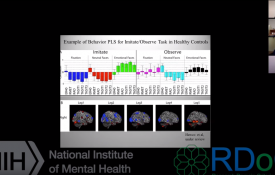
Webinar: Analyzing and Using RDoC Data in Your Research
Watch a recent webinar featuring three NIMH-funded researchers discussing how to analyze and integrate RDoC data.
-
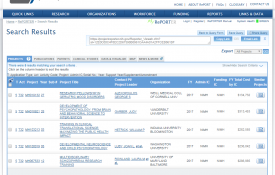
NIH Training Grants Involving RDoC
Run a search on NIH RePORTER for T32 awards (training grants) that mention RDoC.
-
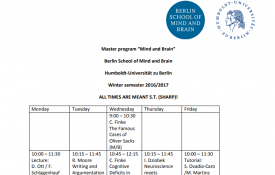
Sample RDoC Semester Course Syllabus
View a course syllabus centered on RDoC used at Berlin School of Mind and Brain.
-
RDoC Bootcamp Slides
Learn about applying for grants related to RDoC in slides by APS Fellow Ian Gotlib and Leanne Williams.
-

Around the World, People Have Surprisingly Modest Notions of the Ideal Life
Rather than being “maximizers,” people seem to aspire to moderate ideal levels of traits, such as pleasure, intelligence, personal freedom, and longevity.
