Science for Society: Cultures of Intelligence: Rethinking Human-AI Interaction Through a Global Lens
How AI Adoption Varies Across the Globe
The use of artificial intelligence (AI) is growing exponentially, but it’s perceived and used differently across different societies. This APS Science for Society webinar focused on the potential harms and effective uses of AI across cultures.
Kentaro Toyama, a computer scientist and international development researcher at the University of Michigan, explained how different socio-political and economic groups have been affected differently by AI and technology. For example, social media has increased political polarization because it allowed people to communicate with those they already agreed with, Toyama said.
“My underlying belief is that, for the most part, technology amplifies underlying human forces,” Toyama said. “And of course, AI is a kind of technology, so we can apply that thinking to AI.”
Katherine Aumer, a social psychologist at the University of Hawaiʻi—West Oʻahu, said more cultures can use AI without feeling alienated. Aumer discussed two types of trust—emotional and cognitive. Cognitive trust may occur when people recognize that AI can be used to produce something of value. Emotional trust involves people feeling safe using technology. Levels of trust differ between students who come from different backgrounds, she explained.
Aumer said a large portion of her work focuses on cultivating trust and a sense of belonging among groups that may feel alienated by technology.
“And when technology tends to ignore that, people can often feel alienated, even hostile towards it,” she said. “And then it exacerbates the problem of more lack of representation, or more of an issue of not being represented in that group.”
Sanae Okamoto, a psychologist and behavioral scientist at United Nations University-Maastricht Economic and Social Research Institute on Innovation and Technology, discussed how AI is being used for innovation in the fields of climate research, disaster prevention, and economics. She discussed how AI is seen differently between individualist and collectivist cultures. “Recent studies suggest that individuals from Western and individualistic cultures often see AI as an external threat to their autonomy, creativity, and privacy. In contrast, people from non-Western collectivistic cultures tend to view it as an extension of the self, promoting great acceptance of AI, not only individually but also at the corporate level,” said Okamoto.
AI is being used for life saving technology like disaster prediction, and for existential threats like climate change, but it must be used with caution and transparency, Okamoto said.
”Importantly, the principles of transparency and accountability are paramount,” she said. Users need to understand how AI operates and who is responsible for its outcomes. And this is crucial for building trust in AI.
“And finally, and perhaps most importantly, we must proactively assess the long-term societal impacts of AI to engage a broad range of stakeholders to ensure AI truly serves humanity.”
Speakers

Katherine Aumer
University of Hawaiʻi – West Oʻahu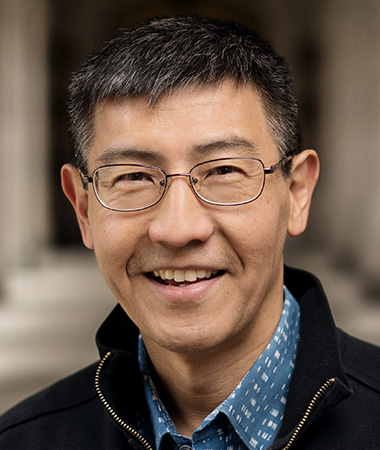
Kentaro Toyama
University of MichiganKentaro Toyama is W. K. Kellogg Professor of Community Information at the University of Michigan School of Information, a fellow of the Dalai Lama Center for Ethics and Transformative Values at MIT, and author of Geek Heresy: Rescuing Social Change from the Cult of Technology.