
Professional Development: Conference Tips II: Delivering Clear Research Talks

There is no doubt that giving a clear and engaging research talk is a skill that requires practice, preparation, and forethought. But by keeping a few tips in mind, this skill can be accessible to anyone willing to put in the time and effort. In this webinar, four researchers shared the elements that guide them when planning their own talks.
Emily Fyfe, an associate professor of psychological and brain sciences at Indiana University, used four bold icons to organize the four key concepts of her talk: a fishhook, a clipboard, a picture frame, and a wrapped present.
She described how each icon represented an important structural element of a clear research talk, starting with the introduction (fishhook), which symbolized catching the interest of your audience in the beginning with a story, vignette, or question that alludes to the mystery the talk will solve.
Then came the methods (clipboard), results (picture frame), and conclusion (wrapped present).
“We want you to be able to visualize your data,” said Fyfe, an APS Janet Taylor Spence Award recipient, while discussing the results section. “We want to be able to visualize what you found in a really powerful way.”
Timo Roettger, a professor of linguistics at the University of Oslo, emphasized the importance of clean design elements when planning the visual aspects of a presentation. Planning slide design by thinking about the experience of your audience during the talk can be a great guide to deciding how to simplify the information presented, he said.
For example, he suggested using less text on each slide, because it is difficult for audiences to read and listen simultaneously.
“Letting your audience read and listen at the same time is like the Japanese proverb: chasing two hares but getting none,” he said.
Robert Sellers, professor of psychology at the University of Michigan, organized his presentation by asking a series of metacognitive questions: Who? What? When? Where? And why? Sellers has received several honors from APS, including the APS mentor award, the James S. Jackson award, and an APS fellowship.
“These are the questions I tend to ask myself before I do any talk,” he said, adding that the answer to these questions help to frame the content of the presentation.
Knowing who you are as a presenter, for example, and what you want your audience to know about you can help you decide what to share and what to leave out. Similarly, he advised attendees to think about who the audience is, what they are interested in, and what their expectations for the talk may be.
Alexa Tompany, an assistant professor of psychological and brain sciences at Drexler University, rounded out the webinar with her tips on data visualization.
She told attendees that it is important to think about the information you are trying to share and how to best convey it, suggesting that though bar charts are a common choice, they are not always the best option. Depending on the nature of the data, presenters may want to consider other options such as box plots, scatter plots, or violin plots – each of which highlights something different about the data.
Tompany also said it’s important to talk slowly and walk through each element of data visualization, from the axes of the graph to the story the data is telling. She demonstrated how she animates her slides so one element of a chart pops up at a time.
“The audience has not seen your data before. You have seen it hundreds of times,” she said. “You think you are taking enough time to unpack it. You are probably not.”
What you will learn:
- How to structure a clear and engaging research talk
- What questions to ask yourself to best prepare
- How to consider smart design elements to tell the story of your research
- Ways to present your data so you know your audience will understand
Speakers
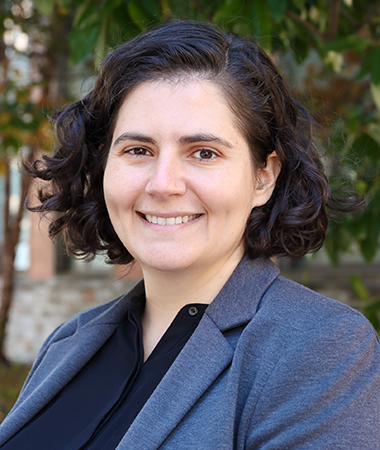
Alexa Tompany
Alexa Tompary is an assistant professor in the Department of Psychological and Brain Sciences at Drexel University. She received her PhD in Psychology from New York University and completed her post-doctoral training at the University of Pennsylvania. Her lab cognitive neuroscience methods to understand how the brain stores, organizes, and transforms memories for new events.
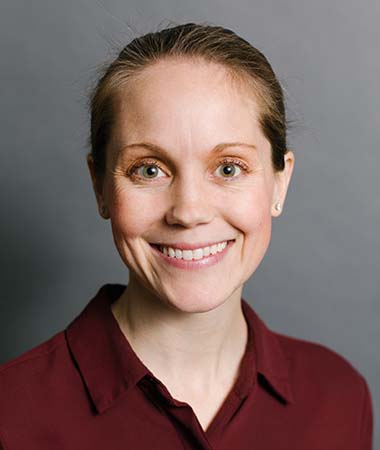
Emily Fyfe
Emily Fyfe is an associate professor in the Department of Psychological and Brain Sciences at Indiana University. She received her PhD in Developmental Psychology from Vanderbilt University, and her research interests center on the science of learning and cognitive development with an emphasis on children’s knowledge of mathematics.
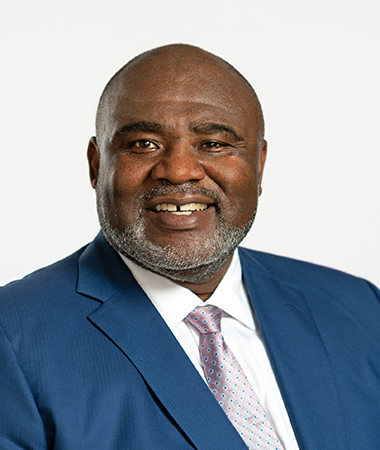
Robert Sellers
Robert M. Sellers is the James S. Jackson Professor of Psychology at the University of Michigan. He received his PhD in Personality Psychology at the University of Michigan. His research interest focuses on the role of race in the psychological lives of African Americans.

Timo Roettger
Timo Roettger is a professor of linguistics at the University of Oslo. He received his PhD in phonetics from the University of Cologne and currently works on language evolution and metascience.
