
-
Consumer Product Safety Commission begins to consider bans in addition to warning labels
The Washington Post: Today, warnings are so pervasive that they’ve become a nearly meaningless safety tool in some areas, more useful in protecting manufacturers against legal liability than in guarding consumers from harm, according to David Egilman, a clinical professor at Brown University’s family medicine department who has researched industry’s influence on warnings. “If everything you pick up has a warning on it, you’re going to instinctively ignore all warnings,” Egilman said. “That’s the real problem.” It’s the classic “cry wolf” situation, said Richard Thompson, a psychology and biological sciences professor at the University of Southern California.
-
Can watching the news can make you sick?
Yahoo: Watching the evening news can be a harrowing experience. Sometimes it seems like the world is rife with disaster, war, violence and nothing else, and the advent of 24-hour news networks means we can tune in anytime. Many of us do consume hours of news a day, and now the results of a new study indicate that watching extensive coverage of violent images of war and disaster can have negative health impacts.
-
The secret of beating fear? Just talk about your emotions, say researchers
The Daily Mail: Simply describing your feelings at stressful times can make you less anxious, researchers have claimed. UCLA research into people who were terrified of spiders found that by simply talking about their fear, they were able to deal with it - and even touch a tarantula. The psychologists asked 88 people with a fear of spiders to approach a large, live tarantula in an open container outdoors. The participants were told to walk closer and closer to the spider and eventually touch it if they could. The subjects were then divided into four groups and sat in front of another tarantula in a container in an indoor setting. Read the whole story: The Daily Mail
-
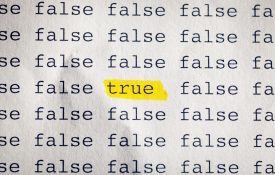
Misinformation: Psychological Science Shows Why It Sticks and How to Fix It
Childhood vaccines do not cause autism. Global warming is confirmed by science. And yet, many people believe claims to the contrary. Why does misinformation stick?
-
Early Music Lessons Have Longtime Benefits
The New York Times: When children learn to play a musical instrument, they strengthen a range of auditory skills. Recent studies suggest that these benefits extend all through life, at least for those who continue to be engaged with music. But a study published last month is the first to show that music lessons in childhood may lead to changes in the brain that persist years after the lessons stop. Researchers at Northwestern University recorded the auditory brainstem responses of college students — that is to say, their electrical brain waves — in response to complex sounds.
-
Babies learn humour from parents: study
The Telegraph: Researchers discovered that between the ages of six months and one year, small children learn what is absurdly funny by watching the reaction of their parents. A study of 30 children carried out by Dr Gina Mireault of Johnson State College and Dr John Sparrow at the University of New Hampshire, in America, involved recording the reaction of babies watching normal and absurd events. The project explored whether 6-month-olds look to their parents for emotional guidance during absurd events, a phenomenon known as 'social referencing'. Read the whole story: The Telegraph
