
-
We’re Not Speaking as Much as We Used To — And Scientists are Concerned
People aren't talking to each other as much as they used to, and our gift of gab and our cognition may suffer as a result. Scientists compared the number of words people spoke per day over nearly a decade and a half. Valeria Pfeifer, from the University of Missouri-Kansas City, said they found that in 2019, people spoke an average of about 12,700 words per day compared to 15,900 back in 2005. The decline was significantly worse in younger individuals than older, leading the scientists to suggest the rise in smartphone use and social media may be playing a role. The study is in the journal Perspectives on Psychological Science.
-

For Young Adults, Recollection of Alcohol Addiction May Differ From Reality
When young adults are asked to recall their drinking habits, their recollections may not always match what actually happened in their day-to-day lives, a new study suggests.
-
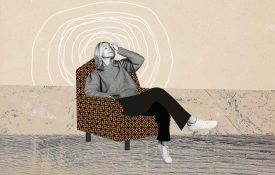
The New Midlife Crisis: Mental and Cognitive Health in Middle-Aged Americans Is Declining
Research has shown that nations with more income inequality, including the United States, have higher levels of loneliness.
-

New Content From Advances in Methods and Practices in Psychological Science
A sampling of recent content covering Large Language Models & AI, statistical methods, culture and more.
-
Edna Foa, Who Pioneered Exposure Therapy to Treat PTSD, Dies at 88
Edna Foa, an Israeli American psychologist who pressed her field — and her patients — to more directly confront fear and anxiety, revolutionizing the treatment of post-traumatic stress disorder, died on March 24 at a hospital in Philadelphia. She was 88.
-
‘Moon Joy’ and the Overview Effect—How Views from Space Change Us
“The moon we are looking at is not the moon you see from Earth whatsoever.” That’s how Artemis II astronaut Christina Koch described our natural satellite as the mission’s spacecraft drew closer to the moon on April 4. ... During these experiences, our perspective of the world seems to zoom out or to flip to a different angle, adds Michelle Shiota, a social psychologist at Arizona State University. This feeling tends to make us feel small and to put our daily problems in perspective. The “zoom out” of going to space is probably “the greatest version of that experience that humans are capable of,” Shiota says.
