
• News & Research
    • Research Topics
    • Podcasts & Videos
  • Conventions & Events
    • 2026 APS Annual Convention
    • Webinars & Virtual Events
    • Past and Future Conventions
  • Journals
    • Psychological Science
    • Current Directions in Psychological Science
    • Psychological Science in the Public Interest
    • Perspectives on Psychological Science
    • Clinical Psychological Science
    • Advances in Methods and Practices in Psychological Science
    • Advances in Psychological Science Open
  • Advocacy & Policy
    • Policy & Position Statements
  • The Observer 
    • Archive
    • About the Observer
    • Advertising
    • Contact the Editor
    • Presidential Columns
  • Members
    • Awards & Honors
    • Member Directory
    • Lifetime Members
    • Student Members
    • Teaching of Psychology
    • Donors
  • Career Resources
    • Employment
  • About
    • Diversity, Equity, & Inclusion
    • Board of Directors 2025-2026
    • Staff Directory
    • Ethics Policy & Code of Conduct
APS Homepage
APS
  • Login
  • Join APS
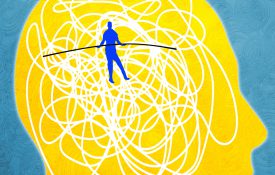
  • This is an illustration of a person navigating inside a person's head.

    Mental Flexibility May Buffer Against Emotional Stress

    Brain imaging research suggests that our ability to do “cold” math calculations may be connected with our ability to regulate “hot” emotions.

  • Does Chess Make You Smarter?

    The Wall Street Journal: It’s a popular notion that learning chess can make you smarter. Chess clubs and federations around the world promote the game for inclusion in school curricula, especially at the elementary level. In Armenia, every second-, third- and fourth-grader takes a chess class. American “tiger parents” often see chess lessons in the same light as music and computer classes—a way to give their children a leg up in the quest for better grades and admission to an elite college. The game of kings has long been associated with intelligence, and chess grandmasters are capable of astounding mental feats.

  • A Lesson For Preschools: When It’s Done Right, The Benefits Last

    NPR: Is preschool worth it? Policymakers, parents, researchers and us, at NPR Ed, have spent a lot of time thinking about this question. We know that most pre-kindergarten programs do a good job of improving ' specific skills like phonics and counting, as well as broader social and emotional behaviors, by the time students enter kindergarten. Just this week, a study looking at more than 20,000 students in a state-funded preschool program in Virginia found that kids made large improvements in their alphabet recognition skills. ...

  • HOW TWO TRAILBLAZING PSYCHOLOGISTS TURNED THE WORLD OF DECISION SCIENCE UPSIDE DOWN

    Vanity Fair: The dozen or so graduate students in Danny Kahneman’s seminar at Hebrew University, in Jerusalem, were all surprised when, in the spring of 1969, Amos Tversky turned up. Danny never had guests: The seminar, called Applications of Psychology, was his show. Amos’s interests were about as far removed from the real-world problems in Applications of Psychology as a psychologist’s could be. Amos himself seemed about as far removed from Danny as he could be. Danny had spent years of his childhood hiding in barns and chicken coops in France, from the Nazis who hunted him.

  • New Research From Clinical Psychological Science

    Read about the latest research published in Clinical Psychological Science: The Vicissitudes of Positive Autobiographical Recollection as an Emotion Regulation Strategy in Depression Aliza Werner-Seidler, Laura Tan, and Tim Dalgleish In this study, the authors examined whether the concordance or discrepancy of a memory with the person's current self impacts the effect of that memory on mood. Depressed and never-depressed British participants rated their mood; never-depressed participants then watched a video designed to induce a sad mood, whereas depressed participants watched a neutral movie.

  • Psychologists argue about whether smiling makes cartoons funnier

    Nature: A large, multi-lab replication study has found no evidence to validate one of psychology’s textbook findings: the idea that people find cartoons funnier if they are surreptitiously induced to smile. But an author of the original report — published nearly three decades ago — says that the new analysis has shortcomings, and may not represent a direct replication of his work. In 1988, Fritz Strack, a psychologist now at the University of Würzburg, Germany, and colleagues found that people who held a pen between their teeth, which induces a smile, rated cartoons as funnier than did those who held a pen between their lips, which induced a pout, or frown1.

« FirstPrevious...102030...851852853854855...860870880...NextLast »
  • Who We Are
  • Privacy Policy
  • Contact Us
  • Donate
  • Advertising
  • Follow APS
  • Facebook Logo link to APS's Facebook
  • BlueSky Logo link to APS's BlueSky
  • Youtube Logo link to APS's YouTube
  • Instagram Logo link to APS's Instagram
  • LinkedIn Logo link to APS's LinkedIn
  • Twitter Logo link to APS's Twitter

© Association for Psychological Science

Cookies
We use cookies on our website to give you the most relevant experience by remembering your preferences and repeat visits. By clicking “Accept”, you consent to the use of ALL the cookies. To accept or reject certain categories of cookies specifically please click the Cookie Settings link. Please read our Cookie Policy for more information.
Do not sell my personal information.
Cookie settingsAccept Reject
Privacy & Cookies Policy

Privacy Overview

This website uses cookies to improve your experience while you navigate through the website. Out of these cookies, the cookies that are categorized as necessary are stored on your browser as they are essential for the working of basic functionalities of the website. We also use third-party cookies that help us analyze and understand how you use this website. These cookies will be stored in your browser only with your consent. You also have the option to opt-out of these cookies. But opting out of some of these cookies may have an effect on your browsing experience.
Necessary
Always Enabled
Necessary cookies are absolutely essential for the website to function properly. This category only includes cookies that ensures basic functionalities and security features of the website. These cookies do not store any personal information.
Functional
Functional cookies help to perform certain functionalities like sharing the content of the website on social media platforms, collect feedbacks, and other third-party features.
CookieDurationDescription
__cf_bm30 minutesThis cookie, set by Cloudflare, is used to support Cloudflare Bot Management.
Performance
Performance cookies are used to understand and analyze the key performance indexes of the website which helps in delivering a better user experience for the visitors.
CookieDurationDescription
AWSELBCORS5 minutesThis cookie is used by Elastic Load Balancing from Amazon Web Services to effectively balance load on the servers.
Analytics
Analytical cookies are used to understand how visitors interact with the website. These cookies help provide information on metrics the number of visitors, bounce rate, traffic source, etc.
CookieDurationDescription
at-randneverAddThis sets this cookie to track page visits, sources of traffic and share counts.
CONSENT2 yearsYouTube sets this cookie via embedded youtube-videos and registers anonymous statistical data.
uvc1 year 27 daysSet by addthis.com to determine the usage of addthis.com service.
_ga2 yearsThe _ga cookie, installed by Google Analytics, calculates visitor, session and campaign data and also keeps track of site usage for the site's analytics report. The cookie stores information anonymously and assigns a randomly generated number to recognize unique visitors.
_gat_gtag_UA_3507334_11 minuteSet by Google to distinguish users.
_gid1 dayInstalled by Google Analytics, _gid cookie stores information on how visitors use a website, while also creating an analytics report of the website's performance. Some of the data that are collected include the number of visitors, their source, and the pages they visit anonymously.
Advertisement
Advertisement cookies are used to provide visitors with relevant ads and marketing campaigns. These cookies track visitors across websites and collect information to provide customized ads.
CookieDurationDescription
loc1 year 27 daysAddThis sets this geolocation cookie to help understand the location of users who share the information.
VISITOR_INFO1_LIVE5 months 27 daysA cookie set by YouTube to measure bandwidth that determines whether the user gets the new or old player interface.
YSCsessionYSC cookie is set by Youtube and is used to track the views of embedded videos on Youtube pages.
yt-remote-connected-devicesneverYouTube sets this cookie to store the video preferences of the user using embedded YouTube video.
yt-remote-device-idneverYouTube sets this cookie to store the video preferences of the user using embedded YouTube video.
yt.innertube::nextIdneverThis cookie, set by YouTube, registers a unique ID to store data on what videos from YouTube the user has seen.
yt.innertube::requestsneverThis cookie, set by YouTube, registers a unique ID to store data on what videos from YouTube the user has seen.
Others
Other uncategorized cookies are those that are being analyzed and have not been classified into a category as yet.
SAVE & ACCEPT
Powered by CookieYes Logo