• News & Research
    • Research Topics
    • Podcasts & Videos
  • Conventions & Events
    • 2026 APS Annual Convention
    • Webinars & Virtual Events
    • Past and Future Conventions
  • Journals
    • Psychological Science
    • Current Directions in Psychological Science
    • Psychological Science in the Public Interest
    • Perspectives on Psychological Science
    • Clinical Psychological Science
    • Advances in Methods and Practices in Psychological Science
    • Advances in Psychological Science Open
  • Advocacy & Policy
    • Policy & Position Statements
  • The Observer 
    • Archive
    • About the Observer
    • Advertising
    • Contact the Editor
    • Presidential Columns
  • Members
    • Awards & Honors
    • Member Directory
    • Lifetime Members
    • Student Members
    • Teaching of Psychology
    • Donors
  • Career Resources
    • Employment
  • About
    • Diversity, Equity, & Inclusion
    • Board of Directors 2025-2026
    • Staff Directory
    • Ethics Policy & Code of Conduct
APS Homepage
APS
  • Login
  • Join APS
  • Help Apply Psychological Science to Improve Federal Programs with the U.S. Office of Evaluation Sciences

    The federal government’s premier organization applying behavioral science to improve federal programs is hiring. The Office of Evaluation Services (OES), a team of social and behavioral researchers applying their knowledge and skills in partnership with

  • The Best Music for Productivity? Silence

    The Atlantic: Like most modern “knowledge” workers, I spend my days in an open office. That means I also spend my days amid ringing phones, the inquisitive tones of co-workers conducting interviews, and—because we work in a somewhat old, infamous building—the pounding and drilling of seemingly endless renovations. Even so, the #content must still be wrung from my distracted brain. And so, I join the characters of trend pieces everywhere in wearing headphones almost all day, every day. And what better to listen to with headphones than music?

  • How to Help Kids Learn to Love Giving

    The Huffington Post: During the holidays, opportunities abound to help kids understand why and how to help people in need, with food drives proliferating and countless organizations making pitches for end-of-year donations. And there’s scientific evidence that kids should be receptive to those messages: Research suggests that they have a deeply rooted instinct to share and to help others, from the time they’re very young—one study even found that toddlers enjoy giving to others more than they like getting treats for themselves. Kids, it seems, have a strong, natural drive to be kind and generous. ...

  • The Ideal Mother Vs. The Ideal Worker

    NPR: A couple of weeks ago, I participated in a panel discussion about motherhood in academia. Along with other female professors with children, I answered questions from the audience, most of whom were female Ph.D. students thinking about whether and when to have children — and whether academia was the right choice for them. One of the questions — posed with greater eloquence and context — was essentially this: Is it possible to be a good academic and also a good mother? Read the whole story: NPR

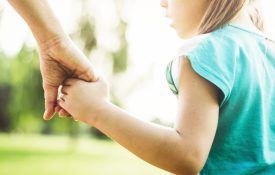
  • Mother is walking with her daughter in the park and holding hands..

    Children Can ‘Catch’ Social Bias Through Nonverbal Signals Expressed by Adults

    Preschool-aged children can learn bias even through nonverbal signals displayed by adults, such as a condescending tone of voice or a disapproving look.

  • New Research From Psychological Science

    Read about the latest research published in Psychological Science: On Learning Natural-Science Categories That Violate the Family-Resemblance Principle Robert M. Nosofsky, Craig A. Sanders, Alex Gerdom, Bruce J. Douglas, and Mark A. McDaniel A classical view of psychology suggests that categories are formed based on family resemblance: Members of a category have a group of features in common that are not shared with members of other categories; however, not all categories have been found to adhere to the family-resemblance principle.

« FirstPrevious...102030...837838839840841...850860870...NextLast »
  • Who We Are
  • Privacy Policy
  • Contact Us
  • Donate
  • Advertising
  • Follow APS
  • Facebook Logo link to APS's Facebook
  • BlueSky Logo link to APS's BlueSky
  • Youtube Logo link to APS's YouTube
  • Instagram Logo link to APS's Instagram
  • LinkedIn Logo link to APS's LinkedIn
  • Twitter Logo link to APS's Twitter

© Association for Psychological Science

Cookies
We use cookies on our website to give you the most relevant experience by remembering your preferences and repeat visits. By clicking “Accept”, you consent to the use of ALL the cookies. To accept or reject certain categories of cookies specifically please click the Cookie Settings link. Please read our Cookie Policy for more information.
Do not sell my personal information.
Cookie settingsAccept Reject
Privacy & Cookies Policy

Privacy Overview

This website uses cookies to improve your experience while you navigate through the website. Out of these cookies, the cookies that are categorized as necessary are stored on your browser as they are essential for the working of basic functionalities of the website. We also use third-party cookies that help us analyze and understand how you use this website. These cookies will be stored in your browser only with your consent. You also have the option to opt-out of these cookies. But opting out of some of these cookies may have an effect on your browsing experience.
Necessary
Always Enabled
Necessary cookies are absolutely essential for the website to function properly. This category only includes cookies that ensures basic functionalities and security features of the website. These cookies do not store any personal information.
Functional
Functional cookies help to perform certain functionalities like sharing the content of the website on social media platforms, collect feedbacks, and other third-party features.
CookieDurationDescription
__cf_bm30 minutesThis cookie, set by Cloudflare, is used to support Cloudflare Bot Management.
Performance
Performance cookies are used to understand and analyze the key performance indexes of the website which helps in delivering a better user experience for the visitors.
CookieDurationDescription
AWSELBCORS5 minutesThis cookie is used by Elastic Load Balancing from Amazon Web Services to effectively balance load on the servers.
Analytics
Analytical cookies are used to understand how visitors interact with the website. These cookies help provide information on metrics the number of visitors, bounce rate, traffic source, etc.
CookieDurationDescription
at-randneverAddThis sets this cookie to track page visits, sources of traffic and share counts.
CONSENT2 yearsYouTube sets this cookie via embedded youtube-videos and registers anonymous statistical data.
uvc1 year 27 daysSet by addthis.com to determine the usage of addthis.com service.
_ga2 yearsThe _ga cookie, installed by Google Analytics, calculates visitor, session and campaign data and also keeps track of site usage for the site's analytics report. The cookie stores information anonymously and assigns a randomly generated number to recognize unique visitors.
_gat_gtag_UA_3507334_11 minuteSet by Google to distinguish users.
_gid1 dayInstalled by Google Analytics, _gid cookie stores information on how visitors use a website, while also creating an analytics report of the website's performance. Some of the data that are collected include the number of visitors, their source, and the pages they visit anonymously.
Advertisement
Advertisement cookies are used to provide visitors with relevant ads and marketing campaigns. These cookies track visitors across websites and collect information to provide customized ads.
CookieDurationDescription
loc1 year 27 daysAddThis sets this geolocation cookie to help understand the location of users who share the information.
VISITOR_INFO1_LIVE5 months 27 daysA cookie set by YouTube to measure bandwidth that determines whether the user gets the new or old player interface.
YSCsessionYSC cookie is set by Youtube and is used to track the views of embedded videos on Youtube pages.
yt-remote-connected-devicesneverYouTube sets this cookie to store the video preferences of the user using embedded YouTube video.
yt-remote-device-idneverYouTube sets this cookie to store the video preferences of the user using embedded YouTube video.
yt.innertube::nextIdneverThis cookie, set by YouTube, registers a unique ID to store data on what videos from YouTube the user has seen.
yt.innertube::requestsneverThis cookie, set by YouTube, registers a unique ID to store data on what videos from YouTube the user has seen.
Others
Other uncategorized cookies are those that are being analyzed and have not been classified into a category as yet.
SAVE & ACCEPT
Powered by CookieYes Logo