
• News & Research
    • Research Topics
    • Podcasts & Videos
  • Conventions & Events
    • 2026 APS Annual Convention
    • Webinars & Virtual Events
    • Past and Future Conventions
  • Journals
    • Psychological Science
    • Current Directions in Psychological Science
    • Psychological Science in the Public Interest
    • Perspectives on Psychological Science
    • Clinical Psychological Science
    • Advances in Methods and Practices in Psychological Science
    • Advances in Psychological Science Open
  • Advocacy & Policy
    • Policy & Position Statements
  • The Observer 
    • Archive
    • About the Observer
    • Advertising
    • Contact the Editor
    • Presidential Columns
  • Members
    • Awards & Honors
    • Member Directory
    • Lifetime Members
    • Student Members
    • Teaching of Psychology
    • Donors
  • Career Resources
    • Employment
  • About
    • Diversity, Equity, & Inclusion
    • Board of Directors 2025-2026
    • Staff Directory
    • Ethics Policy & Code of Conduct
APS Homepage
APS
  • Login
  • Join APS
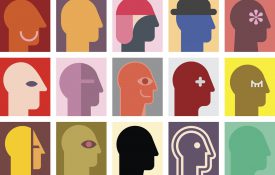
  • This is an illustration of diverse and colorful silhouettes of human heads

    Science Shows How Faces Guide, and Reflect, Our Social Lives

    A special issue of Current Directions in Psychological Science illuminates the myriad ways in which face perception infuses our thinking and behavior.

  • When Your Child Is a Psychopath

    The Atlantic: This is a good day, Samantha tells me: 10 on a scale of 10. We’re sitting in a conference room at the San Marcos Treatment Center, just south of Austin, Texas, a space that has witnessed countless difficult conversations between troubled children, their worried parents, and clinical therapists. But today promises unalloyed joy. Samantha’s mother is visiting from Idaho, as she does every six weeks, which means lunch off campus and an excursion to Target. The girl needs supplies: new jeans, yoga pants, nail polish. ... Psychopaths not only fail to recognize distress in others, they may not feel it themselves.

  • The Making Of Emotions, From Pleasurable Fear To Bittersweet Relief

    NPR: Emotions, the classic thinking goes, are innate, basic parts of our humanity. We are born with them, and when things happen to us, our emotions wash over us. "They happen to us, almost," says Lisa Feldman Barrett, a professor of psychology at Northeastern University and a researcher at Harvard Medical School and the Massachusetts General Hospital. She's also the author of a book called How Emotions Are Made: The Secret Life of the Brain. In it, she argues for a new theory of emotions which is featured in the latest episode of NPR's program and podcast Invisibilia. Read the whole story: NPR

  • The Benefits of Talking to Yourself

    The New York Times: A stranger approached me at a grocery store. “Do you need help finding something?” he asked. At first, I wasn’t sure what he meant. Then the realization kicked in: I was talking out loud, to myself, in public. It was a habit I’d grown so comfortable with that I didn’t even realize I was doing it. The fairly common habit of talking aloud to yourself is what psychologists call external self-talk. And although self-talk is sometimes looked at as just an eccentric quirk, research has found that it can influence behavior and cognition. “Language provides us with this tool to gain distance from our own experiences when we’re reflecting on our lives.

  • 2018 Cognitive Aging Conference Now Accepting Submissions

    The biennial 2018 Cognitive Aging Conference, hosted by the Georgia Institute of Technology, will be held on May 3–6, 2018, in Atlanta, Georgia at the JW Marriott hotel in the Buckhead area of the city. There are different deadlines for symposium and paper submissions. Externally organized symposium proposals are due Sept 15, 2017. Symposia should target either a 90 minute or 2-hour time slot with presentations by 3–4 speakers, discussant optional. Submissions of abstracts for stand-alone posters or papers are due November 15, 2017. For more information, please visit the conference website.

  • REMEMBERING THE MURDER YOU DIDN’T COMMIT

    The New Yorker: When Ada JoAnn Taylor is tense, she thinks she can feel the fabric of a throw pillow in the pads of her fingers. Taylor has suffered from tactile flashbacks for three decades. She imagines herself in a small apartment in Beatrice, Nebraska. She is gripping the edges of a pillow, more tightly than she means to, and suffocating a sixty-eight-year-old widow. “I feel for her,” Taylor told me recently. “She was my grandmother’s age.” Taylor confessed to the woman’s murder in 1989 and for two decades believed that she was guilty. She served more than nineteen years for the crime before she was pardoned.

« FirstPrevious...102030...779780781782783...790800810...NextLast »
  • Who We Are
  • Privacy Policy
  • Contact Us
  • Donate
  • Advertising
  • Follow APS
  • Facebook Logo link to APS's Facebook
  • BlueSky Logo link to APS's BlueSky
  • Youtube Logo link to APS's YouTube
  • Instagram Logo link to APS's Instagram
  • LinkedIn Logo link to APS's LinkedIn
  • Twitter Logo link to APS's Twitter

© Association for Psychological Science

Cookies
We use cookies on our website to give you the most relevant experience by remembering your preferences and repeat visits. By clicking “Accept”, you consent to the use of ALL the cookies. To accept or reject certain categories of cookies specifically please click the Cookie Settings link. Please read our Cookie Policy for more information.
Do not sell my personal information.
Cookie settingsAccept Reject
Privacy & Cookies Policy

Privacy Overview

This website uses cookies to improve your experience while you navigate through the website. Out of these cookies, the cookies that are categorized as necessary are stored on your browser as they are essential for the working of basic functionalities of the website. We also use third-party cookies that help us analyze and understand how you use this website. These cookies will be stored in your browser only with your consent. You also have the option to opt-out of these cookies. But opting out of some of these cookies may have an effect on your browsing experience.
Necessary
Always Enabled
Necessary cookies are absolutely essential for the website to function properly. This category only includes cookies that ensures basic functionalities and security features of the website. These cookies do not store any personal information.
Functional
Functional cookies help to perform certain functionalities like sharing the content of the website on social media platforms, collect feedbacks, and other third-party features.
CookieDurationDescription
__cf_bm30 minutesThis cookie, set by Cloudflare, is used to support Cloudflare Bot Management.
Performance
Performance cookies are used to understand and analyze the key performance indexes of the website which helps in delivering a better user experience for the visitors.
CookieDurationDescription
AWSELBCORS5 minutesThis cookie is used by Elastic Load Balancing from Amazon Web Services to effectively balance load on the servers.
Analytics
Analytical cookies are used to understand how visitors interact with the website. These cookies help provide information on metrics the number of visitors, bounce rate, traffic source, etc.
CookieDurationDescription
at-randneverAddThis sets this cookie to track page visits, sources of traffic and share counts.
CONSENT2 yearsYouTube sets this cookie via embedded youtube-videos and registers anonymous statistical data.
uvc1 year 27 daysSet by addthis.com to determine the usage of addthis.com service.
_ga2 yearsThe _ga cookie, installed by Google Analytics, calculates visitor, session and campaign data and also keeps track of site usage for the site's analytics report. The cookie stores information anonymously and assigns a randomly generated number to recognize unique visitors.
_gat_gtag_UA_3507334_11 minuteSet by Google to distinguish users.
_gid1 dayInstalled by Google Analytics, _gid cookie stores information on how visitors use a website, while also creating an analytics report of the website's performance. Some of the data that are collected include the number of visitors, their source, and the pages they visit anonymously.
Advertisement
Advertisement cookies are used to provide visitors with relevant ads and marketing campaigns. These cookies track visitors across websites and collect information to provide customized ads.
CookieDurationDescription
loc1 year 27 daysAddThis sets this geolocation cookie to help understand the location of users who share the information.
VISITOR_INFO1_LIVE5 months 27 daysA cookie set by YouTube to measure bandwidth that determines whether the user gets the new or old player interface.
YSCsessionYSC cookie is set by Youtube and is used to track the views of embedded videos on Youtube pages.
yt-remote-connected-devicesneverYouTube sets this cookie to store the video preferences of the user using embedded YouTube video.
yt-remote-device-idneverYouTube sets this cookie to store the video preferences of the user using embedded YouTube video.
yt.innertube::nextIdneverThis cookie, set by YouTube, registers a unique ID to store data on what videos from YouTube the user has seen.
yt.innertube::requestsneverThis cookie, set by YouTube, registers a unique ID to store data on what videos from YouTube the user has seen.
Others
Other uncategorized cookies are those that are being analyzed and have not been classified into a category as yet.
SAVE & ACCEPT
Powered by CookieYes Logo