• News & Research
    • Research Topics
    • Podcasts & Videos
  • Conventions & Events
    • 2026 APS Annual Convention
    • Webinars & Virtual Events
    • Past and Future Conventions
  • Journals
    • Psychological Science
    • Current Directions in Psychological Science
    • Psychological Science in the Public Interest
    • Perspectives on Psychological Science
    • Clinical Psychological Science
    • Advances in Methods and Practices in Psychological Science
    • Advances in Psychological Science Open
  • Advocacy & Policy
    • Policy & Position Statements
  • The Observer 
    • Archive
    • About the Observer
    • Advertising
    • Contact the Editor
    • Presidential Columns
  • Members
    • Awards & Honors
    • Member Directory
    • Lifetime Members
    • Student Members
    • Teaching of Psychology
    • Donors
  • Career Resources
    • Employment
  • About
    • Diversity, Equity, & Inclusion
    • Board of Directors 2025-2026
    • Staff Directory
    • Ethics Policy & Code of Conduct
APS Homepage
APS
  • Login
  • Join APS
  • Study finds women in gender-equal countries have better cognitive skills – here’s how to understand it

    The Conversation: Let’s try you. Read the title above once, then cover it and write down word for word what you remember. Having difficulties? How well you do may be down to which country you live in. That’s according to a new study, published in Psychological Science, involving an impressive 200,000 women and men from 27 countries across five continents. It revealed that women from more conservative countries performed worse on memory tests than those from more egalitarian countries. Demographics expert Eric Bonsang and his colleagues analysed national survey data from individuals above the age of 50.

  • Why Do Humans Talk to Animals If They Can’t Understand?

    The Atlantic: “Do you think it’s weird that I tell Nermal I love her multiple times a day?” My sister’s question was muffled, her face stuffed in the fur of her six-month-old kitten (named for the cat from Garfield). We were sitting in the living room of her apartment and, as always, Nermal was vying for our attention—pawing at our hair, walking along the couch behind us, spreading across our laps and looking up at us with her big, bright eyes. She’s almost aggressively cute, and inspires the kind of love that demands to be vocalized. I’d find it weirder if my sister weren’t doing so. ... But why do we do it?

  • What Happens to Creativity as We Age?

    The New York Times: One day not long ago, Augie, a 4-year-old Gopnik grandchild, heard his grandfather wistfully say, “I wish I could be a kid again.” After a thoughtful pause, Augie came up with a suggestion: Grandpa should try not eating any vegetables. The logic was ingenious: Eating vegetables turns children into big strong adults, so not eating vegetables should reverse the process. No grown-up would ever come up with that idea. But anyone with a 4-year-old can tell similar stories. Young children’s creativity seems to outstrip that of even the most imaginative adults. How does the ability to come up with unusual ideas change as we grow older? Does it begin to flag in adolescence?

  • Negative Outcomes Spur the Depressed to Say ‘I Saw It Coming’

    Did you see that coming? Wasn’t it just bound to happen? It is often difficult to recall how we initially felt about an event or outcome, knowing what we know about how things turned out.

  • Group of kindergarten kids friends arm around sitting together

    Like Adults, Children Show Bias in Attributing Mental States to Others

    Young children are more likely to attribute mental states to characters that belong to the same group as them relative to characters that belong to an outside group.

  • NSF Program Awards $1 Million in Research Grants to Two Psychological Scientists

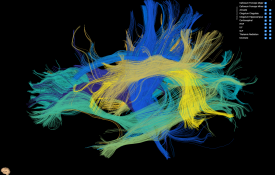
    APS Fellow Franco Pestilli and psychological scientist Terry Sejnowski are among the recipients of grants being awarded by a National Science Foundation (NSF) program supporting basic brain research.

« FirstPrevious...102030...755756757758759...770780790...NextLast »
  • Who We Are
  • Privacy Policy
  • Contact Us
  • Donate
  • Advertising
  • Follow APS
  • Facebook Logo link to APS's Facebook
  • BlueSky Logo link to APS's BlueSky
  • Youtube Logo link to APS's YouTube
  • Instagram Logo link to APS's Instagram
  • LinkedIn Logo link to APS's LinkedIn
  • Twitter Logo link to APS's Twitter

© Association for Psychological Science

Cookies
We use cookies on our website to give you the most relevant experience by remembering your preferences and repeat visits. By clicking “Accept”, you consent to the use of ALL the cookies. To accept or reject certain categories of cookies specifically please click the Cookie Settings link. Please read our Cookie Policy for more information.
Do not sell my personal information.
Cookie settingsAccept Reject
Privacy & Cookies Policy

Privacy Overview

This website uses cookies to improve your experience while you navigate through the website. Out of these cookies, the cookies that are categorized as necessary are stored on your browser as they are essential for the working of basic functionalities of the website. We also use third-party cookies that help us analyze and understand how you use this website. These cookies will be stored in your browser only with your consent. You also have the option to opt-out of these cookies. But opting out of some of these cookies may have an effect on your browsing experience.
Necessary
Always Enabled
Necessary cookies are absolutely essential for the website to function properly. This category only includes cookies that ensures basic functionalities and security features of the website. These cookies do not store any personal information.
Functional
Functional cookies help to perform certain functionalities like sharing the content of the website on social media platforms, collect feedbacks, and other third-party features.
CookieDurationDescription
__cf_bm30 minutesThis cookie, set by Cloudflare, is used to support Cloudflare Bot Management.
Performance
Performance cookies are used to understand and analyze the key performance indexes of the website which helps in delivering a better user experience for the visitors.
CookieDurationDescription
AWSELBCORS5 minutesThis cookie is used by Elastic Load Balancing from Amazon Web Services to effectively balance load on the servers.
Analytics
Analytical cookies are used to understand how visitors interact with the website. These cookies help provide information on metrics the number of visitors, bounce rate, traffic source, etc.
CookieDurationDescription
at-randneverAddThis sets this cookie to track page visits, sources of traffic and share counts.
CONSENT2 yearsYouTube sets this cookie via embedded youtube-videos and registers anonymous statistical data.
uvc1 year 27 daysSet by addthis.com to determine the usage of addthis.com service.
_ga2 yearsThe _ga cookie, installed by Google Analytics, calculates visitor, session and campaign data and also keeps track of site usage for the site's analytics report. The cookie stores information anonymously and assigns a randomly generated number to recognize unique visitors.
_gat_gtag_UA_3507334_11 minuteSet by Google to distinguish users.
_gid1 dayInstalled by Google Analytics, _gid cookie stores information on how visitors use a website, while also creating an analytics report of the website's performance. Some of the data that are collected include the number of visitors, their source, and the pages they visit anonymously.
Advertisement
Advertisement cookies are used to provide visitors with relevant ads and marketing campaigns. These cookies track visitors across websites and collect information to provide customized ads.
CookieDurationDescription
loc1 year 27 daysAddThis sets this geolocation cookie to help understand the location of users who share the information.
VISITOR_INFO1_LIVE5 months 27 daysA cookie set by YouTube to measure bandwidth that determines whether the user gets the new or old player interface.
YSCsessionYSC cookie is set by Youtube and is used to track the views of embedded videos on Youtube pages.
yt-remote-connected-devicesneverYouTube sets this cookie to store the video preferences of the user using embedded YouTube video.
yt-remote-device-idneverYouTube sets this cookie to store the video preferences of the user using embedded YouTube video.
yt.innertube::nextIdneverThis cookie, set by YouTube, registers a unique ID to store data on what videos from YouTube the user has seen.
yt.innertube::requestsneverThis cookie, set by YouTube, registers a unique ID to store data on what videos from YouTube the user has seen.
Others
Other uncategorized cookies are those that are being analyzed and have not been classified into a category as yet.
SAVE & ACCEPT
Powered by CookieYes Logo