

-

Evidence for Opportunity
An editorial in Science argues that Congress should increase funding for behavioral science to restore economic and educational opportunity.
-
Does the Trolley Problem Have a Problem?
Picture the following situation: You are taking a freshman-level philosophy class in college, and your professor has just asked you to imagine a runaway trolley barreling down a track toward a group of five people. The only way to save them from being killed, the professor says, is to hit a switch that will turn the trolley onto an alternate set of tracks where it will kill one person instead of five. Now you must decide: Would the mulling over of this dilemma enlighten you in any way?
-
Hungry, Hungry Hippocampus: Why and How We Eat
Anyone who's tried (and failed) to follow a diet knows that food is more than fuel. The reasons we eat are even embedded in our language. When we're in an unfamiliar place, we yearn for comfort food. We take one too many scoops of ice cream because we stress eat. We connect to others by breaking bread. Having spent decades studying the interplay between food, identity, and culture, psychologist Paul Rozin has come to appreciate that hunger isn't the only reason we head for the kitchen. He says, "Food is not just nutrition that goes in your mouth or even pleasant sensations that go with it.
-
How To Get Your Kids To Do Chores (Without Resenting It)
Back in the early 1990s, psychologist Suzanne Gaskins was living in a small Maya village near Valladolid, Yucatán, when she struck up a conversation with two sisters, ages 7 and 9. The girls started telling her — with great pride — about all the chores they did after school. "I wash my own clothes," the 7-year-old said. The older sister then one-upped her and declared, "I wash my clothes and my baby brother's clothes." Gaskins was so impressed by the girls' enthusiasm for helping around the house that she started to study how kids in the village spend their time.
-
A Troubling Prognosis for Migrant Children in Detention: ‘The Earlier They’re Out, the Better’
Some youngsters retreat entirely, their eyes empty, bodies limp, their isolation a wall of defiance. Others cannot sit still: watchful, hyperactive, ever uncertain. Some compulsively jump into the laps of strangers, or grab their legs and hold on for life. And some children, somehow, move past a sudden separation from their parents, tapping a well of resilience. The Trump administration’s policy of separating migrant children from their parents has alarmed child psychologists and experts who study human development. It is not clear how long the administration plans to hold onto the 2,000 children in detention centers near the border, nor how long before they are returned to their families.
-
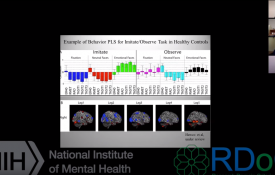
Webinar: Analyzing and Using RDoC Data in Your Research
Watch a recent webinar featuring three NIMH-funded researchers discussing how to analyze and integrate RDoC data.
