• News & Research
    • Research Topics
    • Podcasts & Videos
  • Conventions & Events
    • 2026 APS Annual Convention
    • Webinars & Virtual Events
    • Past and Future Conventions
  • Journals
    • Psychological Science
    • Current Directions in Psychological Science
    • Psychological Science in the Public Interest
    • Perspectives on Psychological Science
    • Clinical Psychological Science
    • Advances in Methods and Practices in Psychological Science
    • Advances in Psychological Science Open
  • Advocacy & Policy
    • Policy & Position Statements
  • The Observer 
    • Archive
    • About the Observer
    • Advertising
    • Contact the Editor
    • Presidential Columns
  • Members
    • Awards & Honors
    • Member Directory
    • Lifetime Members
    • Student Members
    • Teaching of Psychology
    • Donors
  • Career Resources
    • Employment
  • About
    • Diversity, Equity, & Inclusion
    • Board of Directors 2025-2026
    • Staff Directory
    • Ethics Policy & Code of Conduct
APS Homepage
APS
  • Login
  • Join APS
  • New Research From Psychological Science

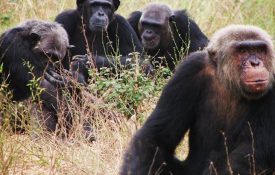
    A sample of research exploring risk taking in chimpanzees,

  • Liberals and conservatives see sexual harassment claims very differently. This explains why.

    Over this past year, the #MeToo movement has put sexual harassment claims front and center in the news. Most recently, accusations of assault and harassment against President Trump’s Supreme Court nominee, Brett M. Kavanaugh, prompted widespread public debate. Although a majority of the country opposed Kavanaugh’s confirmation, polls found that Democrats and Republicans perceived the issue very differently: While 91 percent of Democrats opposed the confirmation, only 6 percent of Republicans did. Perhaps this large gap is a result of the fact that Kavanaugh’s views are very conservative, or because he attacked Democrats during his testimony.

  • What Happens When You’re Convinced You Have Bad Genes

    The first thing you should know is that the DNA-test results everyone got in this study were fake. That was on purpose. Over the course of a year, psychologists at Stanford University recruited 223 participants for a study that would help scientists create personalized nutrition and exercise programs—or so they were told. What the two researchers, Brad Turnwald and Alia Crum, most wanted to investigate was how the participants would react after they took DNA tests and learned their genetic propensities for exercise and diet.

  • Our Fortunetelling Genes

    When I was a graduate student in the early 1970s, psychology was dominated by environmentalism, the view that we are what we learn. It was dangerous professionally (and sometimes personally) even to raise the possibility of genetic influence. We were taught, for example, that schizophrenia was caused by what your mother did to you in the first few years of life. Since then, a mountain of evidence from twin and adoption studies has convinced most scientists that disorders like schizophrenia and traits like cognitive ability run in families for reasons of nature (genetics) not nurture (environment). What is new in the last few years is the DNA revolution.

  • We Still Believe That Genius Is Male—and Women’s Careers Are Suffering as a Result

    The notion that men are intellectually superior to women remains lodged in our collective psyches. New research offers evidence that this bias has pernicious real-world consequences. A new study finds that women are less likely to be referred to employers as promising potential hires if the position in question is said to require a particularly smart person. "Despite the objective evidence of women's intellectual and professional accomplishments, it seems that their ability to make intellectual contributions is still not seen as being on par with men's," writes a research team led by Cornell University psychologist Lin Bian.

  • Cooperation in Chimpanzees Reveals Aspects of Our Evolutionary Past

    In a study of helping, donation, and punishment, researchers found that chimpanzees were often faster to cooperate than to behave selfishly.

« FirstPrevious...102030...568569570571572...580590600...NextLast »
  • Who We Are
  • Privacy Policy
  • Contact Us
  • Donate
  • Advertising
  • Follow APS
  • Facebook Logo link to APS's Facebook
  • BlueSky Logo link to APS's BlueSky
  • Youtube Logo link to APS's YouTube
  • Instagram Logo link to APS's Instagram
  • LinkedIn Logo link to APS's LinkedIn
  • Twitter Logo link to APS's Twitter

© Association for Psychological Science

Cookies
We use cookies on our website to give you the most relevant experience by remembering your preferences and repeat visits. By clicking “Accept”, you consent to the use of ALL the cookies. To accept or reject certain categories of cookies specifically please click the Cookie Settings link. Please read our Cookie Policy for more information.
Do not sell my personal information.
Cookie settingsAccept Reject
Privacy & Cookies Policy

Privacy Overview

This website uses cookies to improve your experience while you navigate through the website. Out of these cookies, the cookies that are categorized as necessary are stored on your browser as they are essential for the working of basic functionalities of the website. We also use third-party cookies that help us analyze and understand how you use this website. These cookies will be stored in your browser only with your consent. You also have the option to opt-out of these cookies. But opting out of some of these cookies may have an effect on your browsing experience.
Necessary
Always Enabled
Necessary cookies are absolutely essential for the website to function properly. This category only includes cookies that ensures basic functionalities and security features of the website. These cookies do not store any personal information.
Functional
Functional cookies help to perform certain functionalities like sharing the content of the website on social media platforms, collect feedbacks, and other third-party features.
CookieDurationDescription
__cf_bm30 minutesThis cookie, set by Cloudflare, is used to support Cloudflare Bot Management.
Performance
Performance cookies are used to understand and analyze the key performance indexes of the website which helps in delivering a better user experience for the visitors.
CookieDurationDescription
AWSELBCORS5 minutesThis cookie is used by Elastic Load Balancing from Amazon Web Services to effectively balance load on the servers.
Analytics
Analytical cookies are used to understand how visitors interact with the website. These cookies help provide information on metrics the number of visitors, bounce rate, traffic source, etc.
CookieDurationDescription
at-randneverAddThis sets this cookie to track page visits, sources of traffic and share counts.
CONSENT2 yearsYouTube sets this cookie via embedded youtube-videos and registers anonymous statistical data.
uvc1 year 27 daysSet by addthis.com to determine the usage of addthis.com service.
_ga2 yearsThe _ga cookie, installed by Google Analytics, calculates visitor, session and campaign data and also keeps track of site usage for the site's analytics report. The cookie stores information anonymously and assigns a randomly generated number to recognize unique visitors.
_gat_gtag_UA_3507334_11 minuteSet by Google to distinguish users.
_gid1 dayInstalled by Google Analytics, _gid cookie stores information on how visitors use a website, while also creating an analytics report of the website's performance. Some of the data that are collected include the number of visitors, their source, and the pages they visit anonymously.
Advertisement
Advertisement cookies are used to provide visitors with relevant ads and marketing campaigns. These cookies track visitors across websites and collect information to provide customized ads.
CookieDurationDescription
loc1 year 27 daysAddThis sets this geolocation cookie to help understand the location of users who share the information.
VISITOR_INFO1_LIVE5 months 27 daysA cookie set by YouTube to measure bandwidth that determines whether the user gets the new or old player interface.
YSCsessionYSC cookie is set by Youtube and is used to track the views of embedded videos on Youtube pages.
yt-remote-connected-devicesneverYouTube sets this cookie to store the video preferences of the user using embedded YouTube video.
yt-remote-device-idneverYouTube sets this cookie to store the video preferences of the user using embedded YouTube video.
yt.innertube::nextIdneverThis cookie, set by YouTube, registers a unique ID to store data on what videos from YouTube the user has seen.
yt.innertube::requestsneverThis cookie, set by YouTube, registers a unique ID to store data on what videos from YouTube the user has seen.
Others
Other uncategorized cookies are those that are being analyzed and have not been classified into a category as yet.
SAVE & ACCEPT
Powered by CookieYes Logo