• News & Research
    • Research Topics
    • Podcasts & Videos
  • Conventions & Events
    • 2026 APS Annual Convention
    • Webinars & Virtual Events
    • Past and Future Conventions
  • Journals
    • Psychological Science
    • Current Directions in Psychological Science
    • Psychological Science in the Public Interest
    • Perspectives on Psychological Science
    • Clinical Psychological Science
    • Advances in Methods and Practices in Psychological Science
    • Advances in Psychological Science Open
  • Advocacy & Policy
    • Policy & Position Statements
  • The Observer 
    • Archive
    • About the Observer
    • Advertising
    • Contact the Editor
    • Presidential Columns
  • Members
    • Awards & Honors
    • Member Directory
    • Lifetime Members
    • Student Members
    • Teaching of Psychology
    • Donors
  • Career Resources
    • Employment
  • About
    • Diversity, Equity, & Inclusion
    • Board of Directors 2025-2026
    • Staff Directory
    • Ethics Policy & Code of Conduct
APS Homepage
APS
  • Login
  • Join APS
  • Having a bad day? Try washing your hands

    WTOP: WASHINGTON -- Washing your hands, taking a shower or even imagining cleaning up can clear away a sense of immorality, feeling unlucky or having doubts. Researchers at the University of Michigan reached this conclusion after conducting several studies showing the act of removing residue from your body corresponds to perceptions in your mind. One example of the strength of that body and mind link is how people respond to telling a lie and whether the lie is spoken or typed in an email. People voicing a lie respond better to mouthwash afterward. While people typing a lie show preference for hand sanitizer. Read the whole story: WTOP

  • Evil: Is It Us or All Around Us?

    Psychological scientist Philip Zimbardo reflected on his controversial Stanford Prison Experiment with Jon Stewart in a past episode of the Daily Show. In 1971, twelve students were randomly assigned to the roles of a prisoner or a guard in a mock prison in the basement of the Stanford psychology building. Within 36 hours, the students displayed characteristics of abusive guards and pathological criminals. The experiment was supposed to run for 2 weeks, but it ended after only 6 days. In this clip, Zimbardo also discusses his book The Lucifer Effect: Understanding How Good People Turn Evil and explains how our environments can affect our actions.

  • Psychologists Defend The Importance Of General Abilities

    “What makes a great violinist, physicist, or crossword puzzle solver? Are experts born or made? The question has intrigued psychologists since psychology was born—and the rest of us, too, who may secretly fantasize playing duets with Yo Yo Ma or winning a Nobel Prize in science. It’s no wonder Malcolm Gladwell stayed atop the bestseller lists by popularizing the “10,000-hour rule” of Florida State University psychologist K. Anders Ericsson.

  • The Future of Higher Education

    The Center for Public Scholarship presents the 26th conference from the Social Research journal at The New School: The Future of Higher Education Thursday and Friday, December 8-9, 2011 John Tishman Auditorium, 66 West 12th Street, NYC For more information visit: www.newschool.edu/cps/future-higher-ed

  • Resilience in Children

    Silvia Koller’s research focuses on children who have experienced homelessness, sexual abuse, or familial violence. Koller explores the impact of these circumstances on psychological development, and uses this information to better characterize the concept of resilience. Her hope is that understanding resilience, which she defines as a process rather than an individual trait, will lead to programs and policies that help children cope with adversity and prevent future generations from experiencing such hardship. Koller uses an ecological approach, viewing children’s development in the context of their family, community, school, and society.

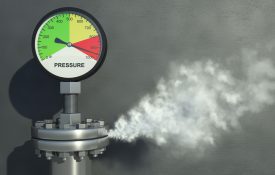
  • Gas or steam leaking from an industrial pressure gauge

    Why Do Some Athletes Choke Under Pressure?

    Athletes know they should just do their thing on the 18th hole, or during the penalty shootout, or when they’re taking a 3-point shot in the last moments of the game. But when that shot

« FirstPrevious...102030...2,1742,1752,1762,1772,178...2,1902,2002,210...NextLast »
  • Who We Are
  • Privacy Policy
  • Contact Us
  • Donate
  • Advertising
  • Follow APS
  • Facebook Logo link to APS's Facebook
  • BlueSky Logo link to APS's BlueSky
  • Youtube Logo link to APS's YouTube
  • Instagram Logo link to APS's Instagram
  • LinkedIn Logo link to APS's LinkedIn
  • Twitter Logo link to APS's Twitter

© Association for Psychological Science

Cookies
We use cookies on our website to give you the most relevant experience by remembering your preferences and repeat visits. By clicking “Accept”, you consent to the use of ALL the cookies. To accept or reject certain categories of cookies specifically please click the Cookie Settings link. Please read our Cookie Policy for more information.
Do not sell my personal information.
Cookie settingsAccept Reject
Privacy & Cookies Policy

Privacy Overview

This website uses cookies to improve your experience while you navigate through the website. Out of these cookies, the cookies that are categorized as necessary are stored on your browser as they are essential for the working of basic functionalities of the website. We also use third-party cookies that help us analyze and understand how you use this website. These cookies will be stored in your browser only with your consent. You also have the option to opt-out of these cookies. But opting out of some of these cookies may have an effect on your browsing experience.
Necessary
Always Enabled
Necessary cookies are absolutely essential for the website to function properly. This category only includes cookies that ensures basic functionalities and security features of the website. These cookies do not store any personal information.
Functional
Functional cookies help to perform certain functionalities like sharing the content of the website on social media platforms, collect feedbacks, and other third-party features.
CookieDurationDescription
__cf_bm30 minutesThis cookie, set by Cloudflare, is used to support Cloudflare Bot Management.
Performance
Performance cookies are used to understand and analyze the key performance indexes of the website which helps in delivering a better user experience for the visitors.
CookieDurationDescription
AWSELBCORS5 minutesThis cookie is used by Elastic Load Balancing from Amazon Web Services to effectively balance load on the servers.
Analytics
Analytical cookies are used to understand how visitors interact with the website. These cookies help provide information on metrics the number of visitors, bounce rate, traffic source, etc.
CookieDurationDescription
at-randneverAddThis sets this cookie to track page visits, sources of traffic and share counts.
CONSENT2 yearsYouTube sets this cookie via embedded youtube-videos and registers anonymous statistical data.
uvc1 year 27 daysSet by addthis.com to determine the usage of addthis.com service.
_ga2 yearsThe _ga cookie, installed by Google Analytics, calculates visitor, session and campaign data and also keeps track of site usage for the site's analytics report. The cookie stores information anonymously and assigns a randomly generated number to recognize unique visitors.
_gat_gtag_UA_3507334_11 minuteSet by Google to distinguish users.
_gid1 dayInstalled by Google Analytics, _gid cookie stores information on how visitors use a website, while also creating an analytics report of the website's performance. Some of the data that are collected include the number of visitors, their source, and the pages they visit anonymously.
Advertisement
Advertisement cookies are used to provide visitors with relevant ads and marketing campaigns. These cookies track visitors across websites and collect information to provide customized ads.
CookieDurationDescription
loc1 year 27 daysAddThis sets this geolocation cookie to help understand the location of users who share the information.
VISITOR_INFO1_LIVE5 months 27 daysA cookie set by YouTube to measure bandwidth that determines whether the user gets the new or old player interface.
YSCsessionYSC cookie is set by Youtube and is used to track the views of embedded videos on Youtube pages.
yt-remote-connected-devicesneverYouTube sets this cookie to store the video preferences of the user using embedded YouTube video.
yt-remote-device-idneverYouTube sets this cookie to store the video preferences of the user using embedded YouTube video.
yt.innertube::nextIdneverThis cookie, set by YouTube, registers a unique ID to store data on what videos from YouTube the user has seen.
yt.innertube::requestsneverThis cookie, set by YouTube, registers a unique ID to store data on what videos from YouTube the user has seen.
Others
Other uncategorized cookies are those that are being analyzed and have not been classified into a category as yet.
SAVE & ACCEPT
Powered by CookieYes Logo