• News & Research
    • Research Topics
    • Podcasts & Videos
  • Conventions & Events
    • 2026 APS Annual Convention
    • Webinars & Virtual Events
    • Past and Future Conventions
  • Journals
    • Psychological Science
    • Current Directions in Psychological Science
    • Psychological Science in the Public Interest
    • Perspectives on Psychological Science
    • Clinical Psychological Science
    • Advances in Methods and Practices in Psychological Science
    • Advances in Psychological Science Open
  • Advocacy & Policy
    • Policy & Position Statements
  • The Observer 
    • Archive
    • About the Observer
    • Advertising
    • Contact the Editor
    • Presidential Columns
  • Members
    • Awards & Honors
    • Member Directory
    • Lifetime Members
    • Student Members
    • Teaching of Psychology
    • Donors
  • Career Resources
    • Employment
  • About
    • Diversity, Equity, & Inclusion
    • Board of Directors 2025-2026
    • Staff Directory
    • Ethics Policy & Code of Conduct
APS Homepage
APS
  • Login
  • Join APS
  • Psychologist Daniel Levitin dissects Pink Floyd’s ‘Dark Side of the Moon’

    LEILA FADEL, HOST: Here's an enduring legacy. Pink Floyd's album "Dark Side Of The Moon" was released 50 years ago today, and it's still on the Billboard charts. It's the longest charting album in history. (SOUNDBITE OF SONG, "BRAIN DAMAGE") PINK FLOYD: (Singing) And if the dam breaks open many years too soon, and if there is no room upon the hill. FADEL: "Dark Side Of The Moon" can be enjoyed for its far-out sonic landscapes or its inventive production. You can also study the lyrics. Much of Roger Waters' writing was inspired by a former member of Pink Floyd, Syd Barrett. He was forced to leave the band he created when his behavior became too erratic. Some say it was a psychotic break.

  • Science of forgetting: Why we’re already losing our pandemic memories

    How much do you remember about the past three years of pandemic life? How much have you already forgotten? A lot has happened since the “Before Times.” Canceled proms, toilet paper shortages, nightly applause for health workers, new vaccines, waitlists for getting the first jab, and more. Covid disrupted everyone’s lives, but it was truly life-changing for only a sizable subset of people: those who lost someone to covid, health-care workers, the immunocompromised or those who developed long covid, among others. ...

  • There’s a Psychological ‘Vaccine’ against Misinformation

    Misinformation can feel inescapable. Last summer a survey from the nonprofit Poynter Institute for Media Studies found that 62 percent of people regularly notice false or misleading information online. And in a 2019 poll, almost nine in 10 people admitted to having fallen for fake news. Social psychologist Sander van der Linden of the University of Cambridge studies how and why people share such information and how it can be stopped. He spoke with Mind Matters editor Daisy Yuhas to discuss this work and his new book, Foolproof: Why Misinformation Infects Our Minds and How to Build Immunity, which offers research-backed solutions to stem this spread.

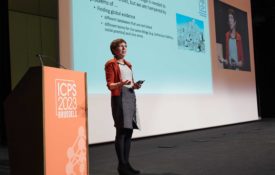
  • Breakthroughs in Brussels: Researchers Share New Integrative Science at ICPS 2023

    “Human behavior is at the heart of so many global challenges involving behavior change,” said Susan Michie at ICPS 2023. And at the heart of “preventing and getting out of them.”

  • Are You (Still) An Optimist? These Questions Might Help Explain Why

    Imagine you’re back in high school — fluorescent lights humming, hard plastic chairs, a classroom stuffy with hormones and anxiety — and you’ve just aced a test. Do you think to yourself, “I guess I got lucky today?” Or does your internal monologue say, “Damn, I’m good!”? Now imagine that you’ve failed the test. Does the voice inside you whisper: “Of course. You’re so bad at this.” Or does it say, “Ugh — you just didn’t study hard enough.” And which of these responses might brand you as an optimist? You might think, for example, that the first response — crediting luck for a good outcome — is a sign of optimism, since it suggests good times ahead.

  • Enhance Mental Health With a Culture of Gratitude

    Work contributes significantly to mental health. Based on everything from assignments and responsibilities to relationships with leaders and colleagues, work makes a difference in how people feel physically, cognitively and emotionally. You can enhance your own mental health and your company can play a role as well by ensuring you have a sense of purpose, performing as well as you can and seeking opportunities for growth. But another way to nurture and sustain mental health is through something unexpected: gratitude. You can foster gratitude for yourself, and organizations can cultivate cultures of gratitude—and these will have positive effects for people as well as for business.

« FirstPrevious...102030...184185186187188...200210220...NextLast »
  • Who We Are
  • Privacy Policy
  • Contact Us
  • Donate
  • Advertising
  • Follow APS
  • Facebook Logo link to APS's Facebook
  • BlueSky Logo link to APS's BlueSky
  • Youtube Logo link to APS's YouTube
  • Instagram Logo link to APS's Instagram
  • LinkedIn Logo link to APS's LinkedIn
  • Twitter Logo link to APS's Twitter

© Association for Psychological Science

Cookies
We use cookies on our website to give you the most relevant experience by remembering your preferences and repeat visits. By clicking “Accept”, you consent to the use of ALL the cookies. To accept or reject certain categories of cookies specifically please click the Cookie Settings link. Please read our Cookie Policy for more information.
Do not sell my personal information.
Cookie settingsAccept Reject
Privacy & Cookies Policy

Privacy Overview

This website uses cookies to improve your experience while you navigate through the website. Out of these cookies, the cookies that are categorized as necessary are stored on your browser as they are essential for the working of basic functionalities of the website. We also use third-party cookies that help us analyze and understand how you use this website. These cookies will be stored in your browser only with your consent. You also have the option to opt-out of these cookies. But opting out of some of these cookies may have an effect on your browsing experience.
Necessary
Always Enabled
Necessary cookies are absolutely essential for the website to function properly. This category only includes cookies that ensures basic functionalities and security features of the website. These cookies do not store any personal information.
Functional
Functional cookies help to perform certain functionalities like sharing the content of the website on social media platforms, collect feedbacks, and other third-party features.
CookieDurationDescription
__cf_bm30 minutesThis cookie, set by Cloudflare, is used to support Cloudflare Bot Management.
Performance
Performance cookies are used to understand and analyze the key performance indexes of the website which helps in delivering a better user experience for the visitors.
CookieDurationDescription
AWSELBCORS5 minutesThis cookie is used by Elastic Load Balancing from Amazon Web Services to effectively balance load on the servers.
Analytics
Analytical cookies are used to understand how visitors interact with the website. These cookies help provide information on metrics the number of visitors, bounce rate, traffic source, etc.
CookieDurationDescription
at-randneverAddThis sets this cookie to track page visits, sources of traffic and share counts.
CONSENT2 yearsYouTube sets this cookie via embedded youtube-videos and registers anonymous statistical data.
uvc1 year 27 daysSet by addthis.com to determine the usage of addthis.com service.
_ga2 yearsThe _ga cookie, installed by Google Analytics, calculates visitor, session and campaign data and also keeps track of site usage for the site's analytics report. The cookie stores information anonymously and assigns a randomly generated number to recognize unique visitors.
_gat_gtag_UA_3507334_11 minuteSet by Google to distinguish users.
_gid1 dayInstalled by Google Analytics, _gid cookie stores information on how visitors use a website, while also creating an analytics report of the website's performance. Some of the data that are collected include the number of visitors, their source, and the pages they visit anonymously.
Advertisement
Advertisement cookies are used to provide visitors with relevant ads and marketing campaigns. These cookies track visitors across websites and collect information to provide customized ads.
CookieDurationDescription
loc1 year 27 daysAddThis sets this geolocation cookie to help understand the location of users who share the information.
VISITOR_INFO1_LIVE5 months 27 daysA cookie set by YouTube to measure bandwidth that determines whether the user gets the new or old player interface.
YSCsessionYSC cookie is set by Youtube and is used to track the views of embedded videos on Youtube pages.
yt-remote-connected-devicesneverYouTube sets this cookie to store the video preferences of the user using embedded YouTube video.
yt-remote-device-idneverYouTube sets this cookie to store the video preferences of the user using embedded YouTube video.
yt.innertube::nextIdneverThis cookie, set by YouTube, registers a unique ID to store data on what videos from YouTube the user has seen.
yt.innertube::requestsneverThis cookie, set by YouTube, registers a unique ID to store data on what videos from YouTube the user has seen.
Others
Other uncategorized cookies are those that are being analyzed and have not been classified into a category as yet.
SAVE & ACCEPT
Powered by CookieYes Logo