

-
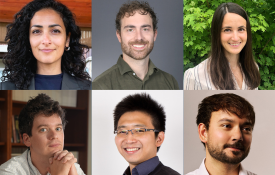
Six Psychological Scientists Receive 2026 APS Janet Taylor Spence Award
Each recipient has led trailblazing research, including on how our environments shape cognition, the brain’s ability to build models of the world and ourselves, and psychology’s interaction with technology.
-

Even Nonmusicians Pick Up on Music’s Context
“Our brains can use the information in the music that’s in front of us in really cool ways. Even when we aren’t specifically trained to play music, we still pick up enough of it just walking around, listening.”
-

Winners Announced for the APS Share Your Science Competition
The winning videos included research on economic stressors, language processing in bilingual speakers, interactive learning, and more.
-
The Evolutionary Brilliance of the Baby Giggle
My son was 14 weeks old when he made his first unmistakable whole-body belly laugh. In the months that followed, his laughter was accompanied by playful provocations — grabbing my hair and shrieking with delight, blowing mouthfuls of mashed bananas skyward and squealing when they landed on the floor. These incidents signaled something more than laughter: An early sense of humor was emerging, initiated by him, months before the other milestones that parents await in the first year. For me as a mother, this was delightful, but as a developmental psychologist, I was perplexed. Despite my Ph.D., I’d never come across research on infant laughter or humor.
-
Dr. Oz Says Drinking Is a ‘Social Lubricant.’ Some Experts Worry About That.
The psychologist first became intrigued by the phenomenon decades ago, while he was setting up an experiment about the effects of drinking on anxiety and heart rate. Women had been excluded from many such studies, so Michael Sayette, a professor of psychology at the University of Pittsburgh, asked five female volunteers to come into the lab and drink, allowing him to set blood alcohol benchmarks for his experiment. ... “Dr. Oz is right — it is really about talking and smiling and connecting,” said Kasey G. Creswell, an associate professor of psychology at Carnegie Mellon University in Pittsburgh.
-
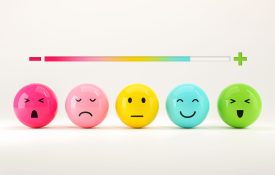
“Lesser of Two Evils”: Applying Artificial Intelligence to Move Beyond Self-Reports
Two researchers advocate for new AI-based measures not because they offer measurement free from error, but rather because they avoid specific problematic forms of error linked to overreliance on self-reports.
