• News & Research
    • Research Topics
    • Podcasts & Videos
  • Conventions & Events
    • 2026 APS Annual Convention
    • Webinars & Virtual Events
    • Past and Future Conventions
  • Journals
    • Psychological Science
    • Current Directions in Psychological Science
    • Psychological Science in the Public Interest
    • Perspectives on Psychological Science
    • Clinical Psychological Science
    • Advances in Methods and Practices in Psychological Science
    • Advances in Psychological Science Open
  • Advocacy & Policy
    • Policy & Position Statements
  • The Observer 
    • Archive
    • About the Observer
    • Advertising
    • Contact the Editor
    • Presidential Columns
  • Members
    • Awards & Honors
    • Member Directory
    • Lifetime Members
    • Student Members
    • Teaching of Psychology
    • Donors
  • Career Resources
    • Employment
  • About
    • Diversity, Equity, & Inclusion
    • Board of Directors 2025-2026
    • Staff Directory
    • Ethics Policy & Code of Conduct
APS Homepage
APS
  • Login
  • Join APS
  • The Psychology of Exile

    The Huffington Post: When I was in middle school, one of the assigned readings was a story called "The Man Without a Country." It was written by Edward Everett Hale in 1863, and told the story of a young American army lieutenant, Philip Nolan, who is tried for treason along with Aaron Burr. During the trial, he angrily denounces his country, declaring his wish to never hear mention of the United States again, and the shocked judge complies: He sentences Nolan to spend the rest of his life in exile, aboard U.S. warships, where he will hear no word of life in America. ... The findings were clear. Those facing a life of loneliness were more apt to believe in supernatural agents of all kinds.

  • How brain lets us hear our inner voice

    Deccan Chronicle: A new study has looked at a possible brain mechanism that could explain how we hear the inner voice in the absence of actual sound. In two experiments, researcher Mark Scott of the University of British Columbia found evidence that a brain signal called corollary discharge - a signal that helps us distinguish the sensory experiences we produce ourselves from those produced by external stimuli - plays an important role in our experiences of internal speech. Corollary discharge is a kind of predictive signal generated by the brain that helps to explain, for example, why other people can tickle us but we can't tickle ourselves.

  • Study Finds Spatial Skill Is Early Sign of Creativity

    The New York Times: A gift for spatial reasoning — the kind that may inspire an imaginative child to dismantle a clock or the family refrigerator — may be a greater predictor of future creativity or innovation than math or verbal skills, particularly in math, science and related fields, according to a study published Monday in the journal Psychological Science. ... The researchers, from Vanderbilt University in Nashville, said their findings make a strong case for rewriting standardized tests like the SAT and ACT to focus more on spatial ability, to help identify children who excel in this area and foster their talents.

  • Of polar bears and consciousness: A tribute to Daniel Wegner

    Scientific American: Last Friday, July 5, the psychology community lost one of its greatest minds, Daniel Wegner. It’s hard to overstate his influence on psychology as a whole — and on individual students and researchers (myself included) along the way. Just last week, I came across a new study that bears his clear imprint: the effect of suppressing your craving for cigarettes on the value you place on smoking. The more you suppress, the higher the value you assign to smoking. Wegner would have approved. About a year and a half ago, I wrote a piece about the origins of Wegner’s famed white bear — the one you can’t stop thinking about no matter how hard you try.

  • Human Emotions Explained In 60 Short Interviews

    NPR: In some sense we're all experts in emotion. We experience emotion every day, all the time. We constantly observe the emotional responses of others, and we often make decisions based on anticipated emotions: we pursue something because we think it will make us happy, or avoid something because we worry it will anger someone else. Despite living intimately with emotion, there's a lot we don't know. Sometimes we're baffled by our own emotional responses, or those of others. Sometimes we wish we could change our emotions, but don't know how. ...

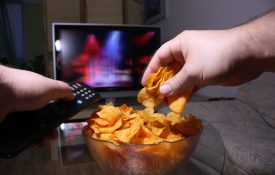
  • Relaxing and watching TV on the couch while eating chips.

    Distracted at Dinner? That’s Why Your Cooking Tastes Bland

    Research suggests that in addition to making us eat more, distractions during meals may also make our food taste different.

« FirstPrevious...102030...1,6111,6121,6131,6141,615...1,6201,6301,640...NextLast »
  • Who We Are
  • Privacy Policy
  • Contact Us
  • Donate
  • Advertising
  • Follow APS
  • Facebook Logo link to APS's Facebook
  • BlueSky Logo link to APS's BlueSky
  • Youtube Logo link to APS's YouTube
  • Instagram Logo link to APS's Instagram
  • LinkedIn Logo link to APS's LinkedIn
  • Twitter Logo link to APS's Twitter

© Association for Psychological Science

Cookies
We use cookies on our website to give you the most relevant experience by remembering your preferences and repeat visits. By clicking “Accept”, you consent to the use of ALL the cookies. To accept or reject certain categories of cookies specifically please click the Cookie Settings link. Please read our Cookie Policy for more information.
Do not sell my personal information.
Cookie settingsAccept Reject
Privacy & Cookies Policy

Privacy Overview

This website uses cookies to improve your experience while you navigate through the website. Out of these cookies, the cookies that are categorized as necessary are stored on your browser as they are essential for the working of basic functionalities of the website. We also use third-party cookies that help us analyze and understand how you use this website. These cookies will be stored in your browser only with your consent. You also have the option to opt-out of these cookies. But opting out of some of these cookies may have an effect on your browsing experience.
Necessary
Always Enabled
Necessary cookies are absolutely essential for the website to function properly. This category only includes cookies that ensures basic functionalities and security features of the website. These cookies do not store any personal information.
Functional
Functional cookies help to perform certain functionalities like sharing the content of the website on social media platforms, collect feedbacks, and other third-party features.
CookieDurationDescription
__cf_bm30 minutesThis cookie, set by Cloudflare, is used to support Cloudflare Bot Management.
Performance
Performance cookies are used to understand and analyze the key performance indexes of the website which helps in delivering a better user experience for the visitors.
CookieDurationDescription
AWSELBCORS5 minutesThis cookie is used by Elastic Load Balancing from Amazon Web Services to effectively balance load on the servers.
Analytics
Analytical cookies are used to understand how visitors interact with the website. These cookies help provide information on metrics the number of visitors, bounce rate, traffic source, etc.
CookieDurationDescription
at-randneverAddThis sets this cookie to track page visits, sources of traffic and share counts.
CONSENT2 yearsYouTube sets this cookie via embedded youtube-videos and registers anonymous statistical data.
uvc1 year 27 daysSet by addthis.com to determine the usage of addthis.com service.
_ga2 yearsThe _ga cookie, installed by Google Analytics, calculates visitor, session and campaign data and also keeps track of site usage for the site's analytics report. The cookie stores information anonymously and assigns a randomly generated number to recognize unique visitors.
_gat_gtag_UA_3507334_11 minuteSet by Google to distinguish users.
_gid1 dayInstalled by Google Analytics, _gid cookie stores information on how visitors use a website, while also creating an analytics report of the website's performance. Some of the data that are collected include the number of visitors, their source, and the pages they visit anonymously.
Advertisement
Advertisement cookies are used to provide visitors with relevant ads and marketing campaigns. These cookies track visitors across websites and collect information to provide customized ads.
CookieDurationDescription
loc1 year 27 daysAddThis sets this geolocation cookie to help understand the location of users who share the information.
VISITOR_INFO1_LIVE5 months 27 daysA cookie set by YouTube to measure bandwidth that determines whether the user gets the new or old player interface.
YSCsessionYSC cookie is set by Youtube and is used to track the views of embedded videos on Youtube pages.
yt-remote-connected-devicesneverYouTube sets this cookie to store the video preferences of the user using embedded YouTube video.
yt-remote-device-idneverYouTube sets this cookie to store the video preferences of the user using embedded YouTube video.
yt.innertube::nextIdneverThis cookie, set by YouTube, registers a unique ID to store data on what videos from YouTube the user has seen.
yt.innertube::requestsneverThis cookie, set by YouTube, registers a unique ID to store data on what videos from YouTube the user has seen.
Others
Other uncategorized cookies are those that are being analyzed and have not been classified into a category as yet.
SAVE & ACCEPT
Powered by CookieYes Logo