
• News & Research
    • Research Topics
    • Podcasts & Videos
  • Conventions & Events
    • 2026 APS Annual Convention
    • Webinars & Virtual Events
    • Past and Future Conventions
  • Journals
    • Psychological Science
    • Current Directions in Psychological Science
    • Psychological Science in the Public Interest
    • Perspectives on Psychological Science
    • Clinical Psychological Science
    • Advances in Methods and Practices in Psychological Science
    • Advances in Psychological Science Open
  • Advocacy & Policy
    • Policy & Position Statements
  • The Observer 
    • Archive
    • About the Observer
    • Advertising
    • Contact the Editor
    • Presidential Columns
  • Members
    • Awards & Honors
    • Member Directory
    • Lifetime Members
    • Student Members
    • Teaching of Psychology
    • Donors
  • Career Resources
    • Employment
  • About
    • Diversity, Equity, & Inclusion
    • Board of Directors 2025-2026
    • Staff Directory
    • Ethics Policy & Code of Conduct
APS Homepage
APS
  • Login
  • Join APS
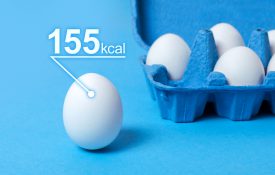
  • Brain Activity Provides Evidence for Internal “Calorie Counter”

    As you glance over a menu or peruse the shelves in a supermarket, you may be thinking about how each food will taste and whether it’s nutritious, or you may be trying to decide what

  • SRCD Policy Fellowships for 2015-2016

    Call for Applications The Society for Research in Child Development (SRCD) is seeking applicants for SRCD Policy Fellowships for 2015–2016. There are two types of fellowships: Congressional and Executive Branch. Both types of fellowships provide researchers with exciting opportunities to come to Washington, DC, and use their research skills in child development to inform public policy. Fellows work as resident scholars within congressional or federal agency offices. Fellowships are full-time immersion experiences and run from September 1, 2015, through August 31, 2016. The SRCD Office for Policy and Communications in Washington, DC.

  • Scientists Trying New Trick to Catch You in a Lie

    ABC News: Ah, Pinocchio, where are you when we need you? How convenient it would be if a liar's nose grew longer with every lie. Then we wouldn't need modern science with all those brain scanners and high tech gizmos to tell us when somebody is fibbing. Ever since John Larson, a medical student at UC Berkeley, invented the polygraph in 1921, scientists have tried to come up with a more reliable way to decipher autonomous signals from the human brain whenever a subject is bending the truth. Cameras that track shifty movements of the human eye and sensors that detect sweaty palms or muscle twitches that we can't control have all been tried with varying degrees of success.

  • How Consumers’ Moods Drive Decisions

    The Atlantic:  In April this year, scientists from Georgia Tech and Yahoo Labs reported that something strange was manipulating online restaurant reviews. It wasn't hackers. It wasn't software bugs. It was rain, snow, and sunshine. After looking at more than 1 million online reviews on sites like TripAdvisor, they found that restaurants received significantly better ratings on days with nice weather and worse reviews on any day with rain. “The best reviews are written on sunny days between 70 and 100 degrees,” researcher Saeideh Bakhshi concluded. “A nice day can lead to a nice review. A rainy day can mean a miserable one.” ...

  • We Want Privacy, but Can’t Stop Sharing

    The New York Times: IMAGINE a world suddenly devoid of doors. None in your home, on dressing rooms, on the entrance to the local pub or even on restroom stalls at concert halls. The controlling authorities say if you aren’t doing anything wrong, then you shouldn’t mind. Well, that’s essentially the state of affairs on the Internet. There is no privacy. If those creepy targeted ads on Google hadn’t tipped you off, then surely Edward J. Snowden’s revelations, or, more recently,Jennifer Lawrence’s nude selfies, made your vulnerability to cybersnooping abundantly clear. ...

  • How Moms Change Brains

    Pacific Standard: For little kids, seeing mom or dad nearby is a calming influence, maybe the difference between between perfect calm and a full-bore freakout. It’s as if having a trusted caregiver nearby transforms children from scared toddlers into confident adolescents. And in a way, a new report suggests, that’s what having mom around does to a kid’s brain. When they’re first born and for years after, infants and young children can’t do a whole lot by themselves. They can’t eat on their own, they aren’t very good at managing their emotions, and it takes a while for them to learn how to dress themselves.

« FirstPrevious...102030...1,2741,2751,2761,2771,278...1,2901,3001,310...NextLast »
  • Who We Are
  • Privacy Policy
  • Contact Us
  • Donate
  • Advertising
  • Follow APS
  • Facebook Logo link to APS's Facebook
  • BlueSky Logo link to APS's BlueSky
  • Youtube Logo link to APS's YouTube
  • Instagram Logo link to APS's Instagram
  • LinkedIn Logo link to APS's LinkedIn
  • Twitter Logo link to APS's Twitter

© Association for Psychological Science

Cookies
We use cookies on our website to give you the most relevant experience by remembering your preferences and repeat visits. By clicking “Accept”, you consent to the use of ALL the cookies. To accept or reject certain categories of cookies specifically please click the Cookie Settings link. Please read our Cookie Policy for more information.
Do not sell my personal information.
Cookie settingsAccept Reject
Privacy & Cookies Policy

Privacy Overview

This website uses cookies to improve your experience while you navigate through the website. Out of these cookies, the cookies that are categorized as necessary are stored on your browser as they are essential for the working of basic functionalities of the website. We also use third-party cookies that help us analyze and understand how you use this website. These cookies will be stored in your browser only with your consent. You also have the option to opt-out of these cookies. But opting out of some of these cookies may have an effect on your browsing experience.
Necessary
Always Enabled
Necessary cookies are absolutely essential for the website to function properly. This category only includes cookies that ensures basic functionalities and security features of the website. These cookies do not store any personal information.
Functional
Functional cookies help to perform certain functionalities like sharing the content of the website on social media platforms, collect feedbacks, and other third-party features.
CookieDurationDescription
__cf_bm30 minutesThis cookie, set by Cloudflare, is used to support Cloudflare Bot Management.
Performance
Performance cookies are used to understand and analyze the key performance indexes of the website which helps in delivering a better user experience for the visitors.
CookieDurationDescription
AWSELBCORS5 minutesThis cookie is used by Elastic Load Balancing from Amazon Web Services to effectively balance load on the servers.
Analytics
Analytical cookies are used to understand how visitors interact with the website. These cookies help provide information on metrics the number of visitors, bounce rate, traffic source, etc.
CookieDurationDescription
at-randneverAddThis sets this cookie to track page visits, sources of traffic and share counts.
CONSENT2 yearsYouTube sets this cookie via embedded youtube-videos and registers anonymous statistical data.
uvc1 year 27 daysSet by addthis.com to determine the usage of addthis.com service.
_ga2 yearsThe _ga cookie, installed by Google Analytics, calculates visitor, session and campaign data and also keeps track of site usage for the site's analytics report. The cookie stores information anonymously and assigns a randomly generated number to recognize unique visitors.
_gat_gtag_UA_3507334_11 minuteSet by Google to distinguish users.
_gid1 dayInstalled by Google Analytics, _gid cookie stores information on how visitors use a website, while also creating an analytics report of the website's performance. Some of the data that are collected include the number of visitors, their source, and the pages they visit anonymously.
Advertisement
Advertisement cookies are used to provide visitors with relevant ads and marketing campaigns. These cookies track visitors across websites and collect information to provide customized ads.
CookieDurationDescription
loc1 year 27 daysAddThis sets this geolocation cookie to help understand the location of users who share the information.
VISITOR_INFO1_LIVE5 months 27 daysA cookie set by YouTube to measure bandwidth that determines whether the user gets the new or old player interface.
YSCsessionYSC cookie is set by Youtube and is used to track the views of embedded videos on Youtube pages.
yt-remote-connected-devicesneverYouTube sets this cookie to store the video preferences of the user using embedded YouTube video.
yt-remote-device-idneverYouTube sets this cookie to store the video preferences of the user using embedded YouTube video.
yt.innertube::nextIdneverThis cookie, set by YouTube, registers a unique ID to store data on what videos from YouTube the user has seen.
yt.innertube::requestsneverThis cookie, set by YouTube, registers a unique ID to store data on what videos from YouTube the user has seen.
Others
Other uncategorized cookies are those that are being analyzed and have not been classified into a category as yet.
SAVE & ACCEPT
Powered by CookieYes Logo