• News & Research
    • Research Topics
    • Podcasts & Videos
  • Conventions & Events
    • 2026 APS Annual Convention
    • Webinars & Virtual Events
    • Past and Future Conventions
  • Journals
    • Psychological Science
    • Current Directions in Psychological Science
    • Psychological Science in the Public Interest
    • Perspectives on Psychological Science
    • Clinical Psychological Science
    • Advances in Methods and Practices in Psychological Science
    • Advances in Psychological Science Open
  • Advocacy & Policy
    • Policy & Position Statements
  • The Observer 
    • Archive
    • About the Observer
    • Advertising
    • Contact the Editor
    • Presidential Columns
  • Members
    • Awards & Honors
    • Member Directory
    • Lifetime Members
    • Student Members
    • Teaching of Psychology
    • Donors
  • Career Resources
    • Employment
  • About
    • Diversity, Equity, & Inclusion
    • Board of Directors 2025-2026
    • Staff Directory
    • Ethics Policy & Code of Conduct
APS Homepage
APS
  • Login
  • Join APS
  • A Meditation on the Art of Not Trying

    The New York Times: Just be yourself. The advice is as maddening as it is inescapable. It’s the default prescription for any tense situation: a blind date, a speech, a job interview, the first dinner with the potential in-laws. Relax. Act natural. Just be yourself. But when you’re nervous, how can you be yourself? How you can force yourself to relax? How can you try not to try? It makes no sense, but the paradox is essential to civilization, according to Edward Slingerland. He has developed, quite deliberately, a theory of spontaneity based on millenniums of Asian philosophy and decades of research by psychologists and neuroscientists.

  • Who needs a hug? Anyone trying to ward off a cold this winter.

    The Washington Post: Do you need a hug? If you're trying to ward off colds and the flu this winter — and who isn't? — the answer is yes, according to a study by Carnegie Mellon University researchers released Wednesday and scheduled for publication in the journal Psychological Science. "The apparent protective effect of hugs may be attributable to the physical contact itself or to hugging being a behavioral indicator of support and intimacy," Sheldon Cohen, a professor of psychology, and his team wrote.

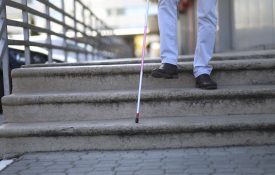
  • Echolocation Acts as Substitute Sense for Blind People

    Echolocation may not just help visually-impaired individuals navigate their environment, but may actually have the potential to be a complete sensory replacement for vision.

  • The Ulysses Strategy

    The New Yorker: As the University of Chicago economist Richard Thaler tells the story, a group of fellow-graduate students in economics were at his house one night in the late nineteen-seventies, socializing before the dinner hour. Thaler saw how much they were snacking, and decided to remove the nut bowls from the living room. His colleagues—almost all of whom were ardent proponents of the idea that humans are rational decision-makers, optimizing their best interests through freely made choices—thanked him for removing the tempting snacks. Thaler took mental note of the moment, one of many notes on human irrationality that he would gather in the ensuing years.

  • Playing Nicely With Others: Why Schools Teach Social Emotional Learning

    The New York Times: If your children’s school seems to suddenly be devoting its time and resources to something called SEL, it may be leaving you wondering what happened to good old reading, writing and arithmetic (or even that new darling, coding). You’re not alone. SEL stands for social emotional learning, and it’s a hot topic at the moment among educators with good reason.

  • Is the Justice System Overly Punitive?

    Scientific American: Twenty years ago Rwanda was torn apart by violence. The Hutu majority slaughtered their Tutsi neighbors, killing approximately 70% of the Tutsi minority in the space of only four months. Once the killing finally stopped, a difficult question arose: how to right these monstrous wrongs without creating a cycle of revenge and retribution? Such a cycle would be the epitome of the ancient “eye for an eye” notion of justice, in which punishment is commensurate with the crime, an approach taken even today by most modern legal systems (including the United States). The aim is simple—when someone is wronged, the goal of punishment is to hurt the perpetrator.

« FirstPrevious...102030...1,2231,2241,2251,2261,227...1,2301,2401,250...NextLast »
  • Who We Are
  • Privacy Policy
  • Contact Us
  • Donate
  • Advertising
  • Follow APS
  • Facebook Logo link to APS's Facebook
  • BlueSky Logo link to APS's BlueSky
  • Youtube Logo link to APS's YouTube
  • Instagram Logo link to APS's Instagram
  • LinkedIn Logo link to APS's LinkedIn
  • Twitter Logo link to APS's Twitter

© Association for Psychological Science

Cookies
We use cookies on our website to give you the most relevant experience by remembering your preferences and repeat visits. By clicking “Accept”, you consent to the use of ALL the cookies. To accept or reject certain categories of cookies specifically please click the Cookie Settings link. Please read our Cookie Policy for more information.
Do not sell my personal information.
Cookie settingsAccept Reject
Privacy & Cookies Policy

Privacy Overview

This website uses cookies to improve your experience while you navigate through the website. Out of these cookies, the cookies that are categorized as necessary are stored on your browser as they are essential for the working of basic functionalities of the website. We also use third-party cookies that help us analyze and understand how you use this website. These cookies will be stored in your browser only with your consent. You also have the option to opt-out of these cookies. But opting out of some of these cookies may have an effect on your browsing experience.
Necessary
Always Enabled
Necessary cookies are absolutely essential for the website to function properly. This category only includes cookies that ensures basic functionalities and security features of the website. These cookies do not store any personal information.
Functional
Functional cookies help to perform certain functionalities like sharing the content of the website on social media platforms, collect feedbacks, and other third-party features.
CookieDurationDescription
__cf_bm30 minutesThis cookie, set by Cloudflare, is used to support Cloudflare Bot Management.
Performance
Performance cookies are used to understand and analyze the key performance indexes of the website which helps in delivering a better user experience for the visitors.
CookieDurationDescription
AWSELBCORS5 minutesThis cookie is used by Elastic Load Balancing from Amazon Web Services to effectively balance load on the servers.
Analytics
Analytical cookies are used to understand how visitors interact with the website. These cookies help provide information on metrics the number of visitors, bounce rate, traffic source, etc.
CookieDurationDescription
at-randneverAddThis sets this cookie to track page visits, sources of traffic and share counts.
CONSENT2 yearsYouTube sets this cookie via embedded youtube-videos and registers anonymous statistical data.
uvc1 year 27 daysSet by addthis.com to determine the usage of addthis.com service.
_ga2 yearsThe _ga cookie, installed by Google Analytics, calculates visitor, session and campaign data and also keeps track of site usage for the site's analytics report. The cookie stores information anonymously and assigns a randomly generated number to recognize unique visitors.
_gat_gtag_UA_3507334_11 minuteSet by Google to distinguish users.
_gid1 dayInstalled by Google Analytics, _gid cookie stores information on how visitors use a website, while also creating an analytics report of the website's performance. Some of the data that are collected include the number of visitors, their source, and the pages they visit anonymously.
Advertisement
Advertisement cookies are used to provide visitors with relevant ads and marketing campaigns. These cookies track visitors across websites and collect information to provide customized ads.
CookieDurationDescription
loc1 year 27 daysAddThis sets this geolocation cookie to help understand the location of users who share the information.
VISITOR_INFO1_LIVE5 months 27 daysA cookie set by YouTube to measure bandwidth that determines whether the user gets the new or old player interface.
YSCsessionYSC cookie is set by Youtube and is used to track the views of embedded videos on Youtube pages.
yt-remote-connected-devicesneverYouTube sets this cookie to store the video preferences of the user using embedded YouTube video.
yt-remote-device-idneverYouTube sets this cookie to store the video preferences of the user using embedded YouTube video.
yt.innertube::nextIdneverThis cookie, set by YouTube, registers a unique ID to store data on what videos from YouTube the user has seen.
yt.innertube::requestsneverThis cookie, set by YouTube, registers a unique ID to store data on what videos from YouTube the user has seen.
Others
Other uncategorized cookies are those that are being analyzed and have not been classified into a category as yet.
SAVE & ACCEPT
Powered by CookieYes Logo