

-
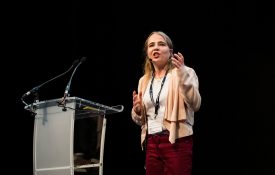
Ten Years Applying Psychological Science Inside the U.K. Government
APS President James Pennebaker’s fourth presidential column features Carla Groom, who discusses her training in psychological science to bring about real changes in the British government.
-

AAAS Names 13 APS Psychological Scientists as 2025 Fellows
The 13 psychological scientists listed below account for all but one of the individuals in the Section on Psychology.
-

Discover the Latest Curated Collection from the APS DEI Committee
The Association for Psychological Science is committed to promoting diversity, equity, and inclusion in all areas of our leadership, membership, activities, staff, and field.
-
Nine Tips to Help You Cope During Turbulent Times
Some scientists believe that we might even benefit from learning about the ways other cultures name their feelings, many of which do not have a direct English translation. Take the Finnish concept of sisu, for example, which is a sort of "extraordinary determination in the face of adversity". "You can think of the words and the concepts they are associated with as tools for living," said neuroscientist Lisa Feldman Barrett at Northeastern University in Boston. ... Since our worries tend to fixate on the future, rather than the past, it can also be used to focus our attention on preparing and problem-solving. It can also motivate us to take action.
-
My Anxiety Is Keeping Me Up. How Can I Get Some Sleep?
According to recent polling from the American Psychiatric Association, Americans are feeling anxious — about current events, job security, finances, the future. You don’t have to be in the center of a storm (proverbial or literal) to be affected by it, said Roxane Cohen Silver, a professor of psychology, public health and medicine at the University of California, Irvine. Distressing news, coming at us constantly through our phones, TVs and radios, can be associated with anxious thoughts, she said.
-
Brain Game May Reduce Risk of Alzheimer’s and Other Dementias
A certain type of brain training appears to prevent or delay dementia by some 25% in people older than age 65, according to new research. Surprisingly, it wasn’t memory or problem-solving tasks that moved the needle — it was an interactive computerized game that tested the ability to recognize two separate images in faster and faster sequences. The game shows the user one of two vehicles in a desert, town or farmland setting. Next, a Route 66 sign appears briefly along the periphery, surrounded by additional distracting road signs. To do the training accurately, the player must click on the correct car or tractor and the location of the Route 66 sign.
