
Canine Science Is Biased Toward the Western World
A new study addresses how studies on domestic dogs tend to focus on a Westernized subset.
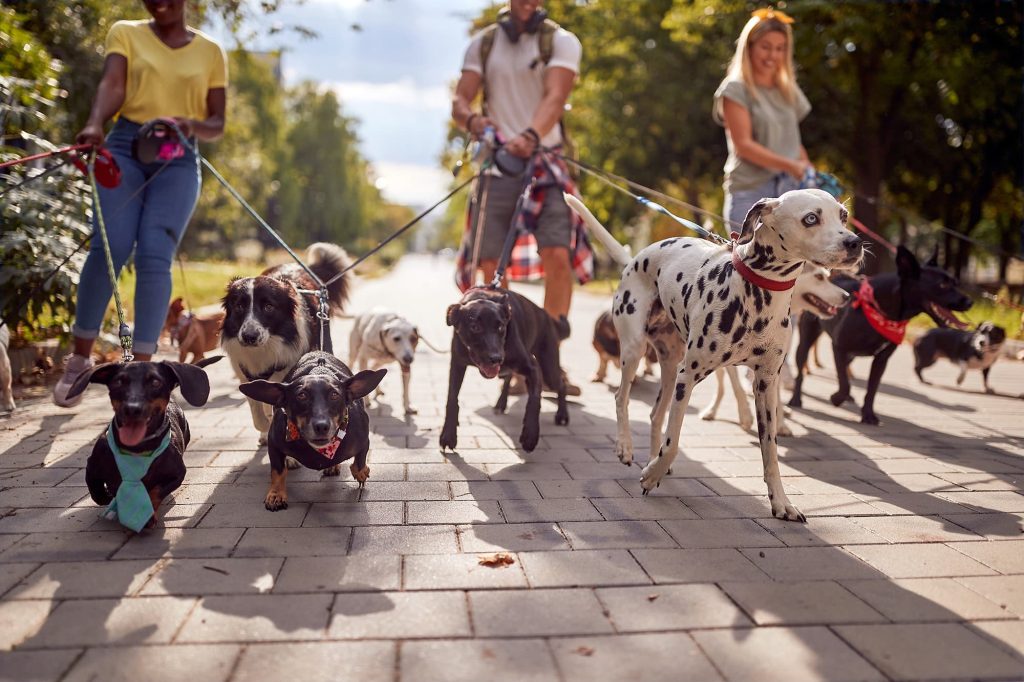
Dogs are human’s best friends in many places across the globe. But does a dog in New York City respond in the same way as a dog in Kyoto? Or Buenos Aires?
Much of canine science has focused on the Western world, namely in and around universities in North America and Europe. In a new paper published in Current Directions in Psychological Science, Julia Espinosa and a team of international colleagues highlight this gap in the scientific literature. They emphasize how existing findings on dog behavior may only be applicable for a subset of canines, how dog and human relationships may vary in understudied countries, and how a globally collaborative approach can provide a solution in boosting multicultural understanding of human–animal interactions.
“[Dogs] have different relationships in different places of the world, and so when we approach understanding dogs as a species, we do so from this narrow perspective of Western culture,” said Espinosa, an animal behavior researcher at York University in Toronto. “We’re really not getting the whole picture until we start including a lot of more populations from other places.”
Human psychological research has long recognized a bias toward Western views. More than a decade ago, researchers began pointing out that many studies in experimental psychology focused on participants from Western, educated, industrialized, rich and democratic (WEIRD) societies. But in 2020, animal researchers began to recognize a similar slant for study animals, where research is centered around a narrow range of STRANGE factors (social background; trappability and self-selection; rearing history; acclimation and habituation; natural changes in responsiveness; genetic make-up; and experience; Webster and Rutz, 2020).
In the new paper, Espinosa and her colleagues discuss how canine science is similarly one-dimensional when it comes to STRANGE factors. Dogs in North America and Europe tend to have doting owners that provide training and education (rearing history) and come in more unique breeds (genetic makeup). This bias likely occurs because canine science is usually done on university campuses in Western countries and attracts participants of high socioeconomic status.
As a result, other dogs with diverse experiences are missing from broader literature. For instance, in the Global South, dogs are generally more autonomous, Espinosa explained, with more agency to roam the streets and find food. But because of a lack of research, it’s unclear how the behavior of these dogs differs from companion dogs in the Global North. Espinosa added that working dogs represent another research gap: These canines are often busy and harder to access because of their jobs in medical service, rescue, or therapy.
The paper argues that big-team science—forming a large collaborative network of labs from around the world—may help scientists sample these understudied populations. There are a number of these initiatives in comparative psychology, such as ManyPrimates and ManyBirds. ManyDogs, an international consortium for those interested in canine science, was started more recently by Espinosa and her colleagues.
“It’s really a bunch of people who decide to pretty selflessly put aside their personal research interests in pursuit of doing things that will really benefit the field,” she explained. In this community, researchers break beyond the bounds of their institution, work together to figure out what to study, standardize approaches and data collection, and help each other carry out the research in their local areas.
Forming these collaborations can help scientists overcome the limitations of their geography and ask bigger questions. “You can’t make broad statements about why dogs are the way they are, why they behave the way they do, unless you have a much more representative sample,” Espinosa said. The paper highlights how ManyDogs has helped researchers undertake bigger studies; for instance, a large team collectively examined a research question by combining data from Toronto to Vienna to Kyoto. In doing so, “we have a much better idea of the ways that dogs in these different regions are similar, the ways that they are different,” Espinosa said.
These advances may not only help us understand our closest companions, but also ourselves, as canines and humans have evolved side by side for millennia. “I think that dogs are incredibly valuable for understanding human evolution and human psychology,” Espinosa said. “Being exposed to the same stressors, the same environmental features, they are perhaps the best comparison species.”
Feedback on this article? Email [email protected] or login to comment.
References
Espinosa, J., Cavalli, C., Bentosela. M., Bhadra, A., & Stevens, J. R. (2026). Beyond WEIRD humans and STRANGE dogs: Using big team science to improve generalizability and reproducibility in comparative psychology. Current Directions in Psychological Science.
Webster, M. M., & Rutz, C. (2020). How STRANGE are your study animals? Nature, 582(7812), 337–340.


APS regularly opens certain online articles for discussion on our website. Effective February 2021, you must be a logged-in APS member to post comments. By posting a comment, you agree to our Community Guidelines and the display of your profile information, including your name and affiliation. Any opinions, findings, conclusions, or recommendations present in article comments are those of the writers and do not necessarily reflect the views of APS or the article’s author. For more information, please see our Community Guidelines.
Please login with your APS account to comment.