
Why Ethnic Minorities Prefer Strong Leaders
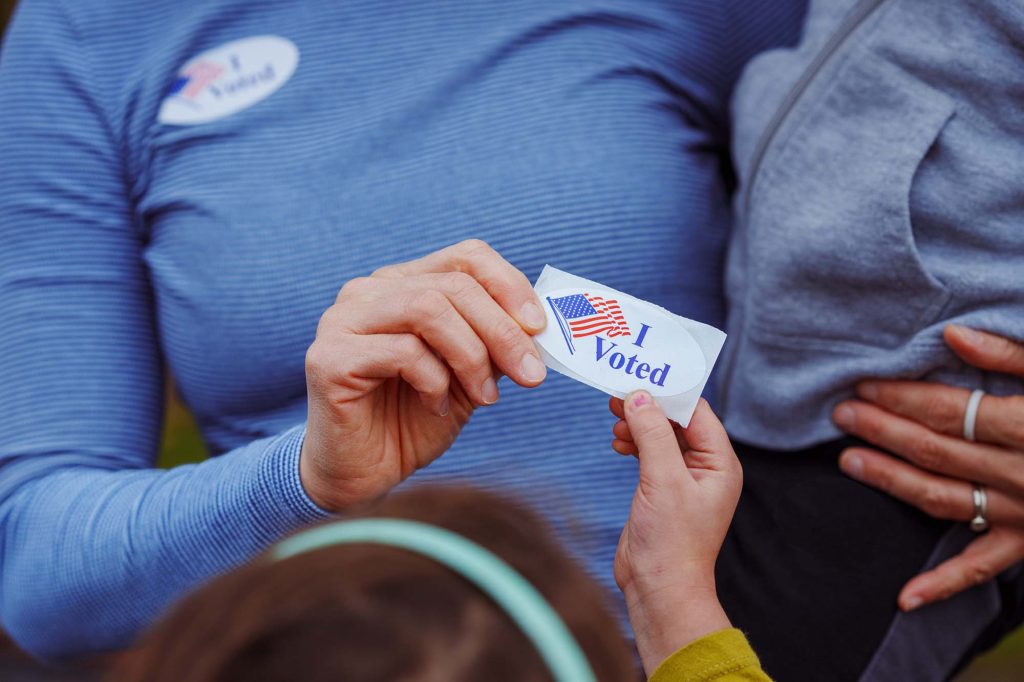
In the 2024 U.S. presidential election, a large number of immigrants voted for the Republican candidate, Donald Trump, despite the campaign’s xenophobic rhetoric. Around the world, ethnic minorities have also been swinging conservative, perplexing experts and the public about a voting base that has traditionally leaned to the political left.
But for Krishnan Nair, a postdoctoral fellow at the University of Illinois Urbana-Champaign, the trend is less surprising. A son of Indian immigrants, and someone who has researched ethnic minorities, Nair said he has seen a pattern in which individuals with immigrant backgrounds “have a lot of values that are closer to the political right but nevertheless have tended to vote for the political left.”
These political nuances, however, are not well-documented in scientific literature, which led Nair and his colleagues to publish a new paper in Psychological Science on the leadership preferences of ethnic minorities. Research in the past has focused on white samples, which have traditionally been the majority of voters in the United States and Western Europe.
“But over time, that’s changed,” Nair said. “Still, there’s not as much of an attention to ethnicity. And in this paper, we’re highlighting that ethnicity is really important for understanding politics,”
Nair and his team analyzed three survey datasets: two from the United States and one from Western Europe. The data contained information about the respondents’ ethnicity, political orientation, and attitudes toward strong leaders in elections and in government. The researchers’ analyses found that minorities across ethnic and political backgrounds consistently favored strong and dominant leaders more than white respondents, Nair explained. Their preferences also more closely resemble those of right-wing rather than left-wing white individuals.
The mechanism that drives these leadership preferences may be lower levels of generalized trust. The link between trust and leadership has been established by political theorists since the 17th and 18th centuries: When people don’t trust others in their group, they have a preference for a leader with an affinity for enforcement and punishment.
The study proposed two main reasons for this lower level of trust. First, many ethnic minorities tend to occupy a lower status in society, particularly in wealthy countries like the United States and Western European nations. Second, ethnic minority groups tend to come from countries that already have low trust in institutions and have strong leaders at the helm. “Those tendencies often last for several generations,” Nair said.
To further strengthen the link between trust and leader preference, Nair and colleagues also conducted experimental mediation. They recruited 903 U.S. participants, of whom a third were white Democrats, a third white Republicans, and a third ethnic minorities of various political orientations. In this manipulation, participants were encouraged to have higher trust by imagining a fictional place where people are compassionate, hard-working, and trustworthy. The researchers found that when minorities were encouraged to have this higher trust, their preference for strong leaders more closely resembled that of left-wing white individuals. In other words, their preference for strong leaders decreased with increased trust.
Understanding these leadership preferences may help researchers decipher the future of politics in the United States and many parts of the Western world, where ethnic minority populations are rapidly growing. Analyses by national news outlets have shown that minority support for Trump has increased each subsequent time he’s run for president. Similarly, countries like the United Kingdom and Canada have also seen a rightward voting shift in their immigrant populations. However, it’s unclear whether these trends will continue. It’s possible that left-wing parties may have more minority representation in the future or gain their own strong leader, Nair said. “In terms of implications, a lot of that is yet to be seen.”
In the meantime, social research that transcends predominantly white samples has implications beyond political dynamics, Nair said. For instance, preference for a strong leader may mean that minorities prefer a starker hierarchy in workplaces. Ethnic minorities are also a diverse group with a wide range of values and morals that sometimes align with the right and sometimes with the left. Future research could focus on detangling these nuances.
“Look at ethnicity as a key variable, because ethnic differences are important,” Nair said.
Feedback on this article? Email [email protected] or login to comment.
References
Nair, K., Mooijman, M., & Kouchaki, M. (2025). The ethnic and political divide in the preference for strong leaders. Psychological Science, 36(5), 384–403.
Bender, M., Glueck, K., Igielnik, R., & Medina, J. (2024, November 7). In Trump’s win, G.O.P. sees signs of a game-changing new coalition. The New York Times.



APS regularly opens certain online articles for discussion on our website. Effective February 2021, you must be a logged-in APS member to post comments. By posting a comment, you agree to our Community Guidelines and the display of your profile information, including your name and affiliation. Any opinions, findings, conclusions, or recommendations present in article comments are those of the writers and do not necessarily reflect the views of APS or the article’s author. For more information, please see our Community Guidelines.
Please login with your APS account to comment.