
-
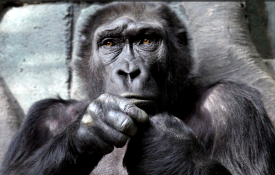
Like Humans, Great Apes Think Differently From Each Other
A new study assesses how cognitive skills of great apes vary between individuals.
-
Why You Should Seek Out a Few Minutes of Awe Every Day
... Awe is one of those emotions you recognize the instant you feel it. It’s the feeling you get “when you encounter things that are vast and beyond your frame of reference,” says Dacher Keltner, a psychologist at the University of California, Berkeley, and author of Awe: The New Science of Everyday Wonder and How It Can Transform Your Life. He's identified a set of reliable sources that includes nature, music, visual design, birth, spirituality, and moral beauty: moments when we witness extraordinary kindness, courage, or generosity in other people.
-
There’s a Name for the People Who Drain You
... The PNAS study didn’t measure what, precisely, hasslers do that is so annoying. But Karen S. Rook, a UC Irvine psychologist who was not involved with the study but who has researched similar phenomena, told me that her study participants frequently complain about people who fail to provide help when it’s needed, or who provide it in a grudging way. (Sometimes, Rook noted, people keep hasslers in their life because of how much they do need help, even if the help is imperfect.) Hasslers might also be overly critical, or exclude others from social activities.
-
How We Chose the 2026 Young American Scientists
Scientific American used expert recommendations and data analysis to identify 28 exceptional early-career researchers. In late 2025 we asked the world’s top researchers a simple question: Who are the best, most promising early-career scientists working in the U.S.? We then read through nominations, mined scientific journals and performed a rigorous data analysis to choose the inaugural class of Scientific American’s Young American Scientists. While we used multiple methods to identify our honorees, the final selections are based on the qualitative judgment of outside experts and our editorial staff.
-
How Does One Brain Speak Two Languages?
Speak a language your whole life and its grammatical rules become ingrained. That’s why you might correctly guess that the present participle of the verb “absquatulate” is “absquatulating,” even if you are completely unfamiliar with the word. ... Early research viewed bilingualism as an “add on” or “disruption” to the processing of one’s native language, said Judith Kroll, a psycholinguist at the University of California, Irvine who was not involved in the new study.
-
Socioeconomic Factors Are Becoming ‘Biologically Embedded’ In Children’s Brains
The most powerful factors affecting a child's brain development involve socioeconomic opportunities, according to a study in the journal Science. The analysis of more than 2,300 9- and 10-year-olds found that environmental factors ranging from household income to education to neighborhood quality are associated with brain differences that can clearly be seen in MRI scans. ... The research "highlights the fact that the environment in which we grow up and live has powerful impacts on our brain," says Russell Poldrack, a psychology professor at Stanford University who was not involved in the study.
