



Featured Speakers
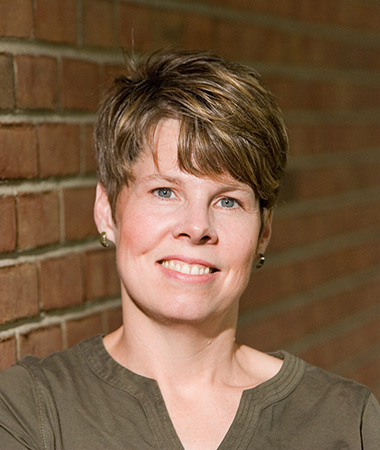
APS President, Pamela Davis-Kean, University of Michigan, USA
The Presidential Plenary Sessions are a longstanding feature of the APS Annual Convention, bringing the entire Convention community together to hear from leading psychological scientists. Invited by the APS President, these sessions showcase thought-provoking discussions on topics driving important conversations across the field. All attendees are encouraged to attend these highlight events.
Psychological Science and Society Presidential Plenary Panel Session
Beyond the Panic: What the Evidence Says About Social Media and Well-Being
Concerns about social media’s effects on youth mental health have dominated public discourse, often outpacing what the empirical evidence actually supports. This symposium brings together researchers studying the relationship between digital technology use and psychological well-being from complementary methodological angles. Speakers will examine the strength and limits of current evidence linking social media and smartphone use to adolescent mental health, address common methodological pitfalls in this literature, and explore why effect sizes, causal claims, and public narratives so often diverge. Together, the talks aim to move the conversation beyond alarm toward a more evidence-based understanding of when, how, and for whom digital technology use matters for well-being.
The Psychological Science and Society plenary session is made possible by generous support from the Alan Kraut-Jane Steinberg Family Fund (KSFF).
Speakers:
Candice L. Odgers, University of California, Irvine, USA
Nick Allen, University of Oregon, USA
Andrew Przybylski, Oxford University, United Kingdom
Kathy Modecki, The University of Western Australia
Presidential Plenary Session
The Data Mosaic: Innovative Data Sources and Methods That Advance Psychological Science
Psychological outcomes are shaped by influences that unfold across time, contexts, and levels of analysis. No single data source can capture the full picture. This symposium showcases innovative approaches to integrating diverse data types—from large-scale administrative and population-based records to longitudinal and developmental designs—to build richer, more comprehensive accounts of psychological and behavioral outcomes. Speakers will demonstrate how combining varied data sources and methods can uncover patterns invisible to any single approach, while addressing the analytic and conceptual challenges of working across data types. Together, the talks will illustrate how a “mosaic” approach to data can deepen our understanding of how psychological outcomes emerge and unfold over the life course.
Speakers:
Leah Richmond-Rakerd, University of Michigan, USA
Justin Jager, University of Michigan, USA
Kathryn Paige Harden, University of Texas at Austin, USA
Presidential Plenary Session
Then and Now: How Psychological Science Rose to Its Own Challenge
Over the past decade and a half, psychological science has undergone a period of intense methodological self-examination, confronting questions about replicability, statistical practices, and research transparency. This symposium reflects on that period of reform: what prompted it, what has changed as a result, and what remains unresolved. Speakers will discuss advances in open science practices, measurement and validity, and the broader research culture that have reshaped how psychological research is conducted and evaluated. Together, the talks will offer both a retrospective on the field’s response to its credibility challenges and a forward-looking assessment of where psychological science still needs to grow.
Speakers:
Simine Vazire, University of Melbourne, Australia
Jessica Flake, The University of British Columbia, Canada
Leif Nelson, University of California, Berkeley, USA
Daniel J. Simons, University of Illinois, USA
