

Psychological Science and Society Plenary Session:
Collective Cognition
Saturday, May 24, 6:00 PM – 7:30 PM
This panel brings together speakers carrying out novel research to address how group interaction influences cognitive processing, going beyond the typical approach of studying cognition through observing individuals acting alone.
Learning, memory, and decision-making often involve individuals working together such as in group projects in classroom environments or in workplace teams, and other everyday settings such as family, community, and social media where people influence one another. However, much research on these topics has focused on individuals working alone. This panel will present recent findings on the effects of group interaction including collaborative remembering, allocation of roles among team members, and the impact of artificial intelligence on teamwork. The speakers will address whether the findings can be derived from principles uncovered by individuals and how group members arrive at collective representations and joint action.
The Psychological Science and Society plenary session is made possible by generous support from the Alan Kraut-Jane Steinberg Family Fund (KSFF). This plenary session is held annually during the APS Annual Convention to showcase the use of psychological science in the public sphere.
Chair: APS President Randi C. Martin, Rice University

How Cognition Shapes Collective Memory
Whether studying for exams, remembering a family vacation, or recalling important public events, we remember the past with others. Despite the ubiquity of social remembering, research on human memory has focused on people performing memory tasks alone. This approach has uncovered many principles of individual cognition, but it cannot explain the interplay of cognitive processes involved in group remembering. Rajaram and her research team study group remembering and the dynamic reciprocity between the collective and the individual. This work has led to an integrative framework to capture the different cognitive mechanisms that come into action during collaborative remembering and cannot be inferred from examining individual performance alone. This integrative approach allows experimental tests of social influences on both accurate memory and memory errors, and it identifies the confluence of specific cognitive processes that give rise to collective memory. Rajaram will discuss experimental studies by her research group on these questions about social memory.
Speaker: Suparna Rajaram, Stony Brook University, The State University of New York
Dr. Suparna Rajaram, SUNY Distinguished Professor of Psychology at Stony Brook University and past president of APS has been a leader in the development of research on collective remembering, in which individuals learn information and recall it together in groups. The research addresses the extent to which the principles of memory established from the study of individuals apply to group recall and the extent to which social influences affect memory, leading to the emergence of collective memory.

Doing Your Own Thing, Together: The Special Role of Specialized Roles in Group Coordination
Humans routinely form groups to achieve goals that no individual could accomplish on their own. Across several collective behavior paradigms that we have studied, effective group coordination arises not from all members acting in unison, but from a division of labor that emerges during group interactions. Successful division of labor is facilitated by players assuming specialized roles, with players becoming consistent in their own behavior, and becoming differentiated from the other players. The computational models that fit human group behavior the best and also perform the best have mechanisms to a) communicate intentions, plans, and proposals across group members, b) adapt to feedback provided by the environment, c) repulse a member’s behavior from others, d) create plans at multiple temporal scales, from moment-to-moment shifts in task coverage to the lifelong development of expertise, and e) infer other members’ knowledge and intentions from their behaviors.
Speaker: Robert L. Goldstone, Indiana University Bloomington
Dr. Robert Goldstone, Distinguished Professor of Psychological and Brain Sciences at Indiana University, has carried out innovative research using behavioral results and computational modeling which documents a self-organizing system for the division of cognitive labor in groups. The results assist in the understanding of how cognitive processes influence group dynamics with potential applications for improving cooperation in groups.

Interactive Team Cognition for Humans and Machines
A team is a heterogeneous group of team members, each with their own roles and responsibilities, who come together to achieve a common goal. Team cognition is the joint processing of information by a team that produces knowledge and actions, beyond what an individual could produce. Nancy J. Cooke will provide examples of some of the team cognition research conducted over the last 30 years that led to the theory of Interactive Team Cognition. In addition, Cooke will suggest some future directions for this work that include a focus on team-level measurement and extension of team cognition to human, artificial intelligence, and robot teaming.
Speaker: Nancy J. Cooke, Arizona State University
Dr. Nancy Cooke, Professor of Human Systems Engineering at Arizona State University, is a leader in the human factors field in examining individual and team cognition and its application to a variety of applied domains such as threat detection and emergency response systems. Her work includes investigation of the effects of teaming humans with AI agents, with ongoing projects on the coordination of human-AI teams in the face of unexpected events.
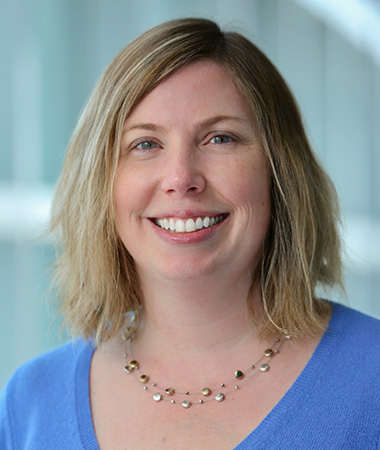
Moderator: Angela Gutchess, Brandeis University
Dr. Angela Gutchess, Professor of Psychology at Brandeis University, has been a leader in initiating the examination of social and cultural influences on cognition.
