APS William James Fellow Award

The APS William James Fellow Award honors APS members for their lifetime of significant intellectual contributions to the basic science of psychology. Recipients must be APS members recognized internationally for their outstanding contributions to scientific psychology. Honorees are recognized annually at the APS Convention.

APS’s lifetime achievement awards are not exclusive. In other words, an exceptional psychological scientist might be awarded all of them.


Nomination Information

View a list of Past Award Recipients


APS William James Fellow Award Committee

Isabel Gauthier, Chair
Vanderbilt University
Kent Berridge, Member
University of Michigan
Sotaro Kita, Member
University of Warwick
Mark Sabbagh, Member
Queen's University, Canada
Yukiko Uchida, Member
Kyoto University

2026 Award Recipients


Deanna M. Barch

Washington University in St. Louis

Deanna M. Barch’s meteoric career trajectory has led her to become one of the world’s top researchers in clinical cognitive neuroscience. Barch holds several titles at Washington University in St. Louis, including Vice Dean of Research, Professor of Psychological & Brain Sciences and of Radiology, and Gregory B. Couch Professor of Psychiatry. Her research involves multiple levels of analysis and methods, and her widely cited research on cognitive control in schizophrenia has illuminated the specific types of cognitive control deficits that characterize what is one of the most poorly understood psychological disorders. Her work shows that that people with schizophrenia have trouble maintaining contextual information, contributing to their difficulties with attention, working memory, episodic memory, and language production. This body of work has changed the way researchers approach the study of cognition in schizophrenia. Barch’s involvement in treatment research aims to spur the development of novel agents to target cognitive deficits in schizophrenia. She also is involved in research to identify neural predictors of depression in very young children and is helping spur the development of treatments that can be implemented in preschools. The remarkable scope of her work has dramatically advanced the fields of cognitive psychology, neuroscience, and clinical psychology. 


Dacher Keltner

University of California, Berkeley

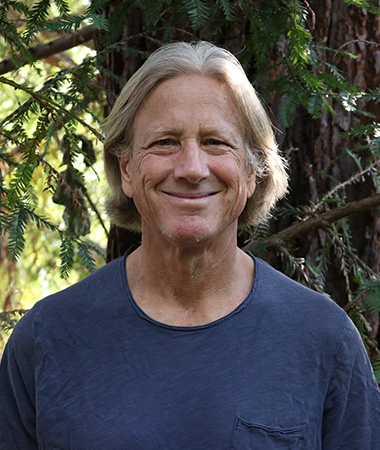
The breadth, depth, and impact of Dacher Keltner’s work is nothing short of remarkable. A Distinguished Professor at the University of California, Berkeley, his research on complex human emotions is impressively broad. His body of work includes groundbreaking research on self-conscious and positive emotions and their interrelations with a host of psychological, sociocognitive, physiological, and moral consequences. He has shown how specific emotions shape causal reasoning, perceptions of risk, and moral judgments concerning punishment, harm, purity, and fairness. With new computational approaches, novel measures, and data from over 26 cultures, he has mapped the forms and functions of emotions such as compassion, awe, love, and embarrassment. His exploration of social class and inequality has documented how social power shapes basic cognitive processes, from empathy to prejudice, and leads to impulsive and inconsiderate behavior. And his creative work on awe has drawn widespread interest in the field. He and his students have documented how awe shifts the sense of self to be more collective and embedded within social networks of strong ties, gives rise to patterns of sharing and cooperation. Keltner’s prolific work has profoundly changed the way social psychologists think about power, social class, and human emotions. 


Brenda N. Major

University of California, Santa Barbara

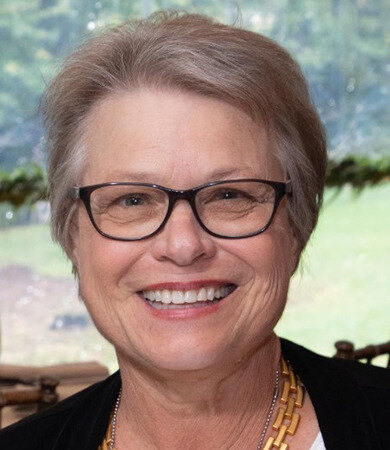
Brenda N. Major is an eminent social psychologist whose scholarship created a new paradigm of studying “prejudice from the targets’ perspective,” redefining the way we think about social stigma. Major is Distinguished Professor Emeritus of Psychological and Brain Sciences at the University of California, Santa Barbara. Over the past 5 decades, she has made ground-breaking discoveries into how and when members of devalued groups in society remain psychologically resilient in the face of discrimination and adversity, while also experiencing physiological strain with implication for health and well-being. Her research also helped shape a new theoretical perspective for the burgeoning interdisciplinary topic of health disparities. Her work identified how stigma affects psychological and physical health and contributes to health disparities. Applying elegant theory and rigorous research to important social issues, she has contributed important empirical discoveries on a wide range of topics. She has shown how diversity initiatives can ironically make it more difficult to recognize biases, how beliefs in the American Dream can block social justice motives, and how cognitive reactions following abortion contributed to mental health. Major’s contributions to psychological science are creative, numerous, and deep in intellectual merit, with significant implications for society’s most important social problems.