
Professional Development: Science Homecoming: Writing for Local Impact
Many researchers are looking for ways to advocate for their science as the funding landscape for scientific research becomes more uncertain in the United States and other areas of the world. One new initiative is providing an opportunity for scientists to communicate the value of their work with the communities they have a deep connection with.
In a joint webinar with APS’s Scientific and Public Affairs Department, psychology professor Steve Piantadosi (University of California, Berkeley) presented on a project he co-created alongside psychology professor Jessica Cantlon (Carnegie Mellon University) in early 2025.
Science Homecoming provides a space for scientists to write editorials about the impact of their research for their hometown newspapers. In just a few months, the project has already helped researchers publish over 60 opinion pieces in local news outlets
Hannah Brown, managing editor for the Observer, began the webinar with a presentation of five tips to make your science writing engaging and accessible to a variety of audiences.
One tip she shared was to use quotes to help give more a personal voice to writing about scientific topics.
“Quotes are a very powerful tool, and I think for a lot of scientific institutions, they are underutilized,” she said.
Brown provided a few guidelines for conducting interviews, including recording the interview to be sure any quotes used are accurate.
“You do not want to put words in somebody’s mouth or make assumptions on what they were trying to say,” she said. “If you’re going to have that relationship with someone, they’re giving you that level of trust to capture their voice in an accurate way. And I think it’s really important to treat that seriously.”
Piantadosi described the motivation behind the project.
“I think very tragic and troubling things have been happening recently,” he said. “For instance, firing the federal workers at NSF [the National Science Foundation] and NIH [the National Institutes of Health], including probationary employees but also people who work in intramural research at NIH, and reorganizing departments in ways that are haphazard and are very likely to mess up the funding model that many specific areas in science, like psychology, have enjoyed for decades.”
Piantadosi acknowledged that many researchers feel uncertain about the future and are searching for ways to act that can make a difference. He said that individuals in academia who have protected positions have a responsibility to society to stand up on behalf of scientific institutions.
“Tenured faculty, for instance, have jobs that are very well protected. They have freedom of speech and academic freedom, which is very well protected, much more so than scientists or academics working in businesses,” he said. “And those freedoms, I think, give us considerable latitude to try to do something to protect science.”
For more information on how to work with Science Homecoming, visit www.sciencehomecoming.com.
Speakers
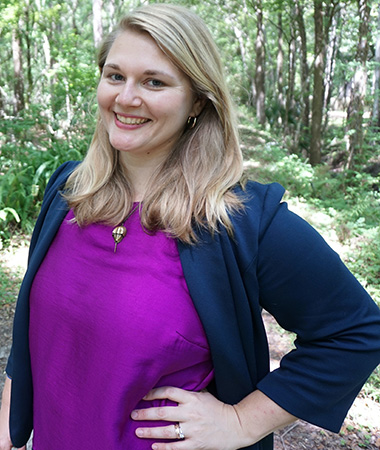
Hannah O. Brown
Association for Psychological ScienceHannah O. Brown is the managing editor of the Observer, a news magazine hosted by the Association for Psychological Science. Hannah has a background in social science research and has worked as a professional journalist since 2010.
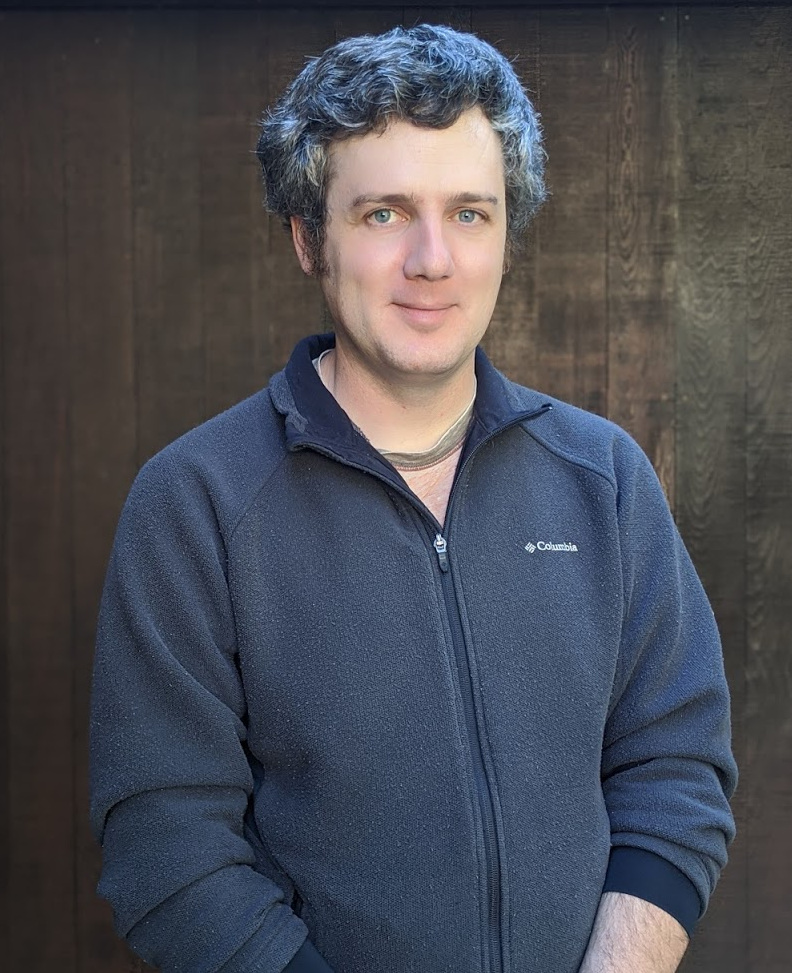
Steve Piantadosi
UC BerkeleySteve Piantadosi is a computational cognitive scientist whose research examines how children learn language and mathematics. He is a co-founder of Science Homecoming, an initiative to encourage scientists to reach out to their hometowns to promote the importance of NSF and NIH.
