
-
Touching Grass
Do you check the daily screen time on your phone? The number can be jarring. ... It may be uncomfortable at first to be alone with your thoughts. But to get the most out of this in terms of reduced stress, better sleep, higher levels of focus and sharper memory, “you do have to unplug,” said Marc Berman, a psychologist at the University of Chicago and the author of “Nature and the Mind.”
-
The High Cost of Silent Classrooms
... The cost of this silence is both cognitive and social. When artificial intelligence anticipates every step before a student even recognizes a hurdle, it strips away the productive struggle on which learning depends. Students need to wrestle with confusion to build their own understanding. The neuroscientist Mary Helen Immordino-Yang and her colleagues have shown that deep learning, the kind that sticks, happens when students connect what they are learning to bigger ideas and to their own lives. Replace dialogue and struggle with isolated screen time, and we disrupt the neural circuits that allow students to build knowledge. ... Doubling down on isolation is dangerous.
-
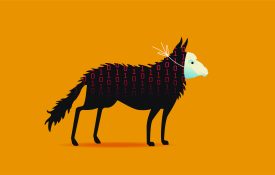
To Fight Fraud, Psychological Scientists Issue a Call to Arms
Scams are now one of the most common crimes in the world. In the most recent issue of PSPI, real-life accounts are used to illustrate how pervasive and indiscriminate fraud can be.
-
Want to ‘Optimize’ Your Happiness? This Happiness Expert Says: Don’t
Are you happy? It’s a deceptively simple question, but for me, at least, a difficult one to answer. Another tough question: Why is it so hard to be happy for so many? Despite a culture full of wellness influencers with their happiness hacks and mind-set tricks, all of the indicators show that we Americans are less happy than ever. It’s as if the more energy we focus on trying to feel happy, the harder it is to achieve. So what is going on and what can we do about it? I put these questions to Laurie Santos. Santos is a cognitive scientist and professor whose class on happiness quickly became the most popular in Yale’s history.
-

Why Is Economic Inequality the Status Quo?
The latest PSPI issue examines the political psychology of economic inequality and highlights the cognitive processes that sustain high levels of inequality across nations.
-

APS Announces Winners of the 2026 Student Poster Awards
Read the personal stories behind some of the best student posters accepted for the APS Convention 2026, 28–30 May, in Barcelona, Spain, as selected by reviewers for the three categories of awards.
