APS James McKeen Cattell Fellow Award

The APS James McKeen Cattell Fellow Award recognizes APS members for a lifetime of outstanding contributions to the area of applied psychological research. Recipients must be APS members whose research addresses a critical problem in society at large. Honorees are recognized annually at the APS Convention.

APS’s lifetime achievement awards are not exclusive. In other words, an exceptional psychological scientist might be awarded all of them.


Nomination Information
View a list of Past Award Recipients


APS James McKeen Cattell Fellow Award Committee

Richard Liu, Chair
Massachusetts General Hospital/Harvard Medical School
Kathryn Hirsh-Pasek, Member
Temple University
Peter Rentfrow, Member
University of Cambridge
Eduardo Salas, Member
Rice University
Ayanna Thomas, Member
Tufts University

2026 Award Recipients


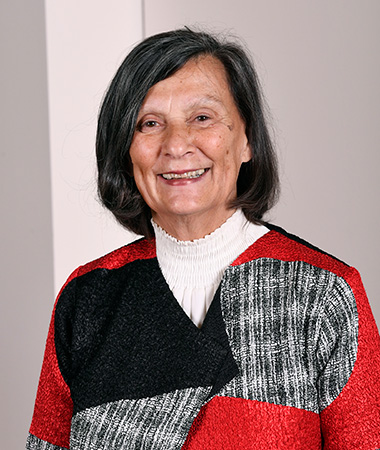
Toni C. Antonucci

University of Michigan

Toni C. Antonucci is an internationally eminent scholar in lifespan development and an interdisciplinary scientist working at the nexus of developmental psychology and survey research. At the University of Michigan, Antonucci is the Elizabeth M. Douvan Collegiate Professor of Psychology and Director of the Life Course Development program in the Institute for Social Research. Her research has examined change in adults as they transition across major life events such as marriage, retirement, and widowhood. She was among the first to provide empirical evidence that people not only feel better when they are embedded in strong social networks, but experience better physical health and live longer than people with fewer social ties. Antonucci (with Robert Kahn) devised the Convoy Model of Social Relations, an integrative conceptualization that constituted the first truly unifying view of how close relationships develop over the lifespan. Her model has been used widely in major surveys in Europe, Asia, and North America. Her research shows that people build social convoys that accompany them throughout life, usually culminating in old age in relatively small circles comprised of familiar social partners with strong social connections. Antonucci has played a foundational role in uncovering the crucial importance of social relations for physical health, cognition, and well-being. 


William G. Iacono

University of Minnesota

William G. Iacono is a pioneer in the neurobehavioral study of mental disorders. His work shows enormous breadth, encompassing psychology, psychiatry, neuroscience, law, psychophysiology, genetics, and developmental psychopathology. Iacono, Regents Professor Emeritus of Psychology, Psychiatry, Neuroscience, and Law at the University of Minnesota, is best known for his landmark longitudinal investigations of mental disorders in large population-representative samples of twins and their families. He is particularly renowned for his groundbreaking work on endophenotypes in psychopathology, a concept he developed in the context of schizophrenia and extended to substance use disorders. His work showed that many attributes thought to be consequences of psychiatric disorder are genetically influenced risk factors that predate disorder onset, revealing entry points in developmental processes that provide opportunities for interventions aimed at preventing or ameliorating subsequent disease. With his empirical studies and a major meta-analysis on eye tracking as an endophenotype, a term used to describe heritable traits associated with a condition, for schizophrenia, he opened numerous avenues of investigation. Iacono is also the world’s leading scientific expert on the physiological detection of deception (lie detection). His research, which includes the only empirical work conducted by non-industry investigators to have directly evaluated the validity of polygraph tests in real-life cases, demonstrated that field polygraph tests are biased against innocent individuals. Iacono stands out as a scientist who combines a substantive scientific record with an admirable service record.