
2026 APS BOARD OF DIRECTORS ELECTION
Voting in the 2026 APS Board of Directors election has concluded, and the results are in!
New APS Board Members-at-Large Margaret Beier, Stephanie Del Tufo, Silvia Koller, and Scott Vrieze will begin 4-year terms on June 1, 2026, joining incoming President-Elect Ayanna Thomas and other continuing members of the Board.
Thank you to all who stood for office and to all who voted. Thank you also to Randi Martin (Past President), Teresa Bajo (Member-at-Large), and Lila Davachi (Member-at-Large) as their terms end and they rotate off the Board.
Incoming Members-at-Large
Margaret E. Beier
Rice University
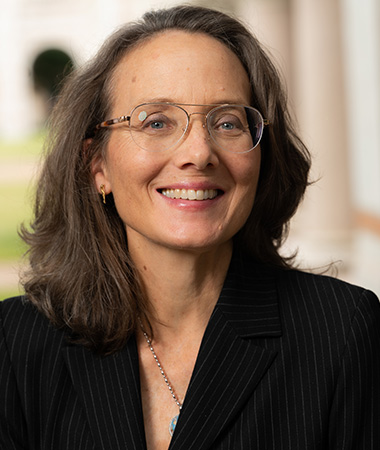
Margaret E. Beier is a Professor and the Chair of the Department of Psychological Sciences at Rice University. She earned her PhD and MS in Psychology from the Georgia Institute of Technology and her BA from Colby College. Beier’s scholarly work focuses on how people navigate work and educational environments, particularly as related to abilities, motivation, and the self-regulatory mechanisms required for learning, reskilling, upskilling, and successful workplace aging. Her research provides critical insights into how age-related changes in cognitive abilities shape worker motivation, engagement, and skill development, particularly in the context of a future of work characterized by an increasingly age-diverse workforce and technological disruption. Her research has been funded by the Howard Hughes Medical Institute, Microsoft Corporation, the Institute for Education Science, and the National Science Foundation, and has been published in top outlets such as the Journal of Applied Psychology, Journal of Business and Psychology, Current Directions in Psychological Science, Personnel Psychology, and Psychological Bulletin.
Margaret has served on committees of the National Academies of Sciences, Engineering, and Medicine (NASEM), resulting in the consensus reports How People Learn II: Learners, Contexts, and Cultures (2018) and Are Generational Categories Meaningful Distinctions for Workplace Management? (2020). She chaired the NASEM committee on “Adult Learning in Military Contexts” (2025). Her scholarly contributions have been recognized with numerous honors, including being named a Fellow of the Association for Psychological Science, the American Educational Research Association, and APA Division 14 (i.e., the Society for Industrial and Organizational Psychology, SIOP). She also works extensively with graduate and undergraduate students and has won mentoring and teaching awards at Rice University, including the Presidential Mentoring Award in 2019.
Margaret joined APS in graduate school and has been an active member ever since. She was a member of the conference planning committee, which involved developing a program for applied/industrial and organizational psychologists and serving as a liaison between SIOP and APS from 2016 through 2019. She also served on the APS election committee, which involved recruiting members to serve in elected roles at APS from 2022 to 2025. She also regularly attends the convention with graduate and undergraduate students.
Read the Candidate’s Statement
Psychological science has always excelled at generating scientific insight but has not always excelled at translating those insights into applied settings or communicating those insights to community members who might benefit from them. As an applied psychologist, I am oriented toward use-inspired research; that is, the pursuit of fundamental understanding of a topic motivated by a drive to solve practical problems. Use-inspired research ensures that our field remains relevant both intellectually and practically.
Psychological insights can inform many pressing questions facing society today. For example, technology and AI are changing how people interact with one another, how they engage in their jobs, and how they learn. Also, financial inequity is increasing stress and reducing access to opportunities in ways that affect psychological health, and population aging necessitates a focus on brain health. Psychologists should be at the forefront of these, and many other, societal concerns. Although APS has developed programming to help psychological scientists communicate the importance of our work, we can do more. We can partner with community members, policy makers, and industry to share our research in ways that can address societal issues.
To be able to inform societal issues, we need to ensure the health of APS, which has experienced a decline in membership over the past decade. The strength of APS lies in its focus on psychological science and its interdisciplinary nature across psychology, but APS could better articulate its value to members, to psychologists, and to graduate and undergraduate students. The need for interdisciplinary work in psychology, particularly bridging basic and applied questions, has never been more urgent. By increasing our visibility in public discourse and providing pathways for members to inform broad societal questions, we can enhance the relevance and value of our association for our membership.
Stephanie N. Del Tufo
University of Delaware
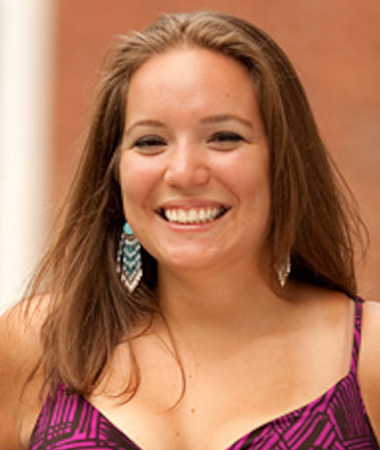
Stephanie N. Del Tufo is an Assistant Professor in the Department of Psychological and Brain Sciences, College of Education and Human Development, and the Interdisciplinary Neuroscience Graduate Program at the University of Delaware. As director of the Developmental and Aging Neuroscience Education Laboratory, she studies how biological and social experiences shape language development. Her work, supported by the National Institutes of Health, the Spencer Foundation, and the Mind Science Foundation, has appeared in Science, Neuron, Cerebral Cortex, and the Journal of Neuroscience. In 2023, she was recognized as an APS Rising Star.
From her early career at Smith College and the Massachusetts Institute of Technology (MIT), she has understood her work as having an audience beyond academia. She has contributed to The Conversation, been interviewed by Delaware Public Media and EdSurge, and her research has been covered by Time Magazine, The New York Times, and the BBC, among others.
After earning her PhD from the University of Connecticut with graduate training at Haskins Laboratories at the Yale School of Medicine, she completed a postdoctoral fellowship at Vanderbilt University, where she began building programming and community to support early-career scientists. She has organized neuroimaging workshops in collaboration with NIH intramural researchers and a Spencer Foundation-funded workshop integrating advanced methods with equity. Recently, she created a webinar for Women in Cognitive Science (WICS+), supporting early-career scientists navigating the job market, and serves as an Early Career Representative on an American Association for the Advancement of Science (AAAS) Steering Committee. She serves as a Consulting Editor for Child Development and the Journal of Research on Adolescence, and as an Assistant Editor for Emerging Adulthood.
She would bring to the APS Board a research identity rooted in integration, a career built on translation, and a deep investment in where psychological science goes next.
***
In 2020, I became an APS member and later a lifetime member. I present regularly at the Annual Convention, and in 2023, I was recognized as an APS Rising Star, a designation honoring early-career researchers whose work has already advanced the field of psychological science. Later that year, I mentored an undergraduate student who received the APS RISE Award. I believe that rigorous, consequential science should not go unnoticed.
I view recognition as a form of advocacy. Visibility in academia tends to compound; those who are already seen continue to receive recognition. I nominate intentionally and regularly, with an eye toward work and scholars that might otherwise go unseen. This includes nominating colleagues for APS Fellow status. I see that not as generosity but as a professional obligation, and a way of pushing back against dynamics that shape who gets to stay in our field.
My research sits at the intersection of cognitive neuroscience and developmental psychology, aligning with APS’s commitment to integrative science. But my interest goes beyond my own subdiscipline. Through my work with WiCS+ and AAAS, I see how professional societies can either open up space for emerging researchers or quietly close it off. For early-career scientists, the stakes of that choice have never been higher. This is not the moment to protect what exists. It is the moment to do what APS does best—build, while others batten the hatches.
My involvement with APS has given me a clear sense of what this society can do. The pipeline for early-career scientists is under pressure, and psychological science is losing the public narrative to unchecked pop psychology. Fortunately, both problems have the same solution: a society with the reach, credibility, connections, and willingness to invest in its people and their voices. APS is positioned to be that society.
Read the Candidate’s Statement
We are at a precipice. Funding is unstable, jobs are diminishing, and politically inconvenient results are discredited. What worked will not sustain the next generation. Yet the strength of our field depends on whether we can attract, support, and retain talented scientists.
Strengthening the pipeline for early-career scientists is among APS’s most pressing opportunities. Like many of you, I invest deeply in my mentees, routinely nominate colleagues, and advocate for underfunded research areas. Through WiCS+ and my AAAS Steering Committee position, I have built programming and community aimed at supporting early-career scientists. As a Rising Star, I know the value of APS’s investment. But we can do more. APS can expand grants and build mentorship into existing awards, positioning recipients to become a resource for the next generation. APS can create structured pathways for early-career members to contribute to governance, not as a symbolic gesture, but as an investment in future leadership. I intend to be the beginning of that pathway, not the exception.
Public interest in the mind and human behavior has never been greater. Yet, psychological science is conflated with unchecked pop science, rather than recognized as a rigorous, empirical discipline. If we do not shape how the public understands our work, others will. I see this tension up close when translating my work for colleagues in different disciplines and individuals outside academia. These experiences have convinced me that APS is uniquely positioned to lead, not by simplifying what we do, but by communicating depth and rigor that resonates beyond our community. By highlighting our members’ expertise, investing in public-facing science communication, and partnering with journalists, APS is well-positioned to connect our work to the audiences it deserves.
I would be honored to help APS invest in our scientists and ensure the public understands why that work matters.
Silvia Helena Koller
Universidade Federal do Rio Grande do Sul, Brazil, and North-West University, South Africa
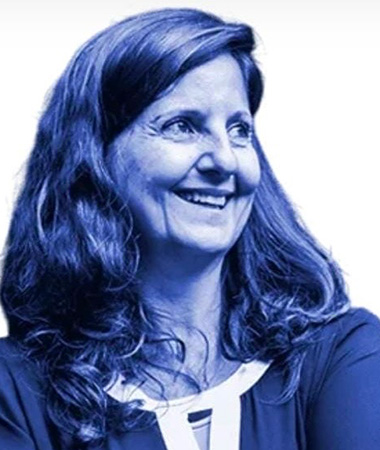
Silvia H. Koller is a Brazilian psychologist and Full Professor whose research focuses on developmental psychology, resilience, and social vulnerability, with particular emphasis on children and adolescents living in contexts of poverty, violence, and social exclusion. Her work is grounded in culturally sensitive and ecological approaches inspired by the bioecological model, examining how interactions across multiple systems shape developmental trajectories.
Over her career, Koller has led large-scale, longitudinal, and community-based research programs with marginalized populations, including street-involved youth. Her scholarship has contributed to advancing resilience theory by conceptualizing it as a dynamic, relational, and context-dependent process embedded in everyday life. She has published extensively in leading journals and books, with an h-index of 94, reflecting her sustained scientific influence.
Koller has built extensive international collaborations across Latin America, Africa, Asia, and Europe, contributing to research capacity building and the development of locally grounded psychological science. Her partnerships with African institutions have been particularly important in fostering equitable knowledge production and strengthening Global South research networks.
In addition to her academic leadership, her work has informed public policies and community-based interventions aimed at promoting positive development and mental health in contexts of adversity. Across her career, she has consistently advocated for a more inclusive and globally representative psychological science—one that recognizes the theoretical and methodological contributions emerging from the Global South as essential to the advancement of the field.
Koller has maintained a long-standing and active engagement with APS, contributing to its mission of advancing scientific psychology through both leadership and service. She has served as Program Chair, playing a central role in shaping the scientific program of APS conventions by promoting thematic diversity, international representation, and high methodological standards.
In addition to this leadership role, she has participated in multiple APS committees, contributing to strategic discussions on the future of the field and supporting initiatives aimed at strengthening the global reach of the organization. Through these roles, she has worked to expand the visibility of research conducted in underrepresented regions, particularly in Latin America and Africa.
Her participation in APS conventions as a presenter and organizer has consistently emphasized the importance of integrating Global South perspectives into mainstream psychological science. She has advocated for greater inclusion of scholars from diverse geopolitical contexts and for the recognition of research that addresses pressing global challenges such as inequality, migration, and youth development.
Koller views APS as uniquely positioned to serve as a global hub for scientific exchange, capable of bridging epistemological and geographic divides within psychology. She is particularly committed to advancing APS’s role in fostering equitable collaborations, supporting early-career researchers from the Global South, and strengthening partnerships that include African institutions.
Through her continued involvement, she seeks to help APS consolidate its leadership in promoting a truly global psychological science—one that is methodologically rigorous, culturally grounded, and responsive to the complexities of human development worldwide.
Read the Candidate’s Statement
Psychological science stands at a pivotal moment marked by both fragmentation and unprecedented opportunity. Among the most pressing issues is the gap between knowledge production and real-world impact. Despite robust advances in theory and methodology, much of our science remains insufficiently translated into policies and practices that address urgent global challenges, including inequality, violence, forced migration, and youth vulnerability.
A second critical issue concerns epistemic diversity. The field continues to be shaped disproportionately by research from the Global North, limiting the generalizability and ecological validity of our theories. Expanding the geographic, cultural, and socioeconomic scope of psychological science is not simply a matter of inclusion—it is essential for scientific rigor.
A third challenge lies in public trust and relevance. In an era of misinformation, psychology must strengthen its role as a credible, evidence-based voice in societal debates, while improving how findings are communicated beyond academic audiences.
APS is uniquely positioned to catalyze action in these areas. First, it can promote translational science by incentivizing research that bridges basic and applied domains and by supporting partnerships with policymakers and practitioners. Second, APS can actively internationalize the field by creating platforms, funding mechanisms, and leadership opportunities for scholars from underrepresented regions. Third, APS can lead in science communication by training researchers to engage effectively with the public and by amplifying psychologically informed responses to global crises.
By fostering integration—across disciplines, contexts, and communities—APS can help ensure that psychological science not only advances knowledge, but also meaningfully contributes to improving lives worldwide.
Scott Vrieze
University of Minnesota
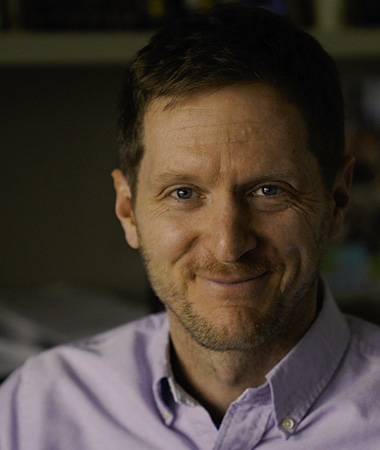
I am a Professor of Psychology at the University of Minnesota and a clinical psychologist investigating the development, causes, and consequences of psychopathology and addiction. My research focuses on quasi-experimental designs—including twin, adoptive family, and genomic methodologies—to disentangle complex etiologies. I prioritize large-scale, cross-disciplinary collaboration to help ensure findings are definitive, representative, and reliable. At Minnesota, with many excellent colleagues, I manage longitudinal twin and adoption cohorts tracking the impact of family experience on lifespan development. Additionally and again with world-class colleagues, I direct a global network of genetic studies on substance use involving millions of participants across dozens of countries to characterize the genomic architecture of addiction.
Beyond the lab, I serve as the Director of Clinical Training for our clinical psychology PhD program, which emphasizes research education as the core foundation of clinical science. I also direct an NIH T32 training program that integrates psychological science with genetics and clinical neuroscience. My career is defined by the belief that clinical psychology must be tethered to rigorous empirical evidence and strong theoretical tests.
APS is the pre-eminent organization devoted to psychology as a robust science. Its importance for clinical psychology as an applied science cannot be overstated; APS acted as a vital catalyst for elevating training standards, directly fostering the growth of the Academy of Psychological Clinical Science (APCS) and the Psychological Clinical Science Accreditation System (PCSAS) as a rigorous alternative to traditional models.
The other major role APS has played in my career is through the science curated in its journals. These publications remain the gold standard for our field, attracting exceptional editors and reviewers. I have contributed to this ecosystem directly as an Associate Editor for Perspectives on Psychological Science. I view APS not just as a professional home, but as a guardian of the scientific integrity of our discipline. Whether through its journals or its policy advocacy, APS helps ensure that psychology remains grounded in science.
Read the Candidate’s Statement
The most crucial issue in psychology is maintaining a science that is cumulative and trustworthy. This requires promoting open science practices that enhance transparency without stifling innovation, while fostering a culture of “respectful skepticism.” All domains of psychology benefit from motivated and resourceful critics; when criticism is engaged with seriously, it results in more thoughtful, durable work.
As a field we must continue to engender public trust in our scientific findings. This, in turn, promotes trust in federal funding, higher education, and applied settings such as the clinic. Moving the empirical needle forward—with as few fads and as little backtracking as possible—is the primary path to building and sustaining public trust. “Getting it right” is not just an academic virtue; it is a market necessity. Clinical therapies, employee selection strategies, social policies, or marketing insights based on “bad psychology” eventually fail in the marketplace. Reality wins out in the end.
APS must continue to be the society organized around the creation of verifiable knowledge. As a board member, I will advocate for APS to remain a network that values rigor in both our research and our training, ensuring that the next generation produces work that is not only high-impact today but remains true tomorrow.
