
2025 APS Board of Directors Election
Voting in the 2025 APS Board of Directors election has concluded and the results are in!
Pamela Davis-Kean* will begin her term as APS President-Elect in June 2025 and will be joined by new APS Board Members-at-Large Angela Gutchess and Jason Rentfrow as they begin three-year terms.
Thank you to all who stood for office and to all who voted. Thank you also to Wendy Wood (Past President), Ayanna Thomas (Member-at-Large), and John T. Jost (Member-at-Large) as their terms end and they rotate off the Board.
President-Elect
Pamela Davis-Kean
University of Michigan
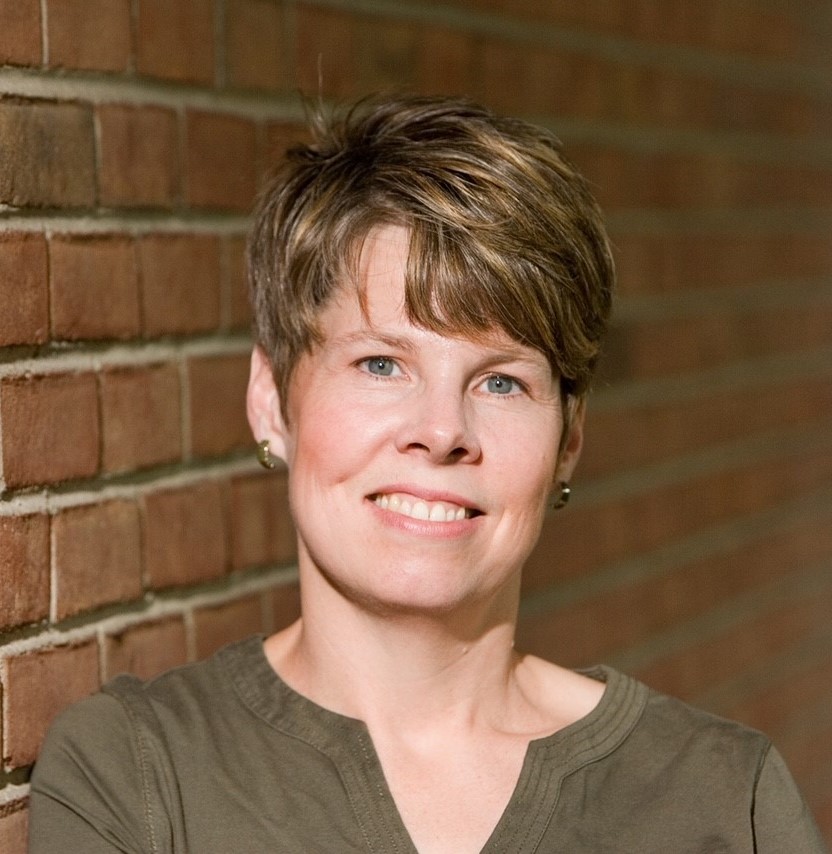
Pamela Davis-Kean is a Professor of Psychology and the Director of the Survey Research Center/Institute for Social Research at the University of Michigan. Davis-Kean’s research and publications range from examining the self-concept of ability in mathematical achievement to how the socioeconomic status of parents (primarily parent educational attainment) relates to their parenting beliefs and behaviors. This research has been published in major developmental and family journals. Davis-Kean has been on multiple editorial boards and is currently the Deputy Editor at Advances in Methods and Practices in Psychological Science (AMPPS). In 2024, she was elected to the Board of the Association of Psychological Science. Davis-Kean was elected as a Fellow of APS in 2013 and has held multiple service positions with APS, including being the Developmental Program Chair from 2012 to 2014 and the Program Chair from 2014 to 2016. Davis-Kean has been continually funded by NSF and NIH grants that have supported her research using population data to study inequalities in cognitive development. For a decade, she directed an NSF grant to support an Interdisciplinary Collaborative Development Science Center (CAPCA) focused on replication across longitudinal studies around the world. She is a proponent of the use of Open Science methods to increase rigor, transparency, and data sharing in the psychological community and considers this an important issue to continue to build and work on at APS. Davis-Kean also sees intra- and interdisciplinary research as an important contribution to psychological research and looks forward to thinking of ways to promote these connections in the future.
Read the Candidate’s Statement
I have been a member of the APS since I was in graduate school and have always been attracted to the APS because of its focus on the science of what we study in psychology. That has meant to me that we take a rigorous and critical approach to our research as we try and understand all aspects of cognition and behavior. I was especially proud of helping to design the APS program where we took on the difficult task of understanding how issues in the way we published and used data were not meeting the level of rigor or transparency required for a healthy science. We continue to grapple with these issues in our science today, but due to these early challenges, APS has started to set the standards of what a strong psychological science should be, as evident in our influential journals. We continue to face challenges in our field, like staying abreast of new technologies such as AI for enhancing the use of our data, embracing an interdisciplinary view of the human condition, and training the next generation of psychological scientists with a changing job market in academia and industry. APS can play an important role in using our conference to bring people together to chart the next decade of psychological science. We often go to meetings to hear about others’ research, but we can also use the meetings to create new collaborations and projects; review and consider issues we may have in the way we conduct science, to make sure we doing the best work possible; and hear from colleagues around the globe and across disciplines about research that enhances our understanding of the state of psychological science in these spaces. I look forward to helping guide APS into the next decade of psychological science.
Members-at-Large
Angela Gutchess
Brandeis University
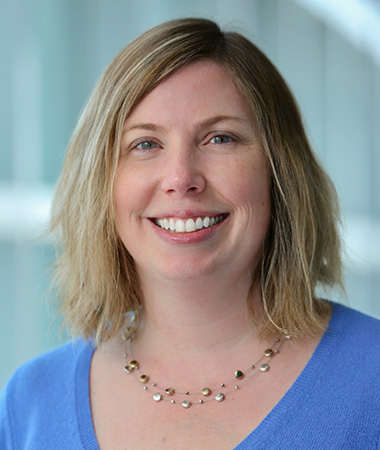
Angela Gutchess is a Professor of Psychology and Department Chair at Brandeis University with appointments in Neuroscience and the Volen Center for Complex Systems. She completed her BA/BS at Boston University, PhD at the University of Michigan, and postdoctoral fellowship at MGH and Harvard University. Gutchess investigates the effects of cognitive aging on memory, including the intersection with social processes and neural changes underlying cognitive decline and compensation. In another line of research, Gutchess probes cultural influences on memory, assessing differences in strategies, memory errors, and neural recruitment. Her research has been supported by the National Institute on Aging, the National Science Foundation, the Alzheimer’s Association, and the American Federation for Aging Research; she received a Fulbright Scholar Award to support a research visit in Türkiye. Gutchess has authored over 100 peer-reviewed papers and three books on cognitive aging. She is an APS Fellow and has been actively involved in serving the Association in various capacities. She served on the APS Election Committee (2020-2023; Chair 2022-2023), the Committee on Global Engagement (2024-2025), the Planning Committee for the inaugural Global Psychological Science Summit (2024), and as Editorial Board member for Psychological Science. A regular attendee and presenter at the Annual APS Convention, Gutchess has organized symposia and participated on panels, including with WiCS and at the upcoming meeting. Her leadership roles in the field include serving as elected Chair (2023) and member (2019-2024) of the Psychonomic Society Governing Board and as Associate Editor at four different journals: Cognition, Memory & Cognition, Journal of Gerontology: Psychological Sciences, and Memory. Gutchess is co-founder and co-organizer of Culture & Cognition meetings supported by NSF and contributed to the inaugural Diversity & Inclusion Committee of the Memory Disorders Research Society.
Read the Candidate’s Statement
The outlook for science has changed dramatically this year, posing new challenges for us as individual scientists and for our professional organizations. APS’s values and interdisciplinarity position it to be a leader. As a field, we must advocate for science-based decision making, ample scientific funding, and protection of our scientists and trainees. APS can leverage its size and resources to serve as an advocate, working across all psychological science subdisciplines to address shared needs and concerns. This involves partnering with organizations such as FABBS (Federation of Associations in Behavioral and Brain Sciences) to represent our field in the federal policymaking process, as well as educating scientists to effectively contribute to advocacy efforts, an area in which many of us lack expertise. APS also stands strongly for global science, taking tangible steps some time ago to broaden the society (even reflected by a name change!), increase programming outside of the US (including the 2026 Convention in Barcelona, Spain), and support broad access and participation, including through the Global Summit. My hope is that the society can build on the goodwill that it has created through its past actions to maintain and strengthen connections amongst scientists across the globe, in a time when people may be increasingly divided. APS stands for a commitment to representing diverse scientists and the study of societal problems that impact individuals from a variety of backgrounds. Finally, APS has a history of supporting trainees and early career researchers. The webinars provide tangible skill-building and professional development in flexible and accommodating format. As resource reductions threaten to shift the landscape for scientific training, it is critical to look out for the needs of the next generation of scientists. APS is committed and ideally positioned to do so; it would be my privilege to contribute to this mission.
P. Jason Rentfrow
University of Cambridge
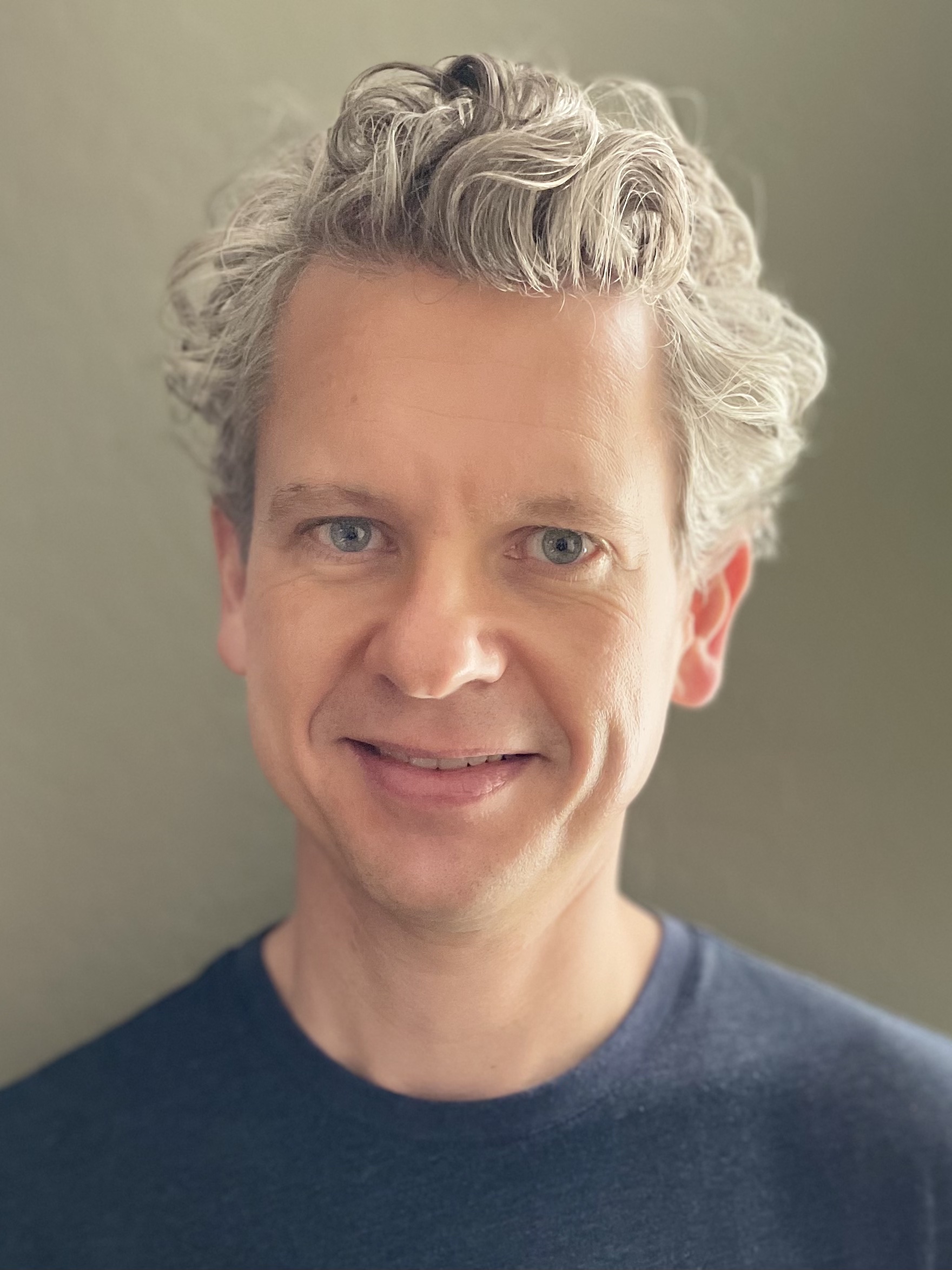
I’m a professor of psychology at the University of Cambridge, where I’ve spent my entire academic career after earning my PhD from the University of Texas at Austin. My research focuses on personality and individual differences, particularly how people interact with their environments—from everyday experiences to larger societal dynamics. My team uses a cross-disciplinary approach, blending insights and methods from psychology, data science, geography, economics, and epidemiology. We study how psychological traits cluster across cities, regions, and countries and how those patterns relate to social, economic, political, and health outcomes. Our work often draws on large-scale surveys, digital trace data, smartphone sensing, machine learning, and Artificial Intelligence. I work closely with researchers in clinical, developmental, cognitive, and neuroscience, as well as colleagues in computer science, political science, and economics—collaborations that are essential for tackling complex questions about human behavior. For example, in one study, we combined personality data from over 3.5 million people with smartphone mobility and COVID-19 case data to show how regional differences in traits like Openness and Emotional Stability shaped early pandemic spread and social distancing. I collaborate regularly with teams across Europe, North America, and Asia, and currently hold an adjunct professorship at Korea University. My research has been published in leading psychology and general science journals and recognized by several computing and psychological associations. I’ve also served in editorial roles for top journals in social and personality psychology. My work has also led to consulting opportunities for multiple international academic, governmental, and technological organizations. As a member of APS, I’m committed to advancing basic psychological science and promoting collaboration across disciplines to address society’s complex challenges.
Read the Candidate’s Statement
Psychological science stands at a pivotal juncture. As the world faces increasingly complex social, economic, and environmental challenges, there is a growing need for scientific insight into how individuals think, feel, and behave in context. One of our field’s biggest opportunities is to fully embrace the richness of human experience by studying how psychological processes are shaped by culture, technology, and the environments in which we live. To do that, we need to broaden our ideas of how psychology research is conducted and adopt approaches that are more interdisciplinary and grounded in real life. That’s been the focus of much of my work—from exploring how personality manifests in people’s daily lives, to mapping psychological traits across regions, to using smartphone data to track behavior in everyday settings. These methods deepen our understanding of how people interact with their environments and produce insights that matter for public policy, education, mental health, and industry. This kind of work requires a support system that fosters collaboration across disciplines, promotes open and accessible data, and encourages innovation in how we do research. I believe APS can play a vital role in providing such support. By creating spaces for cross-disciplinary exchange—among psychologists, data scientists, and public health experts—APS can help psychological science become more integrated with real-world issues. APS can also lead by investing in training, infrastructure, and communication—so researchers are equipped to work with complex data and share their findings in ways that make a difference. Promoting open science and global collaboration will only increase our reach and relevance. In short, the future of psychological science lies in its capacity to connect—to other disciplines, to technological innovation, and to the real-world contexts in which people live. APS can and should be the engine that drives this integration forward.
*The election of Pamela Davis-Kean, a current Board member, to president-elect creates an open member-at-large seat effective June 1, 2025. The APS Board of Directors will appoint a replacement to serve the remaining two years of her member-at-large term.
