
-

Living in Harmony: The Dynamics of Social Coordination
Social scientists outline the affective, social, and environmental cues that promote social coordination among individuals, teams, and entire societies.
-

New Research From Psychological Science
A sample of new research exploring physical position as an impression-management strategy, the origins of ordered line representations, links between agency and intentional binding, and p-curve analyses of findings related to the ‘power pose.’
-
The Science of Humor Is No Laughing Matter
Laugh it up! Humor is universal across human cultures — and fuels psychological research on everything from social perception to emotion regulation.
-
How Kids Catch Our Social Biases
Scientific American: While on the campaign trail Donald Trump was criticized for an incident in which he performed an exaggerated and unflattering impression of journalist Serge Kovaleski, a Pulitzer-prize winning journalist with a physical disability.
-
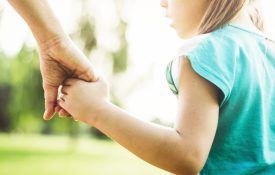
Children Can ‘Catch’ Social Bias Through Nonverbal Signals Expressed by Adults
Preschool-aged children can learn bias even through nonverbal signals displayed by adults, such as a condescending tone of voice or a disapproving look.
-
Sophisticated Communication from 8-Month-Old Babies
Scientific American: New parents love the developmental milestones – the first smile, crab-like crawl, and “ma-ma-ma” are unforgettable. Around their first birthday, babies start pointing, a communicative gesture that is universally, and uniquely, understood by
